
How To
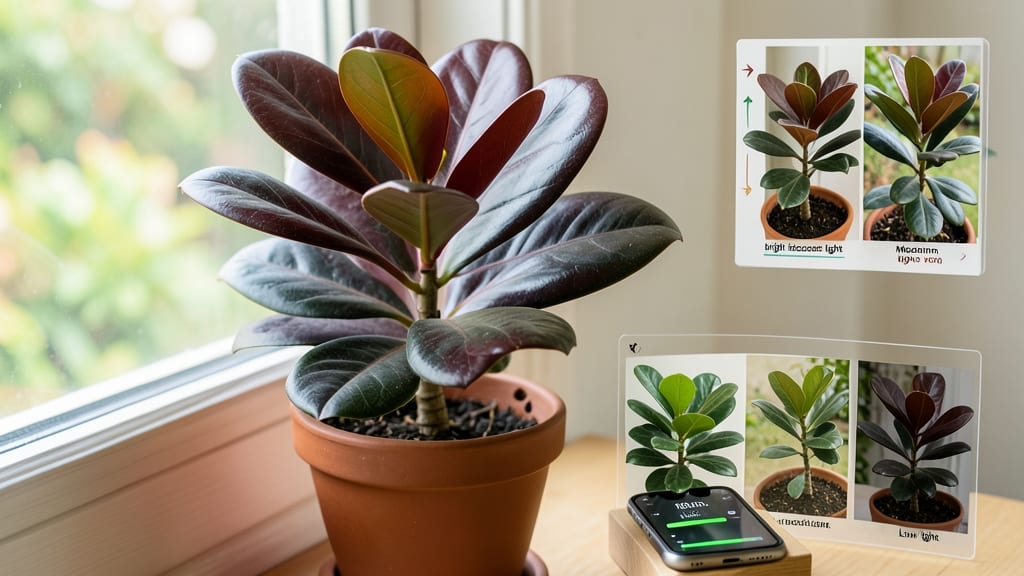
If your rubber plant 🌿 is looking more sad than stunning, the issue might not be your watering schedule—it’s how much light it’s actually getting. Too little, and those glossy leaves turn dull and sparse; too much, and they crisp up like forgotten leftovers.
The truth? Finding the perfect balance is the key to keeping your plant thriving indoors.
Rubber plants are famously adaptable, but they still need bright, indirect light to stay happy. Think of it like your morning coffee—just enough to wake up without burning out.
I’ll break down exactly how to spot the right light levels, what happens when you get it wrong, and even how to supplement with artificial lighting if your space falls short.
You don’t need a greenhouse or a degree in botany to nail this. With a few simple adjustments—like rotating your plant or choosing the right window—you can transform that struggling 🌿 into a bold, leafy statement piece. Let’s get those leaves lush again, starting with the light.
Ready to stop guessing and start growing? I’ll walk you through the exact brightness levels your rubber plant craves, plus how to troubleshoot common light-related problems before they become permanent damage. Your plant’s future starts with this one simple fix.

Optimal rubber plant light requirements: brightness levels by leaf health
Rubber plants (Ficus elastica) thrive in bright, indirect light, but their exact needs depend on your plant’s leaf color and variegation. Darker leaves tolerate lower light levels better, while variegated varieties need more intensity to maintain their striking patterns.
Understanding these nuances ensures your plant grows lush and healthy year-round.
Most rubber plants need 4-6 hours of bright, indirect light daily. This mimics their native understory habitat in Southeast Asia, where they’re shielded from harsh sun. Think of it like positioning your plant near a north- or east-facing window—where sunlight is gentle but abundant.
Avoid south- or west-facing windows unless you filter the light with sheer curtains.
Here’s how light intensity affects your rubber plant’s growth and appearance:
To measure your space’s light levels, use a light meter app (like "Light Meter" for smartphones) or observe your plant’s response over 2-4 weeks. If leaves are stretching toward the light (etiolation), move your plant closer to a brighter spot.
Conversely, if edges turn brown, it’s getting too much direct sun—relocate it farther from the window.
Artificial light can supplement natural light, especially in low-light rooms. LED grow lights with a 5,000-6,500K spectrum mimic sunlight and should be placed 6-12 inches above the plant for 12-14 hours daily. This mimics the plant’s natural photoperiod and prevents weak, leggy growth.
Variegated rubber plants, like the 'White Lady' variety, are particularly sensitive to light. Their white or yellow leaf sections contain less chlorophyll, so they need 20-30% more light than solid-green varieties. Without enough brightness, these patterns will fade to plain green, losing their visual appeal.
Seasonal changes also affect light needs. In winter, shorter days mean reduced natural light—supplement with a grow light or rotate your plant to expose all sides evenly. In summer, watch for increased sunlight intensity and adjust placement to avoid afternoon sun, which can cause leaf burn.
Pro tip: Rotate your rubber plant quarter-turns every 2-4 weeks to ensure even growth. This prevents one side from leaning toward the light source, creating a lopsided appearance. Even exposure helps maintain a symmetrical, bushy shape that’s both healthy and aesthetically pleasing.
Remember, rubber plants are forgiving but not indestructible. Start with medium light and adjust based on your plant’s response. With the right balance, your Ficus elastica will reward you with glossy, vibrant leaves that last for years.
Optimal rubber plant light requirements: brightness levels by leaf health
Your rubber plant (Ficus elastica) thrives on bright, indirect sunlight, but not all light is equal. Think of it like Goldilocks—too little light leaves it leggy and weak, while too much causes brown, crispy edges.
The sweet spot is 10,000–15,000 lux of light, roughly the brightness of a shady patio on a sunny day. This range keeps leaves vibrant, encourages healthy growth, and preserves those stunning variegated patterns.
Natural light varies by season and location, so I recommend using a light meter app (like Light Meter by A1) to measure your plant’s exposure.
For example, a south-facing window in summer can hit 30,000 lux—way too intense—while a north-facing window in winter might only offer 5,000 lux, requiring supplemental lighting. Adjusting your plant’s placement based on these readings is the key to consistent, lush foliage.
| Light Level | Lux Range | Leaf Health | Growth Rate | Ideal Placement |
|---|---|---|---|---|
| Low Light | 500–2,000 lux | Pale, small leaves; etiolated stems | Slow | North-facing window, 5+ feet away |
| Medium Light | 2,000–10,000 lux | Deep green, glossy leaves; healthy variegation | Moderate | East/west window, 2–3 feet away |
| Bright Indirect | 10,000–15,000 lux | Rich color, thick leaves; optimal variegation | Fast | South window with sheer curtain |
| Direct Sun | 15,000+ lux | Brown patches, scorch marks; brittle leaves | Stunted | Avoid; use grow lights instead |
If you’re growing a variegated rubber plant, like the popular 'Tineke' or 'White Ghost', aim for the bright indirect range. Variegated leaves contain less chlorophyll, so they need more light to photosynthesize efficiently.
Without enough brightness, the white or yellow sections fade, and the plant loses its striking appearance. For example, my 'White Ghost' thrives near my south-facing window with a sheer curtain—it gets 12,000 lux in the morning and 8,000 lux in the afternoon, perfect for its needs.
Artificial light can bridge the gap if natural light is lacking. Full-spectrum LED grow lights are ideal because they mimic sunlight’s blue and red wavelengths, which rubber plants crave for growth and color. Place the light 6–12 inches above the plant and run it for 12–14 hours daily.
I use a 20W LED bulb for my 6-inch rubber plant, and it’s made a noticeable difference in leaf vibrancy within just 4 weeks.
Pro tip: Rotate your rubber plant quarter-turns every 2–4 weeks to ensure even light exposure. Plants naturally grow toward the light source, so one side can become lopsided or leggy if left unchecked. This simple habit keeps your plant symmetrical and robust, with uniform leaf color and texture.
Think of it as giving your rubber plant a full-body massage—it’s good for its posture and health!
Monitor your plant’s response to light by observing new leaf growth. Healthy leaves should be thick, glossy, and upright, with a deep green or rich variegated color.
If you notice yellowing or curling, it’s a sign to adjust the light intensity or move the plant closer to (or farther from) the window. Trust your plant—it’s always telling you what it needs if you know how to listen.