
Companion Plants
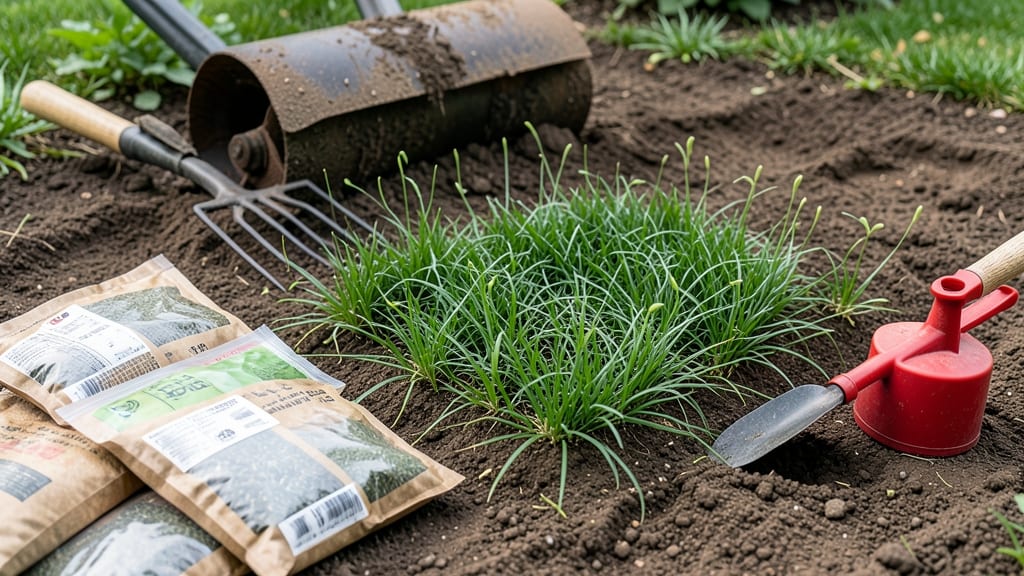
Timing your spring grass planting wrong can mean wasted seeds, patchy lawns, or even failed growth—so knowing the exact soil temperature and frost-free window is critical for a lush, healthy lawn. 🌱
If you've ever stared at a seed packet wondering, "When can I plant grass in the spring?" you're not alone. The answer isn't just about the calendar date—it's about understanding your local climate, soil conditions, and the specific needs of your grass type.
Whether you're in the chilly 6a zone or a warmer region, getting this right makes all the difference between a vibrant lawn and a disappointing failure.
In this guide, I'll break down the ideal planting window based on soil temperature, frost-free dates, and regional variations. You'll learn how to test your soil, calculate your local window, and prepare your seedbed for maximum success. Let's get your lawn off to the best possible start this spring!
Don't let another season go by with a less-than-perfect lawn. By following these proven steps, you'll plant at the perfect time—every time. Ready to transform your outdoor space? Let's dive in.
Ideal soil temperature for spring grass planting by region
Spring grass planting success hinges on one critical factor: soil temperature. Most cool-season grasses (like Kentucky bluegrass or fescue) thrive when soil reaches 50°F–60°F, while warm-season grasses (such as Bermuda or Zoysia) prefer 65°F–75°F.
Planting too early or late can stunt growth or invite weeds—so timing matters more than you might think.
Your USDA Hardiness Zone plays a huge role. Northern states (Zones 3–5) often see ideal temps by mid-April to early May, while Southern states (Zones 7–10) may wait until late March to early April.
Even within the same zone, microclimates (like shaded spots or slopes) can shift your window by weeks.
To test soil temperature, use a soil thermometer (insert 2–4 inches deep) for 3–5 days. Morning readings are most accurate. If temps fluctuate, wait until they stabilize. Pro tip: Early morning planting (before 10 AM) helps seeds stay moist longer, giving them a head start.
Here’s a quick regional breakdown to guide your timing:
| Region | Ideal Soil Temp | Planting Window | Grass Type |
|---|---|---|---|
| Northern US (Zones 3–5) | 50°F–60°F | Mid-April to early May | Cool-season (Kentucky bluegrass, fescue) |
| Midwest (Zones 6–7) | 55°F–65°F | Late March to early April | Cool-season or transition (tall fescue) |
| Southern US (Zones 8–10) | 65°F–75°F | Late March to early April | Warm-season (Bermuda, Zoysia) |
| Pacific Northwest (Zones 7–9) | 50°F–60°F | Early April to mid-May | Cool-season (Ryegrass, fescue) |
If you’re in a transition zone (like Zone 6b), opt for tall fescue—it tolerates a wider temp range (40°F–85°F) and handles both cool and warm seasons. For warm-season grasses, avoid planting until soil temps stay above 65°F for 5+ days, or seeds may rot.
One common mistake? Planting too early in false springs (warm spells followed by frost). Always check a 10-day forecast and wait until nighttime temps stay above 40°F for cool-season grasses. For warm-season types, hold off until daytime highs hit 70°F consistently.
Preparing your soil is just as critical as timing. Loosen the top 4–6 inches with a rake or tiller, remove debris, and level the area. A pH test (ideal range: 6.0–7.0) will tell you if you need lime (to raise pH) or sulfur (to lower it).
Amending soil now ensures your grass gets the nutrients it needs to germinate quickly.
Pro tip: Cover newly seeded areas with straw mulch (not hay—it contains weed seeds) to retain moisture and protect seeds from drying out. Remove the mulch once grass reaches 3–4 inches tall to avoid smothering growth.
Finally, monitor your lawn’s progress. If germination slows after 14–21 days, it may be too cold or dry. Adjust watering (keep soil 1 inch deep moist) or consider a lightweight row cover for extra warmth.
With the right timing, your grass will establish roots in 3–4 weeks, outcompeting weeds and giving you that coveted green carpet.
How to calculate your local frost-free date for perfect grass planting
Knowing your local frost-free date is the first step to planting grass at the perfect time. Unlike calendar dates, frost-free windows vary dramatically—even between neighboring towns. For example, Chicago might have its last frost in mid-April, while Atlanta could see frost-free conditions by early March.
Using the wrong date can lead to seed rot or stunted growth, so accuracy matters.
Start by checking your USDA Plant Hardiness Zone—this gives you a baseline for your region's climate. For instance, Zone 5 areas typically have later frost dates than Zone 8.
Next, visit the NOAA Climate Data website (or your local weather service) to find historical frost records for your area. These records will show you the average last frost date, which is a great starting point.
But here’s the catch: average frost dates aren’t always reliable. A false spring (a warm spell followed by a late frost) can wipe out your new grass in days. That’s why I recommend adding a 2–4 week buffer after the average last frost date.
This gives your grass time to establish roots before summer heat or late frosts strike.
For example, if your average last frost date is April 15, aim to plant grass by May 1 to give it time to establish before summer arrives.
If you’re in a warmer climate (Zone 9+), you might even plant in late winter, but always check soil temperatures—warm-season grasses like Bermuda need soil to be at least 65°F.
Pro tip: Use a soil thermometer to confirm temperatures before planting. If the ground is still below 50°F, wait a few more weeks. Your grass will thank you with faster germination and stronger roots! 🌱