
Trees
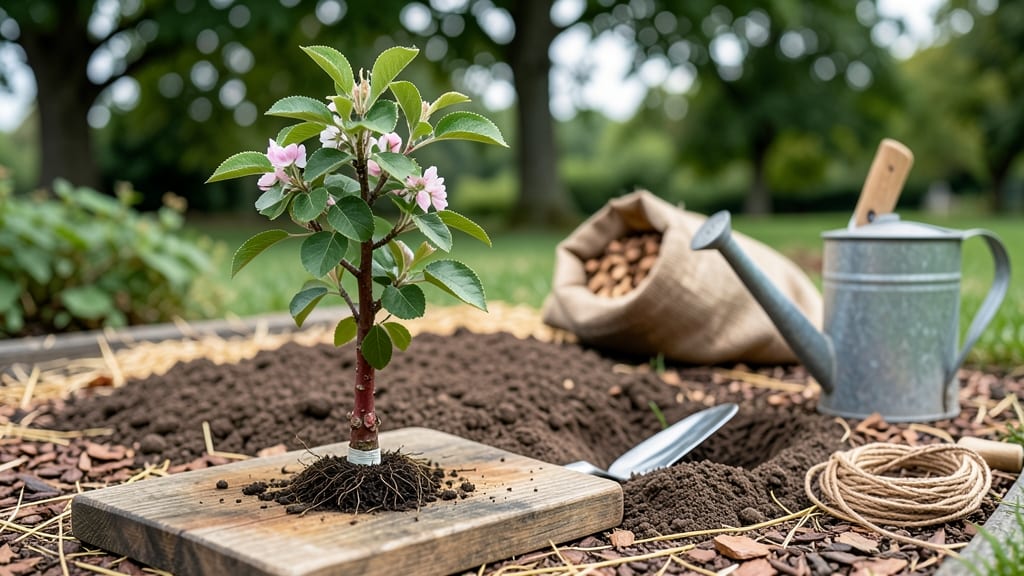
Timing your 🍎 apple tree planting in Oregon isn’t just about the calendar—it’s about matching your variety to the region’s chill hours and frost patterns. Plant too early, and you risk exposing young roots to unexpected freezes; too late, and your tree may struggle to establish before winter sets in.
Oregon’s 7b-9a zones create a patchwork of microclimates, from the Willamette Valley’s mild winters to the high-desert chill of Bend. The key to success lies in planting bare-root trees in late winter (February–March) or container-grown trees in early spring (April), when soil temperatures rise but frost danger recedes.
Why does this matter? Apple trees need 250–1,000+ chill hours to fruit properly, and Oregon’s varied climates mean some varieties thrive in the Willamette Valley while others need the colder high-desert air. I’ll break down the best planting windows for your favorite apples—plus local tips to avoid common mistakes.
Ready to grow your own orchard? Let’s dive into the perfect timing for planting 🍎 apple trees that’ll bear fruit for decades. Your future harvest starts with the right move now.
Oregon’s best planting months for apple trees by chill-hour needs
Timing is everything when planting apple trees in Oregon, where chill-hour requirements (the number of hours below 45°F needed to set fruit) vary dramatically by variety and region. Most Oregon zones (7b–9a) demand 250–1,000+ chill hours, so matching your tree to your microclimate is critical.
For example, Western Oregon’s mild winters (like the Willamette Valley) suit low-chill varieties, while high-desert areas like Bend thrive with high-chill apples.
Spring planting (February–April) is ideal for bare-root trees, allowing roots to establish before summer heat. Fall planting (October–November) works for container-grown trees, but only in frost-free zones like Southern Oregon’s Rogue Valley.
Always plant 2–3 weeks after your last frost date—check OSU Extension’s frost maps for your specific area.
🌱
| Region | Chill Hours | Best Planting Window | Recommended Varieties |
|---|---|---|---|
| Willamette Valley | 300–500 hrs | March–April | Gala, Fuji, Honeycrisp |
| Eastern Oregon (Bend) | 700–1,000+ hrs | February–March | Granny Smith, Braeburn, Jonathan |
| Southern Oregon (Rogue Valley) | 400–600 hrs | October–November (fall) or March | Pink Lady, Ambrosia, Jazz |
| Coastal Oregon | 250–400 hrs | April (avoid early frost) | Golden Delicious, McIntosh |
For bare-root trees, dig a hole twice as wide as the root ball but only as deep. Amend the soil with compost and organic matter to improve drainage—critical in Western Oregon’s clay-heavy soils.
Gently spread roots outward and backfill, tamping lightly to eliminate air pockets. Water deeply to settle the soil and reduce transplant shock.
If planting in containers, choose a pot with drainage holes and use a well-draining potting mix. Keep the tree in a sheltered spot until roots establish (about 4–6 weeks), then transplant to the ground during the optimal window for your region.
Container-grown trees can handle fall planting, but avoid it in frost-prone areas like the Columbia Gorge.
🪴
Proper pollination pairings are non-negotiable for fruit production. Plant at least two compatible varieties (check OSU’s pollination charts) within 50 feet of each other. For example, ‘Gala’ and ‘Fuji’ pollinate each other, but ‘Granny Smith’ needs a different partner like ‘Braeburn’.
In high-desert areas, consider hand-pollinating with a soft brush if bees are scarce.
After planting, mulch around the base with wood chips or straw to retain moisture and suppress weeds. Water deeply once a week for the first month, then taper to every 10–14 days once established. Avoid overhead watering to prevent fungal diseases like apple scab, common in Oregon’s damp springs.
💧
Monitor your tree’s progress with OSU Extension’s chill-hour calculators to ensure it’s getting enough cold exposure. In mild-winter zones (like Eugene), low-chill varieties may need artificial chilling in a garage during winter.
Conversely, high-chill trees in Southern Oregon might struggle—opt for ‘Ambrosia’ or ‘Jazz’, which thrive with 400–600 hours.
Finally, protect young trees from late-spring frosts (common in April) with frost cloth or a row cover. In high-desert regions, consider a windbreak to shield trees from harsh winds.
With the right timing and care, your Oregon apple tree will reward you with years of bountiful harvests.
Oregon’s best planting months for apple trees by chill-hour needs
Oregon’s chill-hour zones (250–1,000+ hours) dictate the best planting windows for apple trees. Low-chill varieties like ‘Anna’ or ‘Dorsett Golden’ (250–500 hours) thrive in Western Oregon’s mild winters, while high-chill types like ‘Granny Smith’ (800+ hours) need the high-desert cold of Bend or La Pine.
For bare-root trees, aim for late winter (February–March) when soil is workable but frost risk is low. Container-grown trees can go in until early spring (April), but avoid planting after mid-April—Oregon’s last frost typically hits by then, and late plantings risk transplant shock before roots establish.
Here’s how Oregon’s microclimates break down for planting:
| Region | Chill-Hour Range | Best Planting Window | Key Varieties |
|---|---|---|---|
| Willamette Valley | 300–500 hours | Late Feb–early March | ‘Gala,’ ‘Fuji,’ ‘Honeycrisp’ |
| Eastern Oregon (Bend) | 600–1,000+ hours | March–early April | ‘Granny Smith,’ ‘Jonagold,’ ‘Braeburn’ |
| Coastal Oregon | 250–400 hours | Late Feb–March | ‘Anna,’ ‘Dorsett Golden’ |
Pro tip: Check Oregon State University’s chill-hour maps to confirm your zone. For example, Corvallis averages 450 chill hours, while La Grande hits 800+ hours. Planting a high-chill variety in the Willamette Valley? It’ll likely fail to fruit—or worse, die from winter stress.
Soil temperature is just as critical as air temperature. Wait until the ground warms to 45°F (7°C)—use a soil thermometer to check. In Western Oregon, this usually aligns with mid-March, while Eastern Oregon may be ready by early April.
Rush the process, and your tree’s roots will struggle to absorb nutrients, stunting growth.
Finally, align your planting with moon phases for extra success. The waxing moon (above the horizon) is ideal for root crops and tree planting—aim for March’s waxing gibbous phase for best results.
Pair this with well-draining soil (Oregon’s clay-heavy soils need compost amendments), and your apple tree will thrive from day one.