
Vegetables
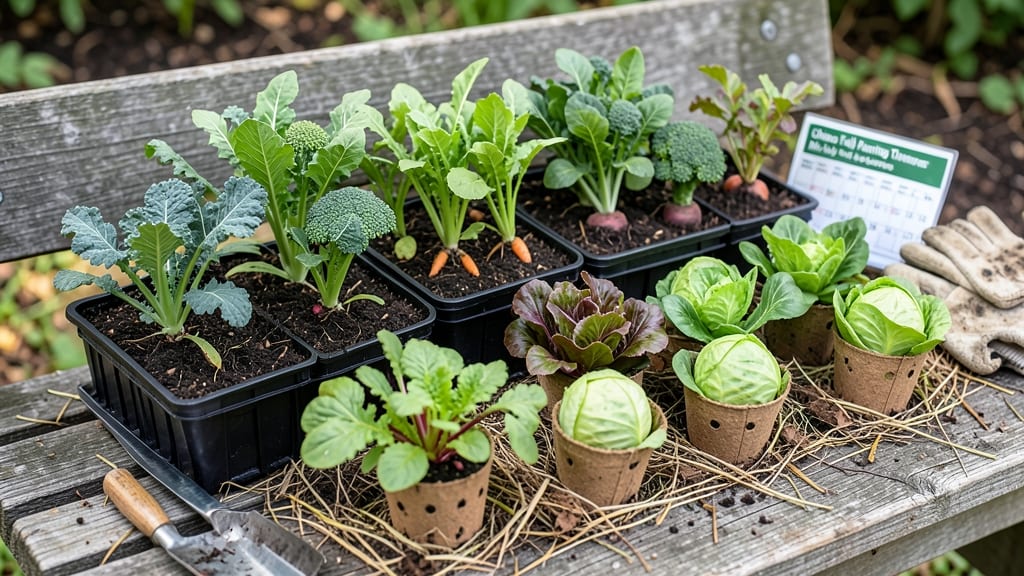
Timing when to plant fall vegetables in Ohio just right can mean the difference between a garden overflowing with crisp kale and sweet carrots and one that fizzles before frost.
The mid-August to mid-September window isn't random—it's when Ohio's Zone 6a climate shifts from scorching summer to the perfect 50-60°F sweet spot for cool-season crops.
I've watched too many Ohio gardeners rush planting, only to watch their broccoli bolt in the heat or their spinach turn bitter before the first frost. The key? Understanding how your local microclimate plays into the equation—whether you're in a sheltered urban backyard or an exposed rural field.
Let me break down exactly when to plant each vegetable for a harvest that lasts from October through November.
You'll discover the exact dates for direct-sowing vs. transplanting, plus how to adjust for early or late frosts. We'll also cover the top 5 mistakes Ohio gardeners make (and how to avoid them), so you can extend your growing season with confidence.
Ready to turn your fall garden into a productivity powerhouse?
From leafy greens that thrive in cooler weather to root vegetables that sweeten after frost, this guide gives you the localized knowledge you need to beat Ohio's unpredictable fall weather. Let's get those seeds in the ground at the perfect moment—before the window closes for good.
Ohio fall planting timeline by vegetable type: exact dates for Zone 6-7 success
Ohio’s Zone 6-7 climate gives us a 6-8 week window for fall vegetables, but timing is everything. Plant too early, and summer’s 90°F+ heat will bolt your greens or stunt root crops. Too late, and first frost dates (typically October 20) will end your harvest prematurely.
To nail the perfect planting window, I’ve broken down 10 essential fall crops by their ideal direct-sow vs. transplant dates, harvest windows, and Ohio-specific adjustments.
Whether you’re growing leafy greens, root vegetables, or brassicas, these dates align with soil temperatures (aim for 50-65°F) and daylength changes.
🌱 Pro Tip: Use succession planting every 2-3 weeks after your first sowing to stretch your harvest until frost. For example, plant spinach in early August, then again in late August and early September for a staggered harvest.
| Vegetable | Direct Sow | Transplant | Harvest Window | Ohio Notes |
|---|---|---|---|---|
| Leafy Greens (Lettuce, Spinach, Kale) | Mid-Aug to Early Sept | Early Aug (start indoors) | Sept to Nov | Bolt-resistant varieties (e.g., 'Winterbor') handle heat better. |
| Root Vegetables (Carrots, Beets, Radishes) | Late July to Mid-Sept | N/A (Direct sow only) | Oct to Nov | Loose, rocky soil prevents forked carrots. Mulch to keep soil warm. |
| Brassicas (Broccoli, Cabbage, Brussels Sprouts) | Early Aug (direct sow) | Mid-July (transplant) | Oct to Dec | Use row covers to protect from flea beetles. |
| Peas (Sugar Snap, Snow) | Mid-Sept to Early Oct | N/A (Direct sow only) | Oct to Nov | Plant on trellises to save space and improve air circulation. |
| Onions & Garlic | Late Aug to Early Sept | Early Sept (sets) | Oct to Nov | Use short-day varieties for fall planting. |
For leafy greens, I recommend starting with bolt-resistant varieties like 'Winter Density' kale or 'Winterbor' lettuce. These handle Ohio’s late-summer heat spikes better than traditional varieties. Direct-sow spinach and arugula in early August for a September-October harvest, then succession plant every 2 weeks.
Root vegetables like carrots and beets need loose, stone-free soil to prevent deformities. In Ohio’s clay-heavy soils, mix in compost and sand to improve drainage. Sow radishes (fast-growing!) in late August for a harvest in 3-4 weeks, then replant in early September.
🌿 Brassicas (broccoli, cabbage, Brussels sprouts) are my top fall workhorses—they sweeten with frost and store well. Start broccoli transplants in mid-July and direct-sow cabbage in early August. Use
How to adjust planting dates based on Ohio’s microclimates and soil conditions
Ohio’s Zone 6-7 climate might look uniform on maps, but in reality, your urban backyard in Columbus can feel like a different world from a rural field in northeast Ohio.
Microclimates—created by buildings, lakes, or elevation—can shift your first frost date by weeks. For example, areas near Lake Erie often enjoy 10-14 extra frost-free days compared to inland regions.
Start by checking your local frost dates. While the average first frost for Ohio is October 20, urban heat islands can delay it to November 1, while exposed hilltops might see frost as early as October 5.
Use resources like the Old Farmer’s Almanac or your local cooperative extension office to pinpoint your exact zone.
Soil type also plays a critical role. Clay-heavy soils in southern Ohio stay warmer longer, giving you a 2-week extension for planting, while sandy soils in northern Ohio cool faster and may require earlier sowing.
Test your soil’s drainage and pH—ideal fall soil should be 60-65°F and slightly acidic (pH 6.0-7.0) for most cool-season crops.
| Microclimate | Adjustment | Example |
|---|---|---|
| Urban Heat Island | Delay planting by 1-2 weeks | Columbus city gardens |
| Lake Erie Shoreline | Extend season by 2 weeks | Cleveland, Sandusky |
| Exposed Hilltops | Plant 3 weeks earlier | Appalachian foothills |
| Clay Soil | Sow 10 days later | Southern Ohio valleys |
| Sandy Soil | Sow 10 days earlier | Northern Ohio sand plains |
For southern Ohio, where summers linger into September, prioritize heat-tolerant varieties like ‘Winterbor’ kale or ‘Nantes’ carrots, which can handle 80°F soil temps briefly. In northeastern Ohio, focus on fast-maturing crops like ‘Salad Bowl’ lettuce (ready in 30 days) to beat early frosts.
Use row covers or cold frames to push your harvest window even further. A simple floating row cover can add 2-4 weeks to your growing season by trapping heat and shielding plants from light frosts (28-32°F).
For hardier crops like kale or spinach, even a thick mulch layer (straw or leaves) can protect roots from 20°F temps.
If you’re unsure whether to plant early or late, succession plant in 2-week intervals for a staggered harvest. This way, even if one batch fails, you’ll still have fresh greens or roots coming in.
And always keep an eye on your local weather forecast—a cold snap in late September might mean it’s time to rush those broccoli transplants under cover.