
Plants
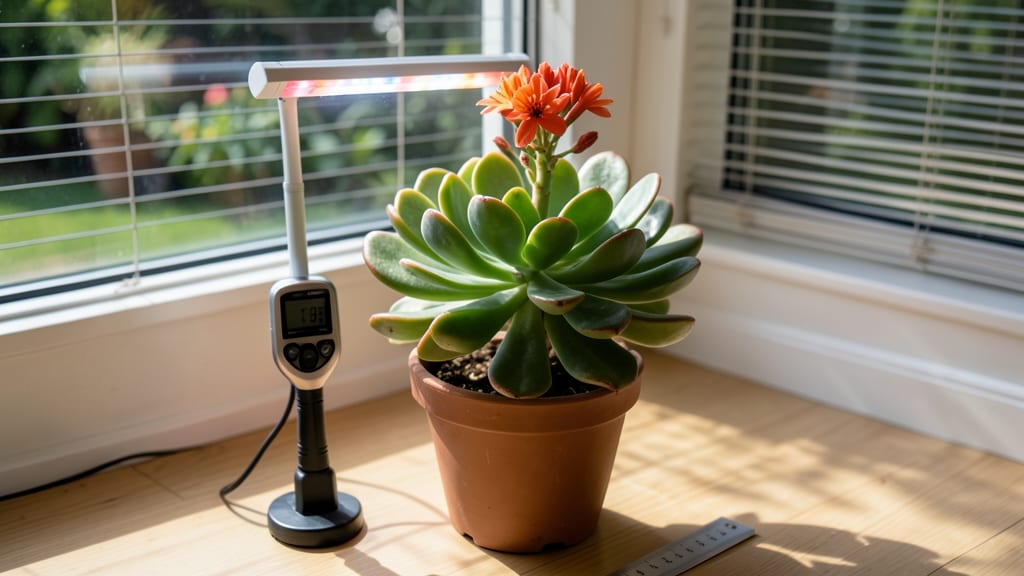
If you’re wondering how much light does a kalanchoe plant need, the answer lies in balancing bright indirect sunlight—too little leaves it leggy, while too much can scorch its delicate leaves.
This hardy succulent thrives in conditions that mimic its natural habitat, where filtered light keeps it vibrant and encourages blooming. Most gardeners assume all plants need full sun, but Kalanchoes are different. They prefer bright, indirect light—think east-facing windows or filtered sunlight through sheer curtains.
Too much harsh direct sun can cause brown spots, while insufficient light leads to pale, weak growth. Don’t worry if your space doesn’t get natural sunlight—grow lights can save the day.
Whether you’re growing it indoors near a sunny window or outdoors in your garden, getting the balance right makes all the difference. I’ll share easy fixes for both indoor and outdoor setups, so your Kalanchoe stays happy year-round. Ready to give your plant the perfect glow?

Ideal light requirements for kalanchoe plants: bright indirect sunlight explained
Kalanchoe plants are sun worshippers at heart, but they’re not fans of harsh, direct sunlight that can scorch their delicate leaves. These succulents thrive best in bright indirect light, mimicking their natural habitat in arid regions where sunlight is intense but filtered through other vegetation.
Think of it as giving them a sunbath with sunscreen—plenty of light, but not the midday burn.
The ideal light exposure for kalanchoes falls between 4 to 6 hours of sunlight daily, but the key is the quality of that light. Direct sun should be filtered through sheer curtains or diffused by nearby trees.
If you’re growing them indoors, a south-facing window is your best bet, as it provides the most consistent light throughout the day without the harsh afternoon rays.
Here’s how to visualize the perfect setup: Imagine your kalanchoe sitting 3-4 feet away from a south-facing window. This distance allows it to bask in gentle, indirect sunlight while avoiding the intense heat that can cause leaf bleaching or crispy edges.
If your home lacks natural light, don’t worry—grow lights can step in to fill the gap, especially during the shorter winter days.
| Light Requirement | Specification |
|---|---|
| Daily Sunlight Duration | 4 to 6 hours |
| Light Type | Bright indirect light |
| Best Window Placement | South-facing, 3-4 feet away |
| Direct Sun Tolerance | Morning sun only (avoid afternoon) |
| Grow Light Alternative | 12-14 hours of LED grow light |
The science behind kalanchoe’s light needs ties back to their photosynthesis efficiency. These plants are CAM photosynthesizers, meaning they open their stomata at night to absorb CO₂ and store it for daytime use. This adaptation allows them to thrive in low-humidity, high-light environments without losing excessive water.
However, too little light disrupts this process, leading to leggy growth and weak stems, while too much light can cause oxidative stress, manifesting as brown or yellow patches on the leaves.
If you’re placing your kalanchoe outdoors, early morning sun is ideal, while afternoon sun should be avoided during the peak summer months. A partial shade cloth (30-50% shade) can help filter sunlight if you’re growing them in a greenhouse or on a patio.
For indoor gardeners, rotating your plant quarter-turns every few days ensures even growth, as kalanchoes will naturally lean toward the light source.
Another pro tip: Observe your plant’s leaves. Healthy kalanchoe leaves should be deep green and firm, with no signs of stretching or discoloration. If the leaves start looking pale or translucent, it’s a cry for more light.
Conversely, if they develop crispy edges or white spots, it’s time to move your plant to a shadier spot or away from direct sunlight.
For those living in high-rise apartments or cloudy climates, supplementing with LED grow lights can make all the difference. Look for lights with a full-spectrum output (especially in the blue and red wavelengths) to mimic natural sunlight.
A 12-14 hour light cycle during winter can keep your kalanchoe blooming and thriving, even when natural light is scarce.
Remember, kalanchoes are adaptable but not forgiving. Once you find the sweet spot of bright indirect light, your plant will reward you with vibrant flowers and compact growth.
Start with these guidelines, and don’t hesitate to adjust based on your plant’s response—after all, every home’s light conditions are unique!
Ideal light requirements for kalanchoe plants: bright indirect sunlight explained
Kalanchoe plants thrive in bright indirect sunlight, which mimics their natural tropical habitat. Unlike sun-loving succulents, they can’t handle harsh afternoon rays—this causes leaf scorch and brown patches. Aim for 4-6 hours of filtered light daily, like an east-facing window or dappled shade outdoors.
Position your kalanchoe near a south-facing window but use sheer curtains to diffuse intense rays. If you notice leaves turning pale or stretching toward the light, it’s a sign of light deprivation. This condition, called etoliation, weakens the plant and reduces blooming potential.
Outdoors, place your kalanchoe in partial shade during peak summer hours (11 AM–3 PM). Morning sun is ideal, while afternoon shade protects delicate foliage. If growing in a greenhouse, ensure ventilation to prevent overheating from direct light.
| Light Condition | Daily Exposure | Best Location | Effect on Plant |
|---|---|---|---|
| Bright Indirect | 4-6 hours | East/west window | Vibrant growth, blooms |
| Direct Morning Sun | 2-4 hours | South window (early) | Healthy, compact leaves |
| Low Light | <2 hours | North window | Leggy stems, pale leaves |
| Harsh Afternoon Sun | >4 hours | South window (no shade) | Brown spots, crispy edges |
For indoor growers, LED grow lights are a game-changer. Place them 6-12 inches above the plant and provide 12-14 hours of light daily to compensate for weak natural light. Full-spectrum bulbs (6500K) mimic sunlight best, encouraging blooming and compact growth.
If your kalanchoe starts developing long, weak stems, it’s begging for more light. Rotate the pot weekly to ensure even growth and prevent leaning. In winter, supplement with a timer-controlled grow light to maintain consistency—kalanchoes won’t tolerate dormancy from light deprivation.
Pro tip: Test your light setup by observing leaf color. Deep green leaves mean perfect lighting, while yellowing or reddening signals stress. Adjust gradually to avoid shocking the plant—sudden light changes can cause more harm than good.