
How To
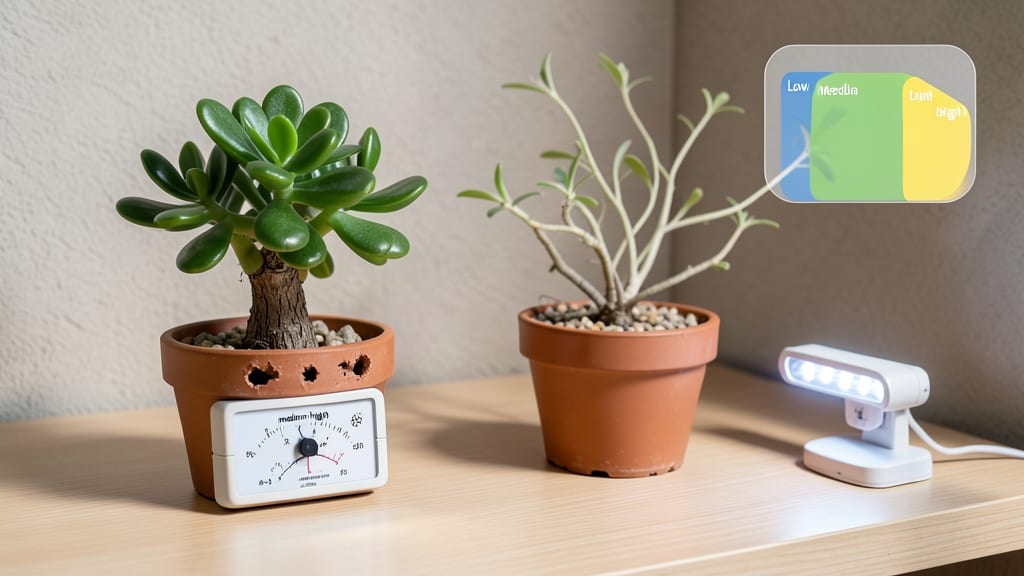
If your Jade Plant 🌿 is looking sad, leggy, or just not thriving, how much light does a Jade Plant need might be the game-changer you're missing. These resilient succulents actually crave bright conditions—but getting the balance right can feel like solving a puzzle.
Too little light, and they stretch awkwardly toward the window; too much direct sun, and those plump leaves can turn crispy.
Most Jade Plants flourish with bright indirect sunlight for about 4-6 hours daily, making east or west-facing windows ideal spots. Think of it like Goldilocks: not too harsh, not too dim, but just right.
The key is mimicking their natural habitat in sunny, arid regions where they soak up gentle morning rays without scorching afternoon heat.
Here’s the good news: Jade Plants are surprisingly adaptable. They’ll tolerate some direct morning sun, especially in cooler climates like USDA Zone 6a, but afternoon sun can quickly lead to sunburn. If your home lacks natural light, don’t panic—grow lights can step in as a more efficient alternative.
I’ll show you exactly how to spot the signs of over- or under-lighting and tweak your setup for lush, compact growth.
Whether you’re a seasoned plant parent or just starting your Jade Plant journey, mastering light exposure is the first step to keeping this low-maintenance beauty happy. Let’s dive into the secrets of giving your Jade Plant the perfect glow—without overcomplicating things.

Ideal light requirements for Jade Plants: bright indirect sunlight explained
Jade plants (Crassula ovata) are succulents that love sunlight, but they need the right kind—too much or too little can stress them. The ideal light for jade plants is bright indirect sunlight, with 4-6 hours daily.
This mimics their natural habitat in South Africa, where they grow under trees or on rocky outcrops with dappled sunlight.
Direct afternoon sun (especially from 12 PM to 4 PM) can scorch their leaves, causing brown, crispy patches. However, morning sun is gentler and often well-tolerated. If your jade plant is outdoors, place it where it gets filtered sunlight, like under a sheer curtain or on a shaded patio.
For indoor growers, the best window placement is east or west-facing, where sunlight is bright but not intense. South-facing windows can work, but you’ll need to rotate your plant every few weeks to prevent leaning toward the light. North-facing windows are usually too dim for jade plants long-term.
Here’s how to tell if your jade plant is getting the perfect light balance:
| Light Condition | Signs | Solution |
|---|---|---|
| Too Little Light | Leggy stems, pale leaves, slow growth | Move to brighter spot or use grow lights |
| Perfect Light | Thick, glossy leaves, compact growth | Keep current conditions; rotate occasionally |
| Too Much Light | Brown patches, crispy edges, sunburn | Move to indirect light or filter sunlight |
Jade plants are adaptable, but sudden changes in light can shock them. If you’re moving your plant from indoors to outdoors (or vice versa), do it gradually—start with 1-2 hours of exposure and increase over 1-2 weeks. This helps them adjust without stress.
Outdoor jade plants can handle full sun in cooler climates (USDA Zones 9-11), but in hotter areas, they’ll appreciate afternoon shade. If you’re growing yours outside during summer, watch for signs of heat stress, like drooping or wilting, and provide shade cloth if needed.
Even in low-light conditions, jade plants can survive, but they’ll grow slowly and may become etoliated (stretched and weak). If your home lacks natural light, consider a LED grow light with a full spectrum (red and blue wavelengths).
Place it 6-12 inches above the plant and provide 12-14 hours of light daily to mimic daylight.
Pro tip: Use a light meter or observe your plant’s response. If leaves are dark green and plump, you’re on the right track. If they’re light green or yellowing, it’s time to adjust.
Remember, jade plants are low-maintenance once their light needs are met. With the right balance, they’ll reward you with thick, vibrant leaves and a sturdy, bushy form for years to come.
How to adjust light for Jade Plants in different environments: indoor vs. outdoor care
Jade Plants are incredibly adaptable, but their light needs shift dramatically between indoor and outdoor settings. In my experience, the biggest mistake is assuming they’ll thrive in any old spot—whether it’s a dim corner or a scorching summer patio.
Let’s break down how to tailor their environment for success, no matter where you live or how much natural light your space offers.
For indoor Jade Plants, the key is replicating their natural habitat’s bright, filtered sunlight. If your home has low-light conditions, like a north-facing window or a basement office, you’ll need to supplement with grow lights.
I’ve found that LED grow lights with a 5000-6500K color temperature work best—just 12-14 hours a day, placed about 6-12 inches above the plant. Rotate your Jade Plant weekly to prevent lopsided growth from leaning toward the light source.
Indoor Lighting: Pros and Cons
| Option | Pros | Cons |
|---|---|---|
| East/West Window | Gentle morning/afternoon sun; no risk of burn | Limited hours; may need rotation |
| South Window | Intense light for compact growth | High risk of sunburn; needs distance |
| Grow Lights | Consistent spectrum; works year-round | Initial cost; requires maintenance |
Outdoor Jade Plants, on the other hand, can handle more direct sunlight—but with caveats. In USDA Zone 6a, where I garden, I’ve learned to introduce them to outdoor conditions gradually in spring. Start with 2-3 hours of morning sun and slowly increase exposure over 2-3 weeks.
Avoid placing them in full afternoon sun, especially during summer, as the intense rays can cause leaf burn. A partially shaded patio or a spot under a dappled tree canopy is ideal for outdoor cultivation.
Seasonal adjustments are crucial, too. During winter, when natural light dims, move indoor Jade Plants closer to south-facing windows or extend grow light hours to 14 hours daily.
I’ve also noticed that Jade Plants in high-altitude areas (like Denver) need slightly more light than those in humid climates, as the air is drier and the sun’s rays are stronger.
Always monitor your plant’s response—if the leaves start turning yellow or translucent, it’s a sign they’re getting too much light.
Pro tip: If you’re growing Jade Plants in containers outdoors, use pots with heat-resistant materials like terracotta. These help regulate soil temperature and prevent root stress from extreme heat.
And remember, Jade Plants are drought-tolerant, so even if they’re outside, they’ll handle brief periods of lower light better than overwatering. The key is balance—give them enough light to thrive, but not so much that they crisp up like overcooked fries.