
Companion Plants
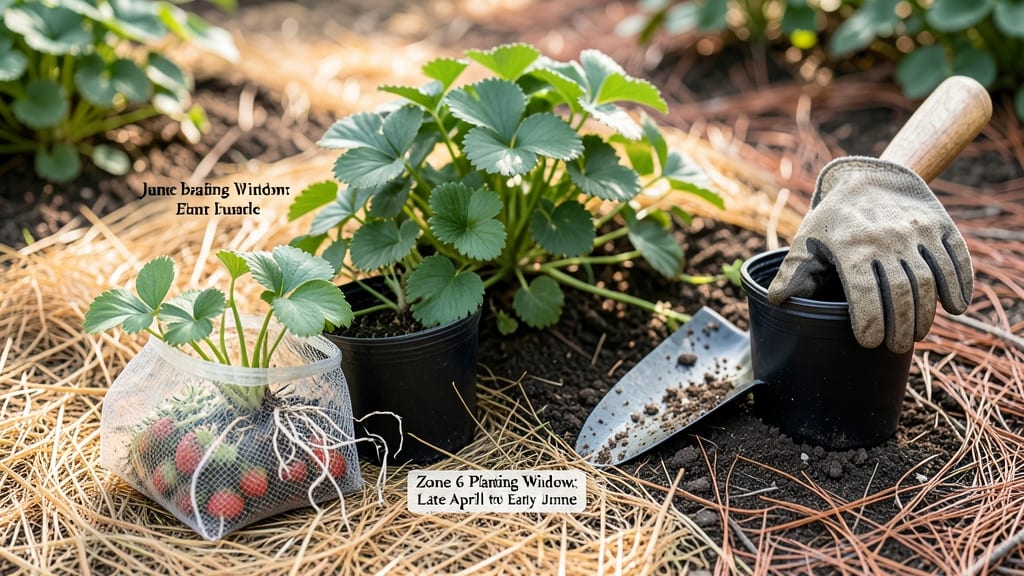
If you're asking "when can I plant strawberries in Zone 6", the answer isn't just about the calendar—it's about catching that perfect window when soil warmth and frost risk align for success. 🍓
Zone 6 gardeners know timing matters, but many still struggle with whether to plant in early spring or fall. The key lies in soil temperatures: strawberries need 40-45°F for bare-root plants or 50-60°F for potted varieties to thrive.
Too early, and frost will zap your efforts; too late, and your harvest may suffer.
I'll walk you through the exact planting windows—March-April for spring or September for fall—plus how to prepare your soil and beds for maximum success. Microclimates and regional frost dates can shift these windows, so we'll cover those nuances too.
By the end, you'll know exactly when to get your strawberries in the ground for a bountiful harvest—no more guessing games. Let's get those plants growing!

Zone 6 strawberry planting timeline: soil temperature rules for success
In Zone 6, strawberries can be planted in early spring or early fall, but timing depends on soil temperature, not just the calendar. The key is waiting until the soil warms to 40-45°F for bare-root plants or 50-60°F for potted strawberries.
Planting too early risks frost damage, while waiting too long delays fruit production.
Most gardeners in Zone 6 aim for late March to mid-April for spring planting, aligning with the last frost date (typically April 15). Fall planting works in early September, giving roots time to establish before winter.
Microclimates—like urban heat islands or north-facing slopes—can shift these windows by 1-2 weeks.
To test soil temperature, use a soil thermometer buried 4 inches deep in the morning.
If it’s below 40°F, hold off—cold soil slows root growth and invites rot. June-bearing varieties planted in spring yield fruit the first year, while everbearing varieties produce in both spring and fall, making them more flexible for staggered planting.
Here’s a quick reference for your Zone 6 strawberry planting timeline, including soil temperature triggers and frost risk:
| Planting Window | Soil Temperature | Frost Risk | Best Varieties |
|---|---|---|---|
| Early Spring (March-April) | 40-45°F (bare-root) / 50-60°F (potted) | Moderate (last frost ~April 15) | June-bearing (e.g., 'Jewel', 'Chandler') |
| Early Fall (September) | 50-60°F (roots establish before winter) | Low (first frost ~October 15) | Everbearing (e.g., 'Seascape', 'Albion') |
| Late Fall (October-November) | 45-50°F (bare-root only) | High (avoid unless using row covers) | June-bearing (hardy types) |
Regional variations in Zone 6 matter—northern Zone 6a (e.g., Chicago) may need to wait until mid-April, while southern Zone 6b (e.g., Atlanta) can start in late March.
Check your local frost dates and adjust by 2-3 weeks if your area runs cooler or warmer than average.
For bare-root strawberries, soak roots in lukewarm water for 1-2 hours before planting to reduce transplant shock. If planting potted strawberries, avoid disturbing the root ball—gentle placement is key.
Both types should have their crowns (where leaves meet roots) at soil level; burying them too deep causes rot, while exposing them risks drying.
After planting, mulch heavily with straw or pine needles to retain moisture and suppress weeds. This is especially critical in Zone 6’s variable spring weather, where frost can return even after warm spells. Mulch also insulates roots in fall, protecting them from freeze-thaw cycles.
Monitor your strawberries for new leaf growth within 2-3 weeks of planting. If growth stalls, check for root rot (dark, mushy roots) or drought stress (wilting leaves). Adjust watering to 1-2 cups per plant every 3-5 days, ensuring soil stays moist but not soggy.
Overwatering in cold soil is a common mistake that leads to failed transplants.
Once established, strawberries in Zone 6 reward patience with two harvest seasons: June-July for spring-planted varieties and August-September for fall-planted everbearers. The key to timing is balancing soil warmth, frost risk, and plant readinessbountiful harvest year after year. 🍓
Zone 6 strawberry planting timeline: soil temperature rules for success
When planning your Zone 6 strawberry planting schedule, remember that soil temperature is the real game-changer—not just the calendar date. Strawberries are cold-hardy but need specific warmth to thrive. For bare-root plants, aim for soil temps between 40-45°F, while potted varieties prefer 50-60°F.
This means waiting for late March to early April in most of Zone 6, after the last frost date (typically April 15).
Fall planting is another option, but timing is critical. Plant in early September to allow roots to establish before winter dormancy. This gives your plants a head start for next year's harvest.
Microclimates matter too—southern Zone 6 areas (like 6b) can plant slightly earlier, while northern edges (like 6a) should wait until soil warms consistently.
To check soil temperature, use a soil thermometer buried 2-4 inches deep. If it’s below 40°F, hold off—your plants will struggle to establish roots. Pro tip: Plant on a cloudy day to reduce transplant shock from wind and sun exposure.
🌱 Zone 6 Strawberry Planting Summary
| Planting Window | Soil Temp Requirement | Frost Risk | Best Varieties |
|---|---|---|---|
| Early Spring (March-April) | 40-45°F (bare-root) / 50-60°F (potted) | Low (after last frost) | June-bearing (e.g., 'Jewel', 'Chandler') |
| Early Fall (September) | 50-60°F (established roots needed) | Moderate (before first frost) | Everbearing (e.g., 'Seascape', 'Albion') |
✅ Pro Tip: Use row covers to extend spring planting by 2-3 weeks if frost is still a risk.
Regional variations in Zone 6 can shift these windows by 1-2 weeks. For example, Chicago (6b) might plant in late March, while Pittsburgh (6a) should wait until early April.
Check your local USDA frost maps and adjust accordingly. If you’re unsure, err on the side of waiting—strawberries recover poorly from frost damage.
Once you’ve nailed the timing, focus on planting depth. The crown (where leaves meet roots) should sit at soil level, never buried. Use well-draining soil mixed with compost to give your plants the best start.
Mulch heavily with straw to retain moisture and suppress weeds—this is especially critical in Zone 6’s variable spring weather.
With the right timing and soil prep, your Zone 6 strawberries will thrive, producing fruit from June-July (spring-planted) or August-September (fall-planted). The key is patience—wait for those soil temps, and your plants will reward you with a sweet harvest. 🍓