
Plants
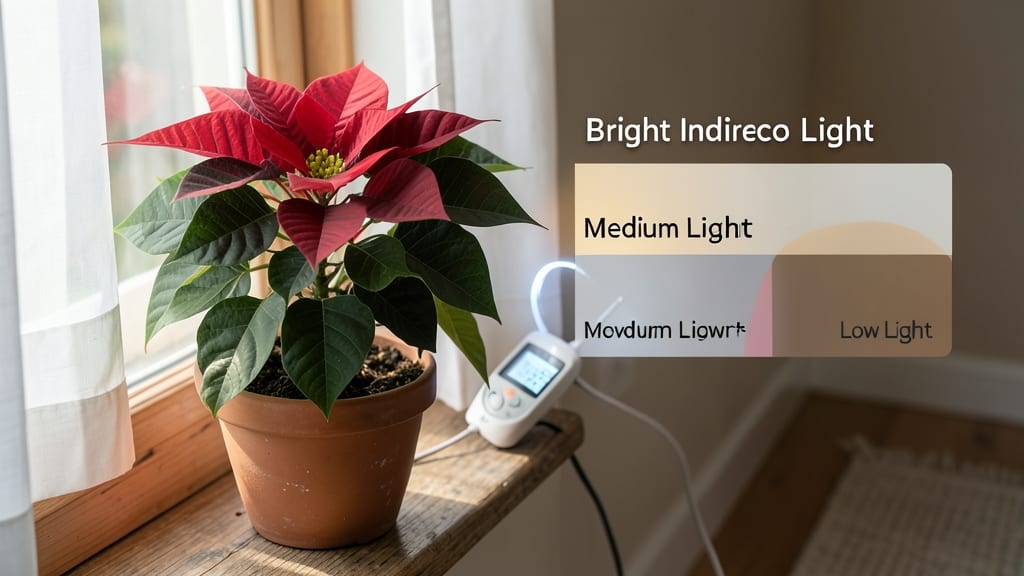
Ideal light requirements for poinsettias: bright indirect sunlight explained
Poinsettias thrive with 6-8 hours of bright indirect sunlight daily, making them perfect for indoor spaces. Unlike sun-loving plants, they can't handle direct sun, which causes leaf burn and crispy edges.
The key is finding that sweet spot where light is abundant but filtered—like a sheer curtain over a south-facing window.
Think of poinsettias as sun worshippers with a sunburn phobia. Too little light leads to leggy growth and weak stems, while too much causes stress.
The goal is to mimic their natural tropical understory habitat, where dappled sunlight filters through trees. This balance ensures vibrant bracts and compact, bushy growth.
Here’s the golden rule: East or west-facing windows are ideal because they provide gentle morning or afternoon light without harsh midday rays. North-facing windows offer softer light but may not be intense enough for consistent blooming. South-facing windows? Only if you’ve got a sheer curtain to diffuse the intensity.
In winter, when natural light fades, poinsettias may stretch toward windows—a sign of light deprivation. This is when supplemental grow lights become your best friend.
A simple LED grow bulb placed 6-12 inches above the plant can mimic sunlight and keep your poinsettia thriving even in the shortest days of the year.
Pro tip: Rotate your poinsettia quarter-turn weekly to ensure even growth. Plants naturally lean toward the light source, and without rotation, they’ll grow lopsided. This simple habit keeps your plant balanced and symmetrically stunning.
Now, let’s break down the light requirements in a clear comparison to help you visualize the perfect setup for your poinsettia:
| Light Condition | Daily Duration | Effect on Poinsettia | Best Solution |
|---|---|---|---|
| Bright Indirect Light | 6-8 hours | Vibrant bracts, compact growth | East/west window with sheer curtain |
| Direct Sunlight | 2+ hours | Leaf burn, crispy edges | Move to indirect light immediately |
| Low Light | Less than 4 hours | Leggy growth, weak stems | Add grow light or relocate |
| Artificial Grow Light | 12-14 hours | Healthy growth, consistent blooms | LED bulb 6-12 inches above plant |
Understanding these light conditions helps you troubleshoot issues before they start. For example, if your poinsettia’s leaves are turning yellow or dropping, it’s often a sign of overwatering or poor light. But if the edges are brown and crispy, you’ve got a direct sun problem that needs immediate attention.
Poinsettias are forgiving plants, but they won’t tolerate neglect. When you provide the right light, you’re not just keeping your plant alive—you’re setting the stage for show-stopping holiday color.
The effort pays off in vibrant red, pink, or white bracts that make your home feel festive all season long.
Remember, the goal isn’t perfection—it’s consistency. A little daily attention to light placement and rotation will keep your poinsettia looking its best from September through January. With the right light, your poinsettia will reward you with lush foliage and stunning blooms year after year.
Now that you’ve got the light requirements locked down, let’s talk about what happens when things go wrong—and how to fix those common light-related issues. 🌱
Signs your poinsettia isn’t getting enough light (and how to fix it)
Your poinsettia might be silently begging for more light—even if it looks fine at first glance. One of the first red flags is pale, yellowing leaves, especially on the lower stems.
This happens when your plant stretches toward light sources, a condition called etiolation. You’ll also notice weak, spindly stems that can’t support the plant’s weight, leading to floppy growth.
Another telltale sign is sparse or underdeveloped bracts. Poinsettias need consistent light to produce their signature vibrant colors. If your plant’s bracts are small, dull, or fail to change color by late fall, it’s likely light-deprived.
Even worse, buds may fail to form entirely, leaving you with a green, unremarkable plant instead of a festive centerpiece.
Don’t ignore leaf drop either—this is your poinsettia’s way of saying, “I’m struggling!” When light is insufficient, older leaves may yellow and fall off to conserve energy. Combine this with small, widely spaced leaves, and you’ve got a classic case of light starvation.
The good news? These issues are reversible with simple adjustments.
Now, let’s talk about the opposite problem: too much direct sunlight. If your poinsettia’s leaves develop brown, crispy edges or white, papery patches, it’s suffering from sunburn.
This damage often starts on leaves facing the window and spreads quickly. Unlike light deficiency, which is subtle, sunburn is obvious—and painful for your plant.
⚠️ Light Crisis? Act Fast!
Low Light Fix: Move your poinsettia to a brighter spot (east/west window) or supplement with a grow light 12-14 hours daily. Rotate the pot weekly for even growth.
Direct Sun Fix: Immediately relocate to indirect light or add a sheer curtain. Trim damaged leaves with clean scissors to prevent rot.
Here’s how to diagnose the issue quickly: Hold your poinsettia up to a window. If you can see shadows through the leaves, it’s getting too much direct light.
If the stems are long and bare between leaves, it’s stretching for light. Both scenarios need your attention—before your plant throws in the towel.
Remember, poinsettias are tropical plants that thrive in dappled light, like under a forest canopy. Mimic this environment by placing your plant near a window with filtered light or using a grow light.
The goal is consistency: 6-8 hours of bright, indirect light daily will keep your poinsettia healthy and blooming beautifully.
With these signs in mind, you’ll catch light issues early and give your poinsettia the care it deserves. Next, let’s explore the best window placements and artificial light solutions to keep your plant thriving all season long. 🌿