
Companion Plants
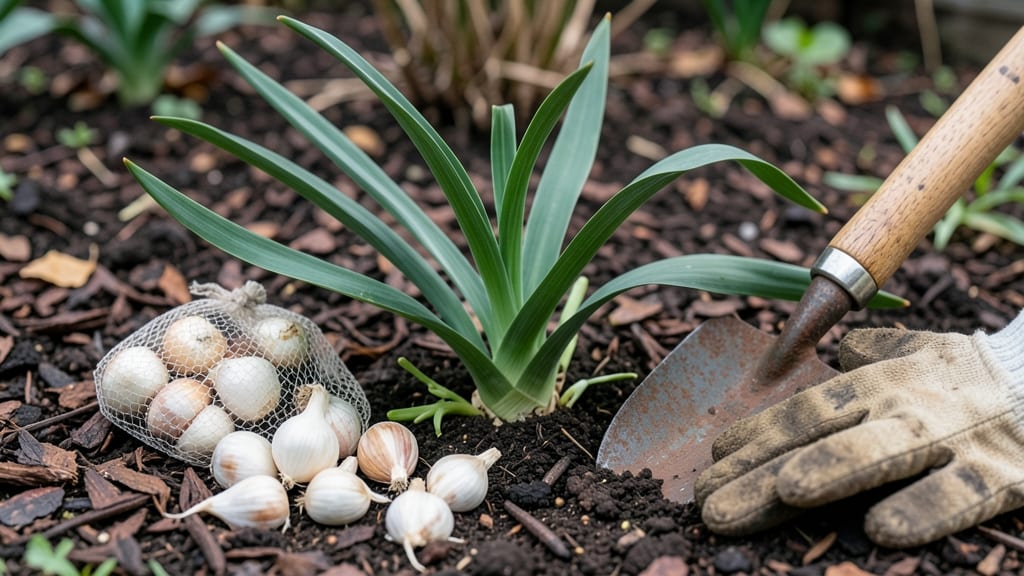
If you're wondering "when should I plant garlic in Michigan", the answer isn't just about the calendar—it's about beating the frost. Michigan's 5b-6b climate demands precise timing, and planting too early risks rot while waiting too long means weak bulbs.
The secret lies in a 6-week window before the ground freezes, typically between late October and early November.
Here's the game-changer: your garlic needs time to establish roots before winter sets in. Planting 4-6 weeks before the first hard frost (usually around November 15 in Michigan) gives those cloves the perfect head start.
This cold-hardy crop actually thrives in winter chilling, which is why Michigan gardeners swear by fall planting for the biggest, most flavorful bulbs.
But timing isn't everything—your soil plays a crucial role too. Well-draining, nutrient-rich soil is non-negotiable for Michigan's 🧄 varieties. We'll cover exactly how to prep your beds so your garlic not only survives but thrives through our unpredictable winters.
Let's get those cloves in the ground at the perfect moment for a harvest next July.
Ready to grow garlic that's bigger and more robust than you've ever seen? I'll walk you through the exact steps to time your planting, choose the right varieties for Michigan's climate, and avoid common mistakes that sabotage first-time growers. Your future flavorful harvest starts with this one decision.
Best planting window for Michigan garlic: frost-free timing explained
Michigan’s 5b-6b hardiness zones mean your garlic planting window is short but sweet—typically between late October and early November. This 6-week window ensures your cloves establish roots before the ground freezes, preventing winterkill while allowing the bulbs to thrive through Michigan’s cold winters.
Plant too early, and you risk rot from excess moisture; too late, and your harvest will be smaller and less flavorful.
The key is to plant 4-6 weeks before your first hard frost, which in Michigan usually lands around November 15. Use your local USDA frost date calculator to pinpoint the exact timing for your specific region—Northern Michigan may need to plant earlier than Southern Michigan.
This timing aligns with garlic’s natural growth cycle, giving it enough time to develop a strong root system before dormancy sets in.
Garlic is unique because it needs cold to form bulbs. Michigan’s winters provide the perfect chilling period, but the roots must be established first. If you plant too close to freezing, the cloves won’t have time to root deeply enough, leading to poor bulb development.
Aim for soil temperatures between 40°F and 50°F—ideal for root initiation without risking rot.
Here’s a quick rule of thumb: if your last frost date is November 15, start planting around October 15. This gives you a buffer for cooler-than-expected falls.
For example, in Detroit (Zone 6a), you might plant as late as early November, while in Traverse City (Zone 5b), you’ll want to plant by mid-October to avoid early freezes.
Your soil type plays a critical role in timing. Clay-heavy soils freeze faster, so plant earlier to allow roots to establish before the ground locks up. Sandy soils, on the other hand, stay workable longer, giving you a slightly later window.
Always test your soil’s drainage—garlic hates soggy conditions, which can lead to rot even in winter.
Pro tip: mark your planting date on a garden calendar and track soil temperatures with a soil thermometer. This ensures you’re planting at the optimal time, even if Michigan’s weather throws a curveball.
Remember, garlic planted in fall will yield larger, more robust bulbs than spring-planted garlic, which often struggles to mature before summer’s end.
🌱 Michigan Garlic Planting Timeline
| Stage | Action | Ideal Timeframe |
|---|---|---|
| Soil Prep | Test pH (6.0–7.0), add compost, loosen soil | Late August – September |
| Planting | Break bulbs into cloves, plant 2" deep, 4–6" apart | October 15 – November 1 (Zone 5b–6b) |
| Winter Chilling | Garlic remains dormant; roots harden | November – February |
| Spring Growth | Shoots emerge; fertilize lightly in June | March – May |
| Harvest | Lower leaves brown; bulbs firm and papery | July – August (next year) |
If you’re new to garlic growing, don’t stress about perfection—Michigan’s climate is forgiving as long as you plant within this window. Even if you miss the ideal date, you can still plant garlic in early spring (March–April), though the bulbs will be smaller and less flavorful.
Spring-planted garlic lacks the winter chilling period, which is crucial for bulb development.
For the best results, pair your planting with mulching (straw or leaves) to insulate the soil and protect cloves from extreme temperature swings. This extra layer helps maintain consistent soil temps, reducing the risk of frost heave or rot.
Mulch also suppresses weeds, giving your garlic an unobstructed path to sunlight and nutrients.
Finally, remember that hardneck garlic (the variety best suited for Michigan) produces scape shoots in spring, which you can harvest for cooking or composting. These scapes appear in May or June and signal that your garlic is thriving.
If you see them, you’re on the right track for a bountiful harvest!
Best planting window for Michigan garlic: frost-free timing explained
Michigan’s Zone 5b-6b climate means your garlic planting window hinges on frost timing, not just calendar dates. The ideal window is 4-6 weeks before the first hard frost, typically late October to early November.
This gives cloves time to root before winter dormancy kicks in—critical for surviving Michigan’s freezing temperatures.
For most of Michigan, that means planting between October 15 and November 1. Check your local last frost date (usually around November 15), then count backward. If you plant too early, cloves may rot; too late, and bulbs won’t mature fully by next summer’s harvest.
Pro tip: Use hardneck varieties like ‘Music’ or ‘German White’—they’re bred for Michigan’s cold winters and thrive with winter chilling. These varieties need the cold to form bulbs, making them perfect for our climate.
| Stage | Action | Michigan Timing |
|---|---|---|
| Soil Prep | Test pH (6.0-7.0), add compost | Late August - Early September |
| Plant Cloves | Break bulbs, plant 2" deep, 6" apart | October 15 - November 1 |
| Winter Dormancy | Mulch 2-4" thick, protect from thaw-freeze cycles | November - March |
| Spring Growth | Remove mulch, fertilize lightly in May | April - May |
| Harvest | Lower leaves brown, bulbs firm | Late July - Early August |
Soil temperature matters too—cloves need 40°F+ soil to sprout. In colder Michigan zones, wait until soil warms slightly after an early frost. A simple soil thermometer ($10 at garden centers) takes the guesswork out of timing.
Mulching is non-negotiable: spread 2-4 inches of straw or leaves after planting to insulate bulbs from thaw-freeze cycles. This protects roots during Michigan’s wild temperature swings in late fall and early spring.
Remember, garlic planted in fall yields larger bulbs than spring-planted garlic. That’s because the winter chilling period triggers bulb formation. For Michigan’s climate, fall planting is always the winner—just get those cloves in the ground at the right time!