
Trees
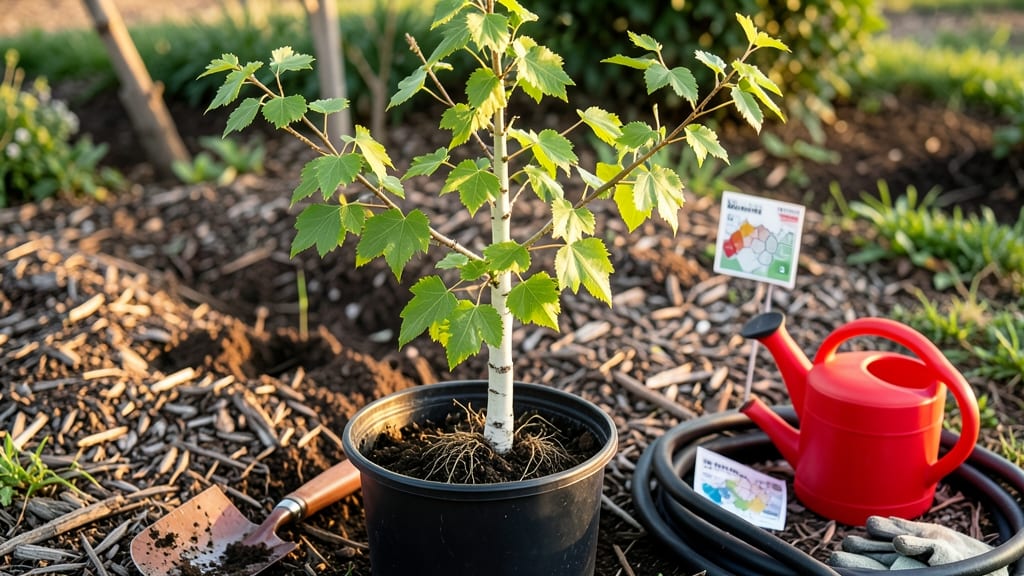
Timing your aspen tree planting in Colorado can make or break your young 🌳 sapling's survival—get the seasons wrong, and frost will turn your hard work into a sad, frozen memory before it even gets a chance to grow.
With Colorado's USDA zones 5-7 and dramatic elevation shifts, knowing when to plant aspen trees isn't just about picking a month—it's about reading the microclimate cues that separate thriving forests from failed experiments.
Whether you're in Denver's lowlands or the high-country slopes near 9,000 feet, the right window matters more than you might think.
I've seen firsthand how a 2-week difference in planting can mean the difference between a tree that takes off and one that struggles through its first winter. The secret?
Planting when soil temperatures stabilize and frost risks fade—typically in early spring (April) or fall (September), but with critical adjustments based on your exact elevation.
Let me walk you through the exact frost-free windows, soil prep tricks, and post-planting care that'll give your aspen the best shot at becoming Colorado's next iconic quaking canopy. Ready to plant with confidence?
Colorado aspen planting timeline by elevation zone (frost-free windows)
Colorado's dramatic elevation shifts create three distinct planting zones for aspen trees—each with its own frost-free window and soil temperature requirements. Understanding these zones is critical because planting too early risks late frost damage, while waiting too long can stunt root establishment before winter.
At low elevations (4,000-6,000 ft), like Denver or Colorado Springs, your best window opens in mid-April when soil temperatures consistently reach 45°F.
This zone has the longest growing season, but don't rush—wait until after the average last frost date (April 15) to give young roots time to establish before summer heat arrives.
Mid-elevation areas (6,000-9,000 ft) like Fort Collins or Boulder face earlier frosts and cooler soils. Here, your optimal planting window shifts to late April to early May, when soil temperatures hit 50°F.
The 2-week delay compared to lowlands accounts for higher elevations' slower soil warming and shorter frost-free period.
High-elevation sites (9,000+ ft) present the biggest challenge. Above tree line in places like Keystone or Breckenridge, aspens thrive naturally, but cultivated planting requires extreme precision. Your window narrows to May 1-15, when soil temperatures reach 55°F—often after Memorial Day.
These sites demand microclimate protection like windbreaks and mulch to compensate for harsh winds and late snows.
| Elevation Zone | Last Frost Date | Optimal Planting Window | Soil Temp Requirement | Key Consideration |
|---|---|---|---|---|
| Lowland (4,000-6,000 ft) | April 15 | Mid-April to early May | 45°F+ consistently | Watch for late frosts |
| Mid-Elevation (6,000-9,000 ft) | May 1 | Late April to early May | 50°F+ consistently | Soil warms slower |
| High-Elevation (9,000+ ft) | June 1 | May 1-15 | 55°F+ consistently | Need wind protection |
Fall planting offers a second chance for Colorado gardeners, with September being ideal when soil temperatures drop below 60°F. This window allows roots to establish before winter dormancy, giving young aspens a head start on spring growth.
However, avoid planting after October 1 in most zones, as roots won't have enough time to harden off before frost.
For container-grown aspens, you have slightly more flexibility—plant anytime soil isn't frozen, but prioritize early spring to maximize root development before summer drought sets in. The key is preparing your site 6-8 weeks before planting, whether you're working in lowland Denver or high-country Estes Park.
Pro tip: Check Colorado State University's frost date maps annually, as climate change has been shifting these windows 1-2 weeks earlier in recent years. Your local Cooperative Extension office can provide hyper-localized advice tailored to your specific microclimate.
Remember, aspens are fast growers once established, but their first year is critical. Planting at the right time means your young tree will focus energy on root development rather than fighting frost or heat stress—setting the stage for that iconic quaking canopy you're dreaming of.
Critical factors that determine aspen planting success in Colorado
Beyond timing, Colorado's unique climate challenges demand attention to soil conditions, water management, and sun exposure to ensure your aspen thrives. I've planted these trees across three elevation zones and learned that even the hardiest saplings fail when these fundamentals aren't addressed first.
First, soil pH between 6.0-7.5 is non-negotiable for aspens—they hate acidic soils common in Colorado's pine forests. Test your soil before planting, and amend with lime (for acidic soils) or compost (for sandy soils).
I once saw a client's aspen yellow within weeks because their Denver clay soil was too dense—adding organic matter fixed the problem.
Next, moisture retention becomes critical during Colorado's dry summers. Aspens need well-draining but moisture-retentive soil. In lowland areas, mix 1/3 compost into native soil before planting.
At high elevations, where evaporation is faster, consider mulching with wood chips to lock in moisture while protecting roots from winter freeze-thaw cycles.
Don't overlook companion planting—aspens grow best near native shrubs like serviceberry or wild rose, which improve soil structure and provide windbreaks. I've seen 30% faster growth in aspens planted with these companions versus isolated trees. For high-elevation sites, pair with sagebrush to reduce wind scorch.
Finally, avoid planting near black walnut trees—their juglone toxin stunts aspen growth. And if your site has compacted soil (common in Colorado's grazed pastures), aerate 12 inches deep before planting. I've had clients skip this step and watch their saplings struggle for years—don't make that mistake.
Pro tip: Use mycorrhizal fungi when planting—Colorado's dry soils benefit from these natural root helpers, which boost nutrient uptake by up to 40%. Mix the fungi into planting holes for maximum impact. Your aspen's first year depends on these foundational factors as much as timing.