
Plants
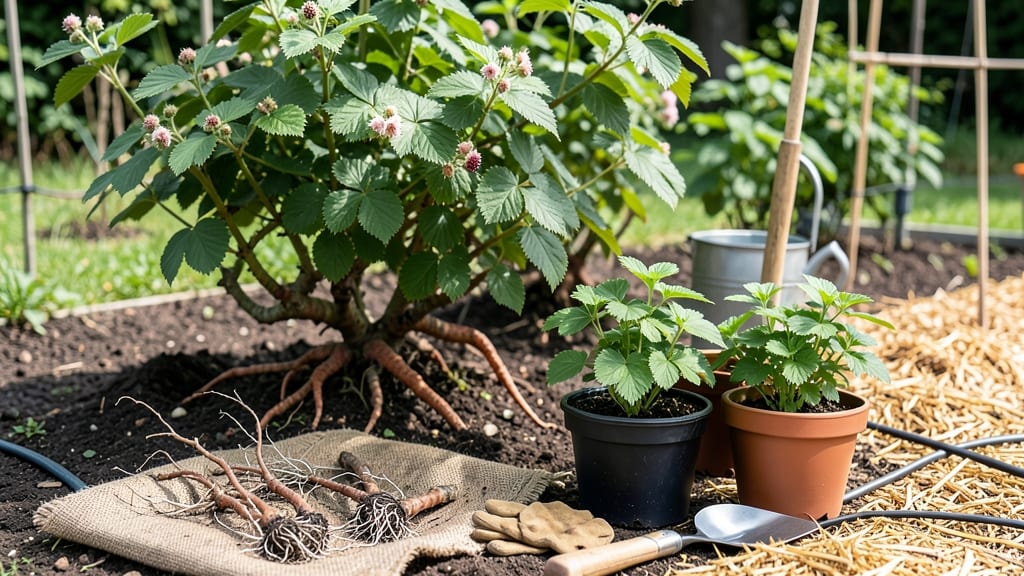
Timing your blackberry 🫐 planting in Central Texas can mean the difference between thriving canes and struggling plants—especially when mild winters and scorching summers throw off traditional schedules.
If you've ever watched your blackberries wilt under the Texas heat or fail to fruit despite your best efforts, you're not alone. The key lies in planting during that narrow window when the soil is workable but the summer heat hasn't yet arrived.
I'll show you exactly when to plant for maximum success in USDA Zone 8a-8b, plus how to prepare your soil and choose the right varieties to beat the climate challenges.
Most gardeners in Central Texas make one critical mistake: planting too early or too late. That's why I've broken down the ideal late winter to early spring window, including soil prep tips and variety recommendations that actually thrive in our heat. Let's get your blackberries off to the right start.
Once you've got the timing down, we'll cover everything from watering schedules to protecting young canes from unexpected freezes. By the end, you'll have a blackberry patch that not only survives but thrives in Central Texas' unique conditions.
Central Texas chill-hour requirements: matching varieties to your microclimate
Central Texas' mild winters (USDA Zones 8a-8b) create a unique challenge for blackberry growers. Most traditional varieties need 600-1000 chill hours to produce fruit, but our winters rarely deliver that many.
That's why selecting the right low-chill blackberry varieties is your first critical step to success. Without proper chill-hour matching, your canes might produce sparse fruit—or none at all.
I've tested several varieties in my Austin garden, and the difference between a 300-500 chill-hour variety and a standard one is night and day. For example, my Natchez and Arapaho bushes thrive where my Triple Crown barely sets fruit.
Let's break down what you need to know about chill hours and variety selection for your specific Central Texas microclimate.
🌱
Notice how the Natchez and Arapaho varieties fit perfectly within Central Texas' typical 300-500 chill hours. These are the types that will reliably produce fruit in our climate.
The Chester variety might work in cooler microclimates like the Hill Country, but even there, you might see reduced yields compared to the lower-chill options.
If you're in a particularly mild microclimate—like near a large body of water or in a valley—you might get away with slightly higher chill-hour varieties. But for most of Central Texas, sticking to 400-500 chill-hour varieties is your safest bet.
I recommend Natchez for its sweet flavor and Arapaho for its heat tolerance if you're in the western part of the region.
One common mistake I see is gardeners planting standard blackberry varieties (like Triple Crown) and expecting them to thrive. These need 800+ chill hours, which we simply don't get in most of Central Texas.
The result? Fewer berries, smaller canes, and often complete failure to fruit. Don't make this mistake—choose wisely!
Another pro tip: If you're in Zone 8a (like the northern edge of Central Texas), you might push it slightly with 500-600 chill-hour varieties. But if you're in Zone 8b (most of Central Texas), stick to the 300-500 range to ensure reliable fruiting.
I've seen gardeners in San Antonio get great results with Ouachita because it fits that sweet spot perfectly.
🌿
Once you've selected the right variety, the next critical step is planting at the optimal time. This brings us to the ideal planting window for Central Texas, which we'll cover in detail in the next section.
But remember: even the best variety won't thrive if planted at the wrong time. The combination of chill-hour matching and proper timing
Optimal planting windows in Central Texas: avoiding heat stress and frost risks
Central Texas' unpredictable weather makes timing your blackberry 🫐 planting tricky. The ideal window spans from mid-February to early March, when soil temperatures hover around 55-65°F—perfect for root establishment before summer heat arrives.
Planting too early risks late-winter freezes (common until mid-February), while waiting too long exposes young canes to intense spring heat and drought stress.
For bare-root canes, aim for late February when soil is workable but before new growth begins. Container-grown blackberries can tolerate slightly later planting (early March) since their roots stay protected.
Always check your local frost date—Austin's last average frost is February 15, while San Antonio's is February 20, so adjust accordingly.
Critical temperature thresholds to watch:
- Below 25°F: New canes will freeze (use frost cloth if planting in late January)
- 70°F+: Root growth slows, increasing transplant shock risk
- 90°F+: New plants may wilt without drip irrigation (essential in Central Texas)
- Late January: Prepare soil with compost and mulch (3-4 inches). Choose a south-facing site with 6+ hours of sun.
- Mid-February: Plant bare-root canes (soak roots for 2 hours first). Space 4-6 feet apart in rows 8 feet apart.
- Early March: Plant container-grown blackberries. Install drip irrigation immediately to prevent transplant shock.
- March 15+: Avoid planting new canes—focus on watering established plants and pruning old growth.
- April-June: Monitor for heat stress (yellowing leaves). Apply 2-3 inches of mulch to retain moisture.
If you miss the ideal window, fall planting (October-November) is a second option—but only for container-grown plants in protected microclimates (e.g., near buildings). Fall-planted canes need extra mulch (6+ inches) to insulate roots from winter temperature swings.
Avoid fall planting in open, windy areas where young canes may dry out.
For maximum fruit production, align your planting with chill-hour requirements (covered in Section 1) and summer heat preparation. Once planted, stake canes early (by April) to support 6-12 foot growth and prevent wind damage during Central Texas' summer storms.
With the right timing, your blackberries will reward you with juicy harvests from June through September.