
Plants
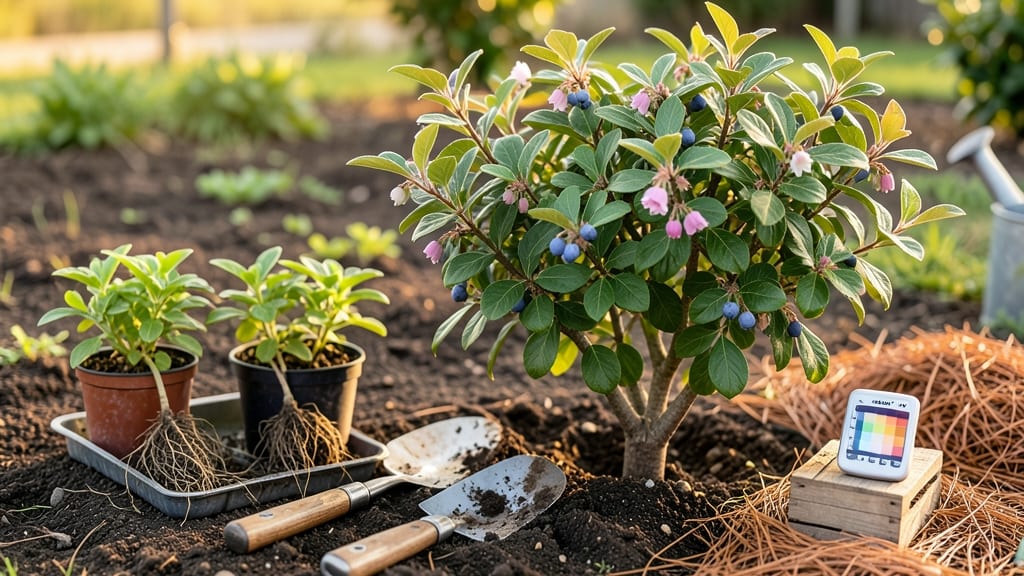
If you're dreaming of luscious 🫐 blueberries ripening in your Utah garden, timing your planting is the secret to success. Utah's unique climate—with its 5-7 USDA zones and unpredictable frost patterns—demands precision to ensure your bushes thrive.
Most gardeners assume spring is the only window, but Utah's microclimates (from the Wasatch Front to the high desert) create opportunities for both spring and fall planting. The key lies in matching your blueberry variety to chill-hour requirements, which range from 300 to 1,000 hours depending on the type.
In this guide, I'll break down exactly when to plant—whether you're working with bare-root saplings or potted bushes—and how to prepare your soil to beat Utah's alkaline challenges. You'll discover the best months for your specific location, plus pro tips to extend your growing season with mulch and row covers.
Ready to grow blueberries that burst with flavor? Let's get started with a planting schedule tailored just for Utah gardeners.
Utah’s blueberry planting timeline: chill-hours vs. last frost dates
Utah’s diverse microclimates—from the Wasatch Front’s urban heat islands to Southern Utah’s high desert—create unique challenges for blueberry growers. The key to success? Matching your blueberry variety to your local chill-hour zone and planting at the right time relative to last frost dates.
Most Utah regions fall in USDA Zones 5-7, but elevation and urban sprawl create microclimates with 300–1,000 chill hours.
Southern Highbush varieties (300–600 chill hours) thrive in Salt Lake Valley and Cache Valley, while Half-Highbush (600–900 chill hours) suits Northern Utah and higher elevations.
For example, ‘Duke’ or ‘Premier’ are ideal for Zone 6–7 areas like Provo or Ogden, while ‘Bluecrop’ or ‘Jersey’ work better in Zone 5 areas like Logan or Park City. Ignoring chill-hour needs often leads to poor fruit set or no harvest at all.
Last frost dates vary dramatically across Utah. The Wasatch Front typically sees its last frost around April 15, while Southern Utah’s St. George region can plant as late as March 15. High-elevation areas like Park City or Heber Valley may experience late frosts into May. Always check your local Almanac frost data or use USDA Plant Hardiness Zone Map for precise timing.
Here’s how to align your planting with Utah’s chill-hour zones and frost risks for maximum success:
For Northern Utah’s colder zones, consider fall planting in September—this gives roots time to establish before winter while avoiding late spring frosts. In Southern Utah’s warmer zones, early spring planting (March) is ideal to beat the summer heat.
Always verify chill-hour requirements on your nursery’s tag, as mislabeled plants are common in Utah’s big-box stores.
Pro tip: Use row covers or mulch heavily in early spring to protect young plants from late frosts. In high-elevation areas, extend the season with cold frames or greenhouse setups for earlier harvests.
Utah’s alkaline soils also require soil amendments—test your pH and aim for 4.5–5.5 before planting.
Timing isn’t just about frost—it’s about balancing chill hours with growing season length. For example, ‘Top Hat’ dwarf varieties (300–400 chill hours) are perfect for containers in urban yards but may struggle in Park City’s Zone 5.
Always cross-reference your local climate data with your plant’s needs to avoid costly mistakes.
One common mistake? Planting too early in clay-heavy Utah soils, which stay cold and waterlogged. Wait
Step-by-step planting schedule for Utah’s best blueberry yields
Utah’s spring planting window (late April to early June) is ideal for blueberries, but fall planting in September-October works too—just 6-8 weeks before your first frost. For Wasatch Front gardeners, aim for after April 15 when frost risk drops below 10%.
In Southern Utah’s high desert, you may plant 2-3 weeks earlier due to milder winters.
Bare-root blueberries are cheaper and establish faster, but potted plants give you a head start. If buying potted, choose 1-2 year old bushes with healthy roots. For bare-root, soak roots overnight in water before planting to reduce transplant shock.
Utah’s alkaline soil (pH 7.5-8.5) is the biggest hurdle—amend with sulfur or peat moss to reach the ideal pH 4.5-5.5.
- Step 1: Test soil pH (aim for 4.5-5.5). If too alkaline, add sulfur 2-3 months before planting.
- Step 2: Dig holes twice as wide as the root ball; mix in compost and peat moss.
- Step 3: Plant bare-root bushes with roots spread evenly; potted plants at same depth as container.
- Step 4: Backfill with amended soil, water deeply, then mulch with pine needles or wood chips.
- Step 5: Water every 2-3 days for first 2 weeks, then adjust for Utah’s dry spells (daily in summer).
- Step 6: Fertilize lightly in spring (1 tbsp 10-10-10 acid fertilizer) and monthly during fruit production.
For fall planting, focus on Southern Highbush varieties (e.g., ‘Duke’ or ‘Premier’) which need 300-400 chill hours. Plant in September when soil temps drop below 70°F to reduce stress.
Mulch heavily (4-6 inches) to protect roots from freezing-thaw cycles. Utah’s high desert winds can dry out young plants—consider windbreaks or container growing in exposed areas.
After planting, prune lightly to remove dead wood and shape the bush. Avoid heavy pruning in the first year—focus on establishing roots. In year 2, prune in late winter to remove 1/3 of old wood to encourage new growth.
Utah’s low humidity reduces fungal risks, but watch for spider mites in hot summers—spray with water weekly to deter them.
Pro tip: Use drip irrigation to deliver water directly to roots, saving up to 30% water compared to overhead sprinklers. Group blueberries with rhodo-dendrons or azaleas to create a shared acidic microclimate.
With proper timing and care, your Utah blueberries will produce harvests in 2-3 years—far sooner than the 5-year wait many gardeners expect!