
Plants
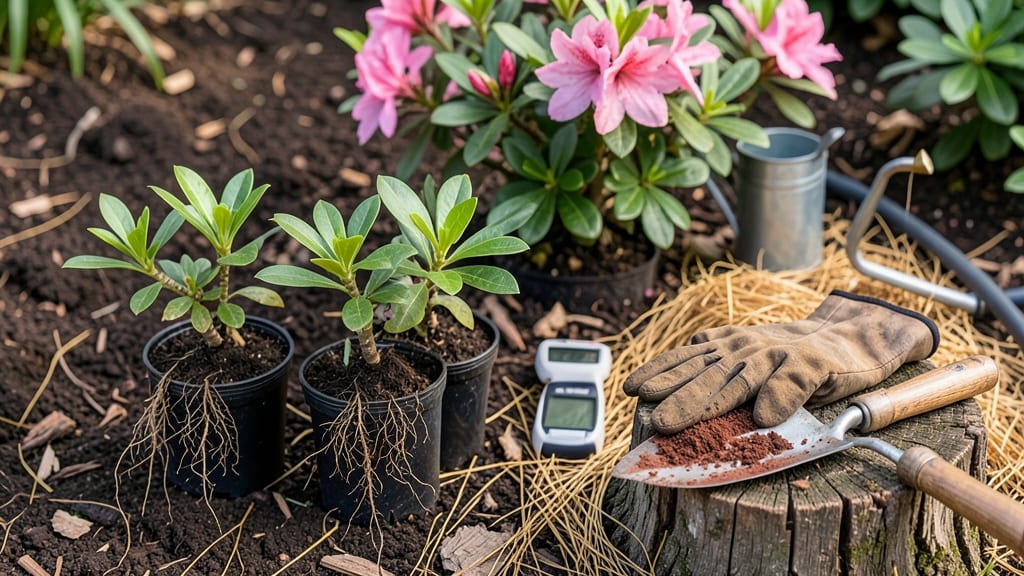
Timing your azalea planting in Arkansas isn't just about seasons—it's about matching your variety to the state's unique chill-hour zones and avoiding late frosts that can devastate young plants.
If you're dreaming of vibrant 🌸 azaleas blooming in your Arkansas garden, you're not alone. But here's the catch: planting these beauties at the wrong time can mean wasted effort.
The key lies in understanding your local chill-hour zone and the delicate balance between Arkansas' unpredictable spring frosts and the ideal planting window.
I've spent years perfecting azalea care in USDA zones 7a-8a, and what I'm about to share will help you avoid common mistakes.
Whether you're planting in fall or early spring, we'll cover the exact timing, soil prep, and even how container planting can give you an edge in Arkansas' variable climate.
Let's dive into the secrets that will have your azaleas thriving from the get-go—no more guesswork, just beautiful blooms. You'll discover how to read your local frost dates, choose the perfect varieties for your region, and give your plants the best possible start for that stunning spring display.
Arkansas azalea planting timeline by chill-hour zone
Arkansas spans USDA zones 7a through 8b, creating distinct chill-hour requirements for azaleas. Southern Arkansas (zones 8a-8b) thrives with Southern Indica varieties that need 300-500 chill hours, while Northern Arkansas (zones 7a-7b) favors deciduous azaleas requiring 600-800 chill hours.
Getting this right means choosing the perfect planting window to avoid winter dieback or summer stress.
Most gardeners in Arkansas plant azaleas during two ideal windows: early fall (October-November) and early spring (March-April). Fall planting gives roots time to establish before winter, while spring planting lets you avoid late frosts.
However, the chill-hour zone where you live dictates which varieties will bloom best—and when you should plant them.
Here’s how to match your azalea variety to Arkansas’ three key regions and their optimal planting months:
For Southern Arkansas gardeners, the October-November window is critical. Planting Southern Indica azaleas too late risks winter desiccation from dry winds, while spring planting should finish by April 15 to avoid late frosts that can blacken new growth.
In Central Arkansas, evergreen varieties like 'Girard’s Pink' handle mild winters better, so you’ve got a slightly longer fall window.
In Northern Arkansas, where winters are colder, deciduous azaleas thrive with an earlier fall start (as early as September 20). These varieties drop leaves in winter, conserving energy, and bloom earlier in spring than evergreens.
If you’re in zone 7a, avoid planting evergreen azaleas—they’ll struggle with below-10°F temperatures.
Container-grown azaleas give you flexibility. You can plant them up to 6 weeks later than bare-root varieties because their roots are already established. Just water deeply after planting and mulch heavily (3-4 inches) to protect roots from Arkansas’ temperature swings.
For in-ground planting, amend the soil with peat moss or pine bark to improve drainage—waterlogged roots are azaleas’ #1 enemy.
One mistake many Arkansas gardeners make is planting azaleas too deep. The root flare (where roots meet the trunk) should sit just above soil level. Burying it too deep suffocates the plant and invites root rot.
After planting, stake tall varieties if needed—Arkansas’ summer humidity can make them top-heavy before roots catch up.
Finally, prune spent blooms in early summer to encourage next year’s flowers. Avoid heavy pruning in fall or winter, as azaleas bloom on old wood.
In Arkansas’s hot, humid summers, watch for lance nematodes—a soil-borne pest that thrives in moist conditions. Rotate plants annually if you suspect an infestation.
By matching your azalea variety to your chill-hour zone and planting within these region-specific windows, you’ll set your shrubs up for vibrant blooms and decades of low-maintenance beauty—just in time for Arkansas’ spring rain showers and fall color peaks. 🌿
Critical deadlines: avoiding Arkansas' late spring frosts
Arkansas' late spring frosts can be brutal for young azaleas, often striking between March 15 and April 15 in higher elevations like the Ozark Mountains. These frosts can kill tender new growth, so timing your planting window is crucial.
The key is to plant 6-8 weeks before your average last frost date, which varies by region—check your NOAA frost-free zone map for precise dates.
For most of Arkansas (USDA zones 7a-8a), this means early March planting for spring varieties or October-November for fall planting. Container-grown azaleas give you a slight advantage—their established root systems handle transplant shock better, so you can push planting dates 1-2 weeks later than bare-root varieties.
⚠️ Frost Alert!
Never plant azaleas after April 1 in Northern Arkansas (zones 7a-7b) or April 15 in Southern Arkansas (zones 8a-8b). Late frosts can kill young plants within 24 hours—monitor forecasts via Arkansas Climate Office for real-time updates.
Pro Tip: Use frost cloth for the first 2 weeks after spring planting to protect new growth.
High-elevation areas like Mount Ida or Eureka Springs (zone 6b) require even earlier planting—aim for February 15-March 1 to avoid frost damage. These regions often see hard frosts until mid-April, so choose hardier varieties like 'Hino Crimson' or 'George L. Taber' that tolerate 30°F temperatures.
If you're unsure about your local frost date, use the 32°F rule: azaleas can survive brief dips to 30°F, but prolonged exposure below 32°F risks damage. Container-grown plants in protected microclimates (like near south-facing walls) can handle slightly later planting, but always err on the side of caution.
For container planting, late fall (November) is ideal—azaleas establish roots before winter dormancy, then bloom earlier the following spring. In-ground planting should always be done when soil temperatures stay above 50°F for 5 consecutive days, typically mid-March in most of Arkansas.
Remember: Azaleas hate transplant shock. Water deeply immediately after planting and mulch with 2-3 inches of pine bark to retain moisture and regulate soil temperature. This extra care helps young plants survive Arkansas' unpredictable spring weather.