
Plants
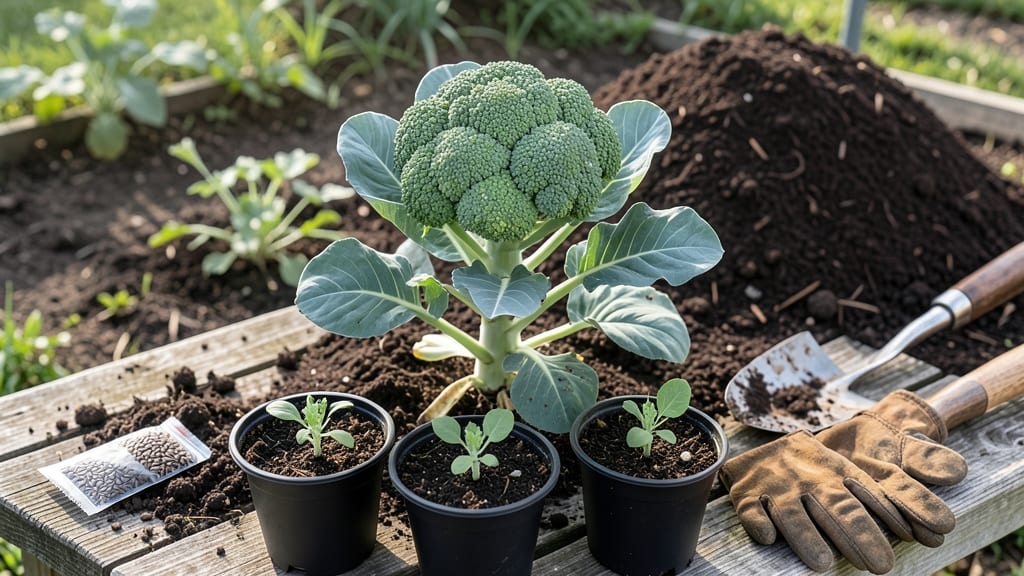
Timing your broccoli 🥦 planting in Utah isn't just about following a calendar—it's about beating the frost, avoiding stunted growth, and maximizing your harvest before the first chill sets in.
With Utah's varied elevation zones, planting too early or too late can mean the difference between a thriving garden and wasted effort.
Most Utah gardeners in zones 5-7 know spring is the prime window, but the exact dates depend on whether you're in the low desert, mid-elevation valleys, or high mountain areas.
I'll show you how to pinpoint the perfect 4-6 week window before your last frost—so you're planting when soil temps hit 40°F and your broccoli has the best shot at reaching maturity before fall frosts arrive.
Don't make the mistake of assuming "spring" means March through May—those dates shift dramatically from Salt Lake City to Park City.
We'll break down the ideal planting schedule for both spring and fall crops, plus how to extend your growing season with cold-hardy varieties that thrive in Utah's shorter frost-free periods.
Whether you're a first-time gardener or a seasoned pro, these elevation-specific tips will help you avoid common pitfalls like bolting or yellowing heads. Let's get your broccoli planted at exactly the right time for your Utah location.
Utah broccoli planting dates by elevation zone (low to high Desert)
Utah’s elevation zones dramatically impact broccoli planting success—what works in St. George’s low desert fails in Park City’s high mountains. Each zone has distinct last frost dates, soil warming speeds, and frost-free windows that determine your ideal planting window.
Let’s break it down by zone so you can align your schedule with Utah’s unique climate.
For accurate timing, reference Utah State University Extension data (2023-2024 averages). The Low Desert (e.g., St. George, Cedar City) has the longest growing season, while High Mountain areas (e.g., Logan, Ogden) face earlier frosts.
Even within zones, microclimates matter—valley floors warm faster than mountain slopes. Always check local weather forecasts 1-2 weeks before planting.
Here’s the critical rule for Utah broccoli planting: Plant 4-6 weeks before your average last frost date for spring crops, and 80-100 days before your first frost for fall harvests.
This ensures heads mature before cold snaps. Below, we’ll map exact months by elevation, plus soil temperature requirements to avoid stunted growth.
🌱
| Elevation Zone | Avg. Last Frost | Spring Planting Window | Soil Temp. (°F) | Fall Planting Window |
|---|---|---|---|---|
| Low Desert (2,000–4,000 ft) | March 15–April 1 | February 15–March 15 | 45–50°F | August 1–September 15 |
| Mid-Elevation (4,000–7,000 ft) | April 1–15 | March 1–March 30 | 40–45°F | July 15–August 15 |
| High Mountain (7,000–9,000 ft) | May 1–15 | April 1–April 30 | 35–40°F | June 15–July 15 |
🌡️ Pro Tip: Use a soil thermometer to confirm temps before planting.
In the Low Desert, you can start broccoli as early as mid-February under row covers, but wait until soil warms to 45°F for direct sowing. This zone’s longer season lets you try two spring plantings (February and April) if space allows.
For Mid-Elevation areas like Salt Lake City, aim for March 1–30—any earlier risks frost damage to young seedlings.
High mountain gardeners face the biggest challenge: short seasons and cold soils. Plant only cold-hardy varieties like ‘De Cicco’ or ‘Waltham 29’ in April, and use black plastic mulch to warm soil faster.
Fall planting here is nearly impossible—focus on spring harvests and consider container growing for extended seasons.
💡 Soil prep is non-negotiable in Utah’s alkaline soils. Broccoli thrives in pH 6.0–7.0—test your soil and amend with sulfur or peat moss if needed. Add 2–3 inches of compost before planting to boost nutrient availability. In high-altitude areas, raise beds to improve drainage and warmth.
For fall broccoli, Utah’s first frost dates vary wildly: Low Desert holds until November 15, while High Mountain sees frost by September 15.
Plant 80–100 days before your frost date—so Low Desert gardeners can sow until early September, while Mid-Elevation should finish by August 15. Use row covers to extend harvests by 2–3 weeks.
🌿 Variety selection matters more in Utah than in warmer climates. Choose ‘Calabrese’ for large heads in long seasons (Low Desert) or ‘Green Goliath’ for compact growth in short seasons (High Mountain). Avoid heat-sensitive varieties like ‘Packman’ in summer—it bolts quickly in Utah’s 90°F+ spells.
Finally, track your local frost dates for 3 years to refine timing. Utah’s climate shifts yearly—what worked in 2023 may fail in 2024. Join
How to extend Utah’s broccoli growing season (cold-hardy varieties & succession planting)
Utah’s short frost-free season makes growing broccoli 🥦 a challenge, but the right varieties and planting strategies can push harvests into late fall. I’ve tested these methods in my own garden—some varieties like 'De Cicco' and 'Calabrese' thrive in cooler temps and extend your harvest window by 4-6 weeks.
For spring plantings, aim to start seeds indoors 6-8 weeks before your last frost date. In Utah’s mid-elevation zones, this means early February for transplanting by late March. Fall plantings should begin 80-100 days before your first frost—typically late July to early August.
Succession planting is your secret weapon. Instead of one big planting, try weekly transplants every 2-3 weeks from March through May. This staggered approach ensures a continuous supply of fresh broccoli 🥦 heads throughout the season.
Top 5 Ways to Extend Utah Broccoli Harvests
- 🌱 Cold-Hardy Varieties: 'De Cicco' (60 days), 'Calabrese' (70 days), 'Waltham 29' (65 days)
- ⏰ Succession Planting: Stagger transplants every 2-3 weeks for continuous harvests
- 🌡️ Row Covers: Use frost blankets to protect plants until soil warms to 40°F+
- 🌿 Fall Planting: Direct sow seeds in late July-August for October harvests
- 💧 Consistent Watering: Keep soil moist during head formation to prevent bolting
Don’t overlook row covers—they’re my go-to for extending both spring and fall seasons. Lightweight frost blankets can push spring plantings 2-3 weeks earlier and fall harvests 3-4 weeks later without risking frost damage. Just
For high-altitude gardeners above 7,000 feet, focus on early-maturing varieties like 'Green Goliath' (55 days) and plant them as soon as soil is workable—often by early April. These varieties tolerate cooler temps better than standard types.
Pro tip: Harvest outer leaves first to keep plants producing. This side-shoot harvesting technique can extend your broccoli harvest by 30-40% compared to traditional head-only harvesting. It’s a game-changer for Utah’s short growing season!