
Plants
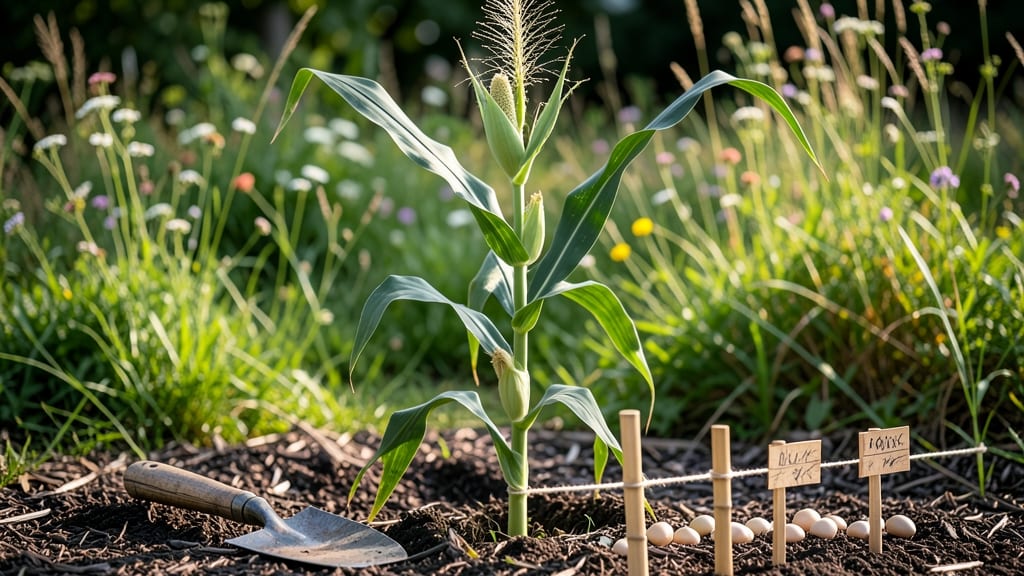
Timing your 🌽 corn planting in Upstate New York isn’t just about following a calendar—it’s about playing the odds against frost, soil warmth, and your local microclimate. Get it wrong, and you might end up with stunted plants or wasted seeds, no matter how much you’ve invested in your garden.
Most gardeners here know the general rule: wait until after the last frost, but that’s not enough. The real secret lies in soil temperatures—corn needs at least 60°F to germinate properly, and Upstate NY’s unpredictable springs can leave you guessing.
I’ll show you exactly how to read the signs and adjust your planting schedule for maximum yield.
Whether you’re growing sweet corn for summer meals or field corn for fall harvests, the window between mid-April and early May is your best bet—but it’s not one-size-fits-all.
We’ll break down how to account for your specific USDA Zone 5b-6a conditions, from the cooler Adirondacks to the warmer Finger Lakes region.
By the end, you’ll know not just when to plant, but how to fine-tune your approach for healthier, more productive corn—no more second-guessing or last-minute scrambles when the weather turns. Let’s get those seeds in the ground at the perfect moment.
Upstate NY corn planting dates by soil temperature & frost risk
Corn thrives in warm soil and frost-free conditions, making timing critical in Upstate NY’s USDA Zones 5b-6a.
The ideal window balances soil temperature (at least 50°F for germination, 60°F+ for optimal growth) with last frost dates, which typically fall between mid-April and early May—but can shift 2-3 weeks earlier or later depending on microclimates.
For sweet corn, aim to plant when daytime highs consistently reach 70°F+, usually late April to early May in most of Upstate NY. Field corn (for grain) can tolerate slightly cooler soils but still requires at least 150 frost-free days to mature.
In the Adirondacks, where springs are cooler, delay planting until early May, while Finger Lakes regions may see earlier opportunities.
Use a soil thermometer to verify readiness—corn seeds won’t sprout in soils below 50°F, and slow germination increases risk of damping off or fungal diseases. If soil temps linger below 60°F past your target planting date, consider black plastic mulch to warm the soil 5-10°F faster.
🌽 Pro Tip: Check the National Weather Service’s Albany or Syracuse forecasts for 10-day outlooks—a 3-day stretch above 60°F is your green light. For extra insurance, plant 1-2 weeks after your local average last frost date (not the earliest recorded date).
| Region | Last Frost Date (Avg.) | Optimal Planting Window | Soil Temp Requirement | Frost-Free Days Needed |
|---|---|---|---|---|
| Finger Lakes (e.g., Rochester) | Mid-April | Late April – Early May | 60°F+ (daytime) | 160–180 days |
| Central NY (e.g., Syracuse) | Early May | Early May – Mid-May | 60°F+ (daytime) | 150–170 days |
| Adirondacks (e.g., Lake Placid) | Late May | Mid-May – Early June | 65°F+ (soil) | 140–160 days |
| Western NY (e.g., Buffalo) | Early May | Late April – Early May | 55°F+ (soil) | 170–190 days |
*Adjust planting dates 1–2 weeks earlier for early-maturing varieties (80-day) or later for late varieties (110-day).
Upstate NY’s microclimates play a huge role—valleys warm up faster than hilltops, and urban areas (like Syracuse or Albany) may see 5-7°F warmer soil temps than rural spots.
To account for this, plant test rows in multiple locations or use row covers to extend the season by 2-3 weeks.
For sweet corn, prioritize short-season varieties (e.g., ‘Bodacious’ (80 days) or ‘Silver Queen’ (90 days)) to avoid early fall frosts.
These varieties can mature in 140–160 days, leaving room for succession planting if your season stretches into early October. Field corn (like ‘Pioneer 33B15’) needs 100+ days and should be planted 1-2 weeks earlier than sweet corn.
Monitor heat unit accumulation (growing degree days) using tools like the Corn GDD Calculator from Cornell Cooperative Extension. Upstate NY typically accumulates 2,500–3,000 GDDs by early October, which is enough for medium-season corn but may limit late varieties in cooler years.
If you’re starting seeds indoors (not recommended for most Upstate NY gardeners due to transplant shock), begin 4–6 weeks before your target outdoor planting date.
Use biodegradable pots and harden off seedlings for 7–10 days before transplanting after the last frost. Direct sowing is far more reliable—corn hates root disturbance and transplants poorly.
🌱 Key Takeaway:
How to adjust planting timing for early vs. late varieties of corn
Upstate NY’s short growing season means choosing the right corn variety is just as important as planting timing. Early varieties mature in 80-90 days, while late varieties need 100-120 days—a critical distinction for zones 5b-6a.
I’ve found that planting short-season varieties like 'Early Sunglow' in early May gives me a harvest by late July, while 'Golden Bantam' (a heirloom) needs June planting for a fall harvest.
For late varieties, consider using black plastic mulch to warm soil faster, or row covers to extend the season. I’ve successfully grown 'Silver Queen' in the Finger Lakes by planting in late May and using mulch—this added 10-14 days to the growing window.
However, this approach requires monitoring for heat stress during summer’s occasional 90°F days.
| Variety Type | Days to Maturity | Planting Window | Upstate NY Risk |
|---|---|---|---|
| Early (80-90 days) | 80-90 | Mid-April to early May | Low frost risk if soil >50°F |
| Medium (90-100 days) | 90-100 | Late May to early June | Moderate—needs warm soil |
| Late (100-120 days) | 100-120 | June (with mulch) | High—requires season extension |
If you’re growing field corn for animal feed, prioritize earlier varieties like 'Pioneer Brand 38N33'—they tolerate cooler soils better. For sweet corn, 'Ambrosia' (90 days) strikes a balance between yield and maturity.
My rule of thumb: Calculate backward from your first frost date (typically October 15) and subtract the variety’s days to maturity to determine your planting window.
For example, a 100-day variety planted on June 1 will mature by September 8, leaving a 27-day buffer before frost. This method helps avoid the heartbreak of watching corn bolt due to premature cold snaps.
I’ve also had success with succession planting: staggering 3-week intervals between plantings ensures a steady harvest through August.
One pro tip: Test soil temperature with a soil thermometer before planting late varieties. Corn seeds won’t germinate below 50°F, and even at 60°F, growth is sluggish. I’ve wasted seeds by planting 'Country Gentleman' in May when soil temps hovered at 52°F—the seeds rotted in the ground.
Always wait for consistent 60°F+ soil temps for 5+ days.
Finally, consider your microclimate. Gardens in the Finger Lakes region often warm up 1-2 weeks earlier than the Adirondacks due to lake effects. I adjust planting dates accordingly: May 1 in Canandaigua vs. May 15 in Saranac Lake.
Local Cooperative Extension offices provide frost-free date averages—a must-have resource for Upstate gardeners.