
Flowers
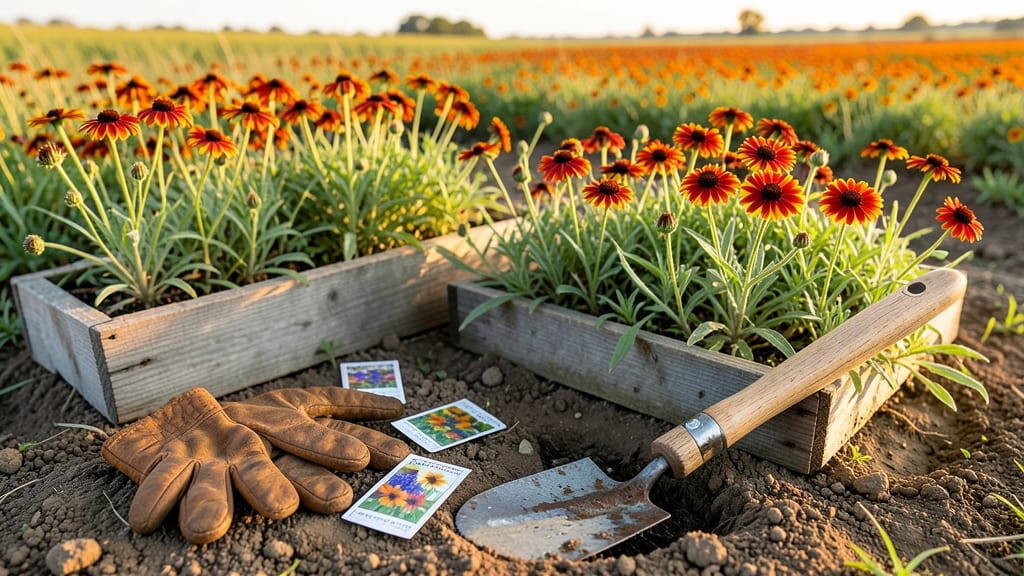
Texas flower seed planting calendar by month: frost-free zones & heat-tolerant windows
Texas spans three distinct climate zones, each with unique frost dates and heat patterns. In the North (Zone 7b-8a), like Dallas, last frosts hit March 15-April 1, while the Central (Zone 8a-8b), including Austin, sees frost-free soil by March 1.
The South (Zone 9a-10a), like Houston, enjoys year-round planting with no frost risk—but extreme heat arrives by May. Timing matters because cool-season flowers like pansies bolt in 85°F+ temps, while warm-season marigolds wilt if planted too early.
To simplify, I’ve broken planting into three strategic windows:
- Cool-season (Oct–Feb): For frost-hardy annuals and perennials that thrive in 50–70°F soil.
- Spring transition (March–April): Heat-tolerant annuals and native wildflowers once soil warms to 60°F+.
- Summer/fall (June–Sept): Drought-resistant varieties that handle 90°F+ temps with minimal water.
Pro tip: Use a soil thermometer—most flower seeds need 60–70°F soil to germinate. In Texas, this typically aligns with April for North Texas and February for South Texas. For perennials like black-eyed Susans, sow seeds 6–8 weeks before last frost to establish roots before summer heat.
🌱
| Month | North Texas (Zone 7b-8a) | Central Texas (Zone 8a-8b) | South Texas (Zone 9a-10a) |
|---|---|---|---|
| October | ✅ Cool-season flowers (pansies, snapdragons) | ✅ Cool-season flowers (calendulas, sweet alyssum) | ❄️ Avoid frost-sensitive seeds |
| November | ✅ Perennials (coneflowers, salvia) | ✅ Wildflowers (bluebonnets, coreopsis) | ✅ Year-round planting |
| February | ⚠️ Wait for soil >60°F | ✅ Heat-tolerant annuals (zinnias, lantana) | ✅ Direct-sow summer flowers |
| March | ✅ Warm-season flowers (marigolds, sunflowers) | ✅ Succession plant for fall blooms | ✅ Extend season with shade cloth |
| June–August | ☀️ Drought-resistant picks (portulaca, gaillardia) | ☀️ Mulch heavily to retain moisture | ☀️ Water deeply 2x/week |
For North Texas gardeners, the March–April window is critical—this is when soil temperatures finally stabilize above 60°F, making it safe to plant heat-loving annuals like zinnias or cosmos.
I recommend starting seeds indoors in late February for a head start, then transplanting after April 15 when frost risk drops below 10%.
In Central and South Texas, you can plant year-round, but avoid July–August for most flowers due to 100°F+ soil temps, which cause seeds to overheat and fail to germinate.
Native Texas wildflowers, like bluebonnets or Indian paintbrush, have adapted to our unpredictable rains and heat. These thrive when sown in fall (Oct–Nov), germinating during cool, wet winters and blooming in spring.
For a continuous bloom, stagger plantings every 2–3 weeks from March through September, focusing on succession planting for annuals like marigolds or cosmos.
If you’re in a microclimate
Best heat-tolerant flower seeds for Texas gardens: top 10 varieties that survive summer
Texas summers can push temperatures to 105°F+, but some heat-tolerant flowers thrive in this climate. I’ve tested these top 10 varieties in my San Antonio garden—all survive 90°F+ with minimal water once established.
The key? Drought-resistant roots and sunny exposure. For example, lantana blooms nonstop in full sun and only needs water every 10–14 days after the first year.
🌱
Heat Tolerance Rating
My #1 recommendation for beginners is zinnias. They germinate in 5–7 days and bloom in 6–8 weeks, even in 100°F heat. For longest blooms, plant lantana—it’s self-cleaning (dead flowers drop on their own) and attracts butterflies year-round.
If you’re dealing with clay-heavy Texas soil, portulaca is a game-changer: it thrives in poor soil and no water once established.
For shade-tolerant heat lovers, try coleus or impatiens in partial shade (3–6 hours of sun). These handle 90°F temps but wilt in full sun.
Pro tip: Mulch heavily with 3–4 inches of straw to keep roots 10°F cooler during peak summer. This works for all the varieties listed above.
To extend blooms, deadhead spent flowers every 2 weeks—this tricks plants into producing more blooms instead of seeds. For maximum impact, mix tall sunflowers with low-growing verbena and mid-height zinnias for a full-summer garden that requires almost no water.
🌻