
Companion Plants
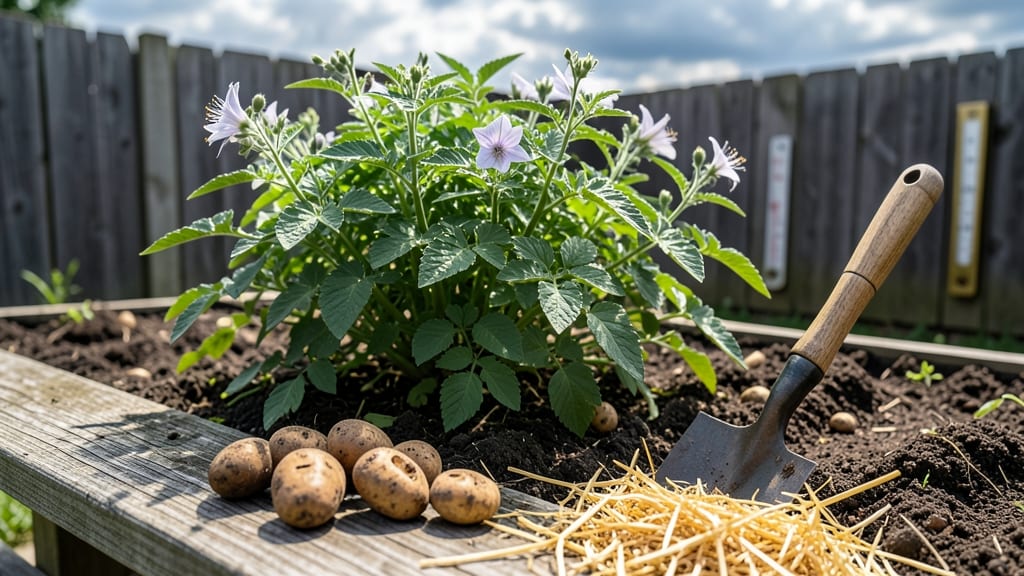
Planting potatoes in Zone 6 can feel like walking a tightrope—too early, and frost zaps your sprouts; too late, and you miss the sweet spot for a fast, bountiful harvest.
The key? Timing it right with a clever cold-soil trick that gives your 🥔 a head start without risking frost damage.
Most gardeners wait until soil warms to 45°F, but that’s not your only option. By planting 2-4 weeks before last frost, you can use mulch or straw to protect tender shoots while still getting tubers growing underground.
This method lets early varieties pop up faster, giving you a jump on the season.
Whether you’re a first-timer or a veteran gardener, nailing the planting window makes all the difference. I’ll walk you through exactly when to plant—plus soil prep tips and frost-proofing hacks—to ensure your potatoes thrive from the get-go.
Ready to beat the odds? Let’s dive into the fastest way to get your Zone 6 potatoes off to a flying start this spring.

Optimal planting windows for potatoes in Zone 6 (with frost-proofing tips)
In Zone 6, the last average frost date typically falls around mid-April, but this varies by microclimate. Most gardeners aim to plant potatoes 2-4 weeks before the last frost, but with the right techniques, you can start even earlier.
The key is understanding soil temperature thresholds—potatoes thrive when soil reaches 45°F, but can tolerate cooler temps with protection.
For early-season varieties like 'Yukon Gold' or 'Red Pontiac', I recommend planting as soon as the soil is workable, often in late February or early March. Mid-season varieties can wait until late March to early April, while late-season types like 'Russet' do best when planted in April to avoid disease pressure from wet springs.
Here’s the critical rule: Never plant when soil temps drop below 40°F—this stunts growth. Use a soil thermometer to check temps at 4-inch depth (the planting depth).
If your area has late frosts or cold snaps, mulch heavily with straw or leaves to insulate the soil and protect emerging sprouts.
Zone 6 spans 6a (hardiness -10°F) to 6b (-5°F), so adjust timing based on your specific sub-zone. In colder 6a areas, stick to early April planting, while 6b regions can safely plant in late March.
If you’re unsure, consult your local cooperative extension office for precise frost dates.
For gardeners in Zone 6a, where frosts linger longer, I recommend a two-part strategy: plant early varieties in trenches (covered with mulch) and late varieties after the last frost. This staggered approach ensures a continuous harvest from mid-July to September.
In Zone 6b, you can afford to plant all varieties at once in late March, thanks to milder winters.
One common mistake is relying solely on calendar dates instead of soil temperature. For example, planting in March might seem early, but if the soil is still below 40°F, your potatoes will rot.
Always check with a soil thermometer—it’s the most reliable indicator. If you’re impatient, use the cold-soil trick (covered in the next section) to jumpstart growth weeks earlier.
Another pro tip: Plant potatoes in raised beds if your garden soil drains poorly. Raised beds warm up faster in spring and provide better drainage control, which is critical for preventing waterlogged tubers.
Fill beds with a mix of compost, peat moss, and sand to create the ideal loose, crumbly soil potatoes love.
Finally, don’t forget about second crops. After harvesting your first planting in July, you can replant fast-maturing varieties like 'Early Rose' or 'Gold Rush' for a fall harvest. Just be sure to use sterilized soil or a new bed to avoid disease buildup from the first crop.
With these timing strategies, you’ll avoid the frost trap
The cold-soil trick: how to plant potatoes 4-6 weeks earlier in Zone 6
Most gardeners wait until soil reaches 45°F to plant potatoes, but in Zone 6, you can beat the frost by using the cold-soil trick. This method lets you plant 4-6 weeks earlier while protecting tender sprouts.
The secret? A thick layer of mulch or straw that insulates the soil while allowing tubers to grow underground.
Start by choosing early-maturing varieties like 'Yukon Gold' or 'Red Norland'—they thrive in cooler soil and produce harvests in 70-90 days. Cut seed potatoes into 1.5-inch chunks with at least one "eye" (sprout) per piece, then let them chit (sprout) indoors for 2-3 weeks before planting.
Here’s how to execute the cold-soil trick step-by-step to maximize your early harvest:
Test your soil’s drainage—potatoes rot in soggy conditions. Amend with compost or aged manure to improve fertility.
Dig trenches 6-8 inches deep and place seed potatoes 4 inches deep, spacing them 12 inches apart in rows 3 feet apart.
Pile 12+ inches of straw or leaves over the trench. This traps heat, warms the soil faster, and protects sprouts from frost.
When sprouts emerge (3-4 inches tall), thin mulch to 6 inches to prevent rot. Add more as plants grow.
When plants reach 6 inches tall, mound soil around stems to encourage tuber formation and protect new growth.
For new potatoes, dig when plants flower. For full-sized tubers, wait until foliage yellows (usually 90-120 days after planting).
This method works best in Zone 6’s 6a-6b sub-regions, where last frost typically hits mid-April. By planting in early March, you’ll have a head start on neighbors—and a harvest ready by late June!
Pro tip: Use a soil thermometer to confirm soil temps are 40-45°F before planting. If nighttime temps dip below 32°F, add extra mulch to shield sprouts.