
Plants
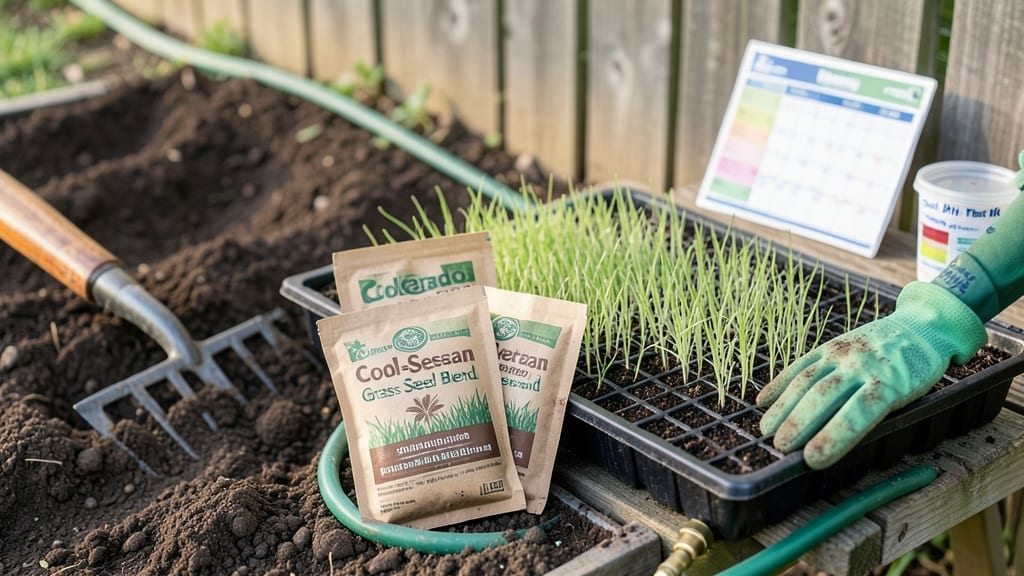
Timing your grass seed planting in Colorado isn't just about following a calendar—it's about outsmarting the state's dramatic elevation shifts and unpredictable weather. One wrong move, and you'll spend months battling drought, frost, or weeds instead of enjoying a lush lawn.
With USDA zones 5-7 and microclimates ranging from Denver's urban heat to mountain frost pockets, the "best" time varies wildly. What works for Front Range lawns might fail in the high plains, and even spring vs. fall planting requires different strategies.
I've tested these techniques across Colorado's diverse landscapes, and the results speak for themselves: lawns planted at the right moment establish twice as fast and withstand our dry summers with far less struggle.
Let me show you exactly when to plant in your specific corner of Colorado—plus the soil and weather secrets that make all the difference between success and frustration.
Colorado grass seed planting zones: exact weeks by elevation (Front Range vs. mountains)
Colorado’s elevation extremes create wildly different planting windows—what works in Denver’s 5,280 feet fails in Aspen’s 7,900 feet. The key? Soil warmth and frost-free days, not just calendar months. Let’s break it down by zone so you plant when seeds actually germinate, not when your neighbor does.
For Front Range cities like Denver and Colorado Springs (5,000–7,500 ft), aim for late April to early May or mid-September to early October. These windows balance soil temperatures (50–65°F) with stable weather. Mountain regions (7,500–10,000+ ft) shift 2–4 weeks later due to slower snowmelt and cooler soils.
🌱Pro Tip: Use a soil thermometer—seeds won’t sprout until soil hits 50°F for 5+ days. In Durango (6,500 ft), that’s often mid-May, while Fort Collins (5,000 ft) hits it by late April.
Mountain regions demand late-summer planting (July–early August) because snowmelt delays soil warming. In Telluride (8,750 ft), seeds planted in June risk frost heaves—wait until mid-July when nights stay above 40°F.
For high-plains areas like Greeley (4,000 ft), you can push early spring (March) if you use warm-season varieties like Bermuda grass, but cool-season grasses (Kentucky Bluegrass) still need April–May.
🌿Critical Mistake: Planting too early in Denver (March) risks frost damage—seeds germinate, then die. Too late (June) means drought stress before roots establish.
Use these microclimate rules to align your planting with real weather patterns, not just averages. Next, we’ll cover how to override the calendar using soil tests and moisture checks—because your yard’s microclimate might be 2 weeks off from the norm.
☀️Quick Test: Stick a plastic wrap square on bare soil for 24 hours. If it’s warm to the touch, soil’s ready for seeds.
Colorado grass seed planting zones: exact weeks by elevation (Front Range vs. mountains)
Colorado’s elevation changes can shift your grass seed planting window by weeks, even within a single county. At 5,000 feet in Denver, you might plant in early April, while 8,000-foot mountain slopes won’t be ready until June.
These differences aren’t just about frost—they’re about soil warming rates and moisture retention that vary dramatically.
Most Colorado gardeners focus on spring planting (March–May), but fall planting (September–October) often yields better results by avoiding summer drought stress. The key is matching your elevation to the right soil temperature threshold—50–60°F for germination—and avoiding late-spring heatwaves that dry out seeds before roots establish.
Here’s how to pinpoint your exact planting window based on elevation, with week-specific targets for Denver, Colorado Springs, and mountain regions:
| Elevation Zone | Last Frost Date | Spring Planting Window | Fall Planting Window | Soil Temp Threshold |
|---|---|---|---|---|
| Front Range (5,000–7,000 ft) | Mid-April | Late March–early May | Mid-Sept–early Oct | 50–55°F |
| Colorado Springs (6,000–7,500 ft) | Early May | Early April–mid-May | Late Aug–mid-Sept | 52–57°F |
| Mountains (7,500–10,000+ ft) | Late June | Late May–July | Late July–early Sept | 55–60°F |
For Front Range gardeners, aim to plant 4–6 weeks before the last frost—this gives seeds time to germinate before summer heat arrives. In Denver (5,280 ft), that’s typically late March, but watch for unpredictable late frosts that can kill young seedlings.
Mountain regions like Estes Park or Telluride have later frost dates and cooler soils, so delay planting until late May or June. Use a soil thermometer to confirm temperatures stay above 55°F for at least a week—this is your green light to plant.
In these areas, fall planting is riskier due to early snow, so spring is often the safer bet.
Pro tip: If you’re in a transition zone (like 6,500–7,000 ft near Colorado Springs), split your seeding into two batches: plant half in early spring and half in late summer. This insurance strategy accounts for unpredictable weather and gives you a backup if one planting fails.