
Plants
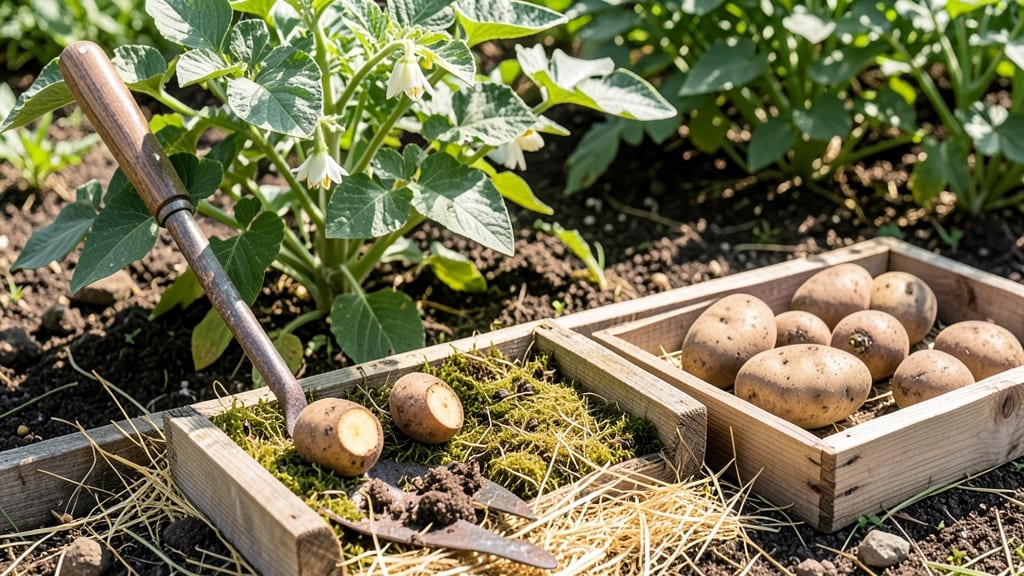
Planting potatoes in Ohio isn’t just about tossing seed potatoes into the dirt—it’s about timing them perfectly to avoid frost damage and maximize your harvest.
The exact window for planting 🥔 in Ohio’s 6a zone starts 4-6 weeks before your last frost date, typically between early March and mid-April, depending on where you live in the state.
Why does this matter? Because planting too early risks frost-killed sprouts, while waiting too long cuts your growing season short. I’ll break down Ohio’s regional frost dates—whether you’re in the colder northeast or milder southeast—and share the soil temperature trick that guarantees strong, healthy starts every time.
You’ll also discover how to choose the right potato varieties for your area, protect your crop from unexpected late frosts, and even explore whether fall planting is worth the effort. Let’s get those spuds in the ground at the perfect moment for a bumper harvest.
No more guessing games—just science-backed advice tailored to Ohio’s climate. Ready to dig in?
Ohio’s last frost dates by region: exact weeks before planting potatoes for risk-free growth
Ohio’s last frost dates vary dramatically across its three distinct regions, making regional planning critical for potato success. The Northeast (e.g., Cleveland) typically sees its last frost around April 15, while the Southeast (e.g., Cincinnati) averages April 20.
Central Ohio (Columbus) falls right in the middle at April 10. These dates create a 4-week window for planting seed potatoes before frost risk becomes a concern.
For zero-frost-risk planting, Ohio gardeners should aim to plant 4-6 weeks before their region’s last frost date. This translates to March 1-20 for most areas, but late-March is ideal for the Northeast and early-April for the Southeast.
Using historical frost data from the Old Farmer’s Almanac ensures you’re planting at the safest window for your microclimate.
Localized frost patterns matter more than USDA zones alone. For example, Lake Erie’s influence in Northeast Ohio can delay frosts by 5-7 days compared to inland areas. Always check your local cooperative extension for 5-year frost averages—this data is gold for Ohio gardeners.
Here’s how to calculate your safe planting window:
- Find your last frost date (use NOAA’s frost maps or local records)
- Subtract 6 weeks (potatoes need 90-120 days to mature)
- Adjust 1 week earlier if using row covers or black plastic mulch
🌱 Ohio’s Potato Planting Timeline by Region
| Region | Last Frost Date | Safe Planting Window | Harvest Window |
|---|---|---|---|
| Northeast (Cleveland, Toledo) | April 15 | March 15–April 1 | July 15–August 15 |
| Central (Columbus, Dayton) | April 10 | February 28–March 25 | July 1–August 10 |
| Southeast (Cincinnati, Athens) | April 20 | March 20–April 5 | July 10–August 20 |
⚠️ Note: Adjust planting dates 1 week later if your area has a history of late frosts.
If you’re in a high-elevation area (e.g., Appalachian foothills), expect frosts 1-2 weeks later than lowland regions. For example, Athens, OH (Southeast) often sees frosts 3-5 days later than Cincinnati due to its higher elevation. Always monitor soil temperatures—potatoes won’t sprout until the soil reaches 45°F.
For first-time Ohio gardeners, I recommend starting seed potatoes indoors in late February (using grow lights) to get a 2-week head start. This is especially useful in northern Ohio, where short growing seasons can limit harvest windows.
Use biodegradable pots to transplant seedlings outdoors after the last frost.
Pro tip: Plant early varieties like ‘Early Red Skins’ (60 days to harvest) if you’re in Zone 6a and want to maximize your harvest window. These varieties can tolerate cooler soils and still produce a full yield before the first fall frost.
Don’t forget about fall planting! While less common, late-summer plantings (August) can yield smaller but tasty potatoes before the first frost. This works best in southern Ohio, where the growing season extends into mid-October. Use row covers to protect tender shoots if nights dip below 50°F.
For ultimate frost protection, consider straw mulch (6+ inches thick) or black plastic mulch to warm the soil 5-10°F faster than bare earth. This can extend your planting window by 2 weeks in cool springs
How to time potato planting for maximum yield: soil temperature, variety matters, and frost-proofing tips
Timing your potato planting isn’t just about counting down the weeks to last frost—it’s about waiting for the soil temperature to hit that 45°F threshold. Cold soil slows sprouting, leaving your potatoes vulnerable to late frosts.
Use a soil thermometer to check depths of 4-6 inches, especially in Ohio’s cooler northeast regions where soil warms slower.
Once the soil is ready, choose your potato varieties wisely. Early-maturing types like ‘Red Pontiac’ (90 days) thrive in shorter seasons, while ‘Yukon Gold’ (110 days) need more time.
For Ohio’s 6a zone, I recommend cold-hardy varieties that tolerate light frosts—just don’t plant them until after the dangerous frost window has passed.
Here’s the key: Plant seed potatoes 4-6 weeks before last frost, but only when soil temps are stable. In northern Ohio, that’s often early April; in the southeast, you might start in late March. The goal? Give tubers time to establish roots before warm weather kicks in.
✅ Planting Too Early vs. Too Late
🌱 Planting Too Early
- Frost damage to sprouts
- Slow growth from cold soil
- Wasted seed potatoes
🌿 Planting Too Late
- Smaller yields due to shorter season
- Missed harvest window
- Pests/diseases have more time to spread
Protect your early plants with row covers or black plastic mulch to warm the soil faster. I’ve had great success using floating row covers in my garden—they raise soil temps by 5-8°F and shield tender sprouts from unexpected frosts.
For extra insurance, plant in raised beds, which warm up 1-2 weeks earlier than in-ground soil.
Don’t forget about fall planting in Ohio! If you’re in the southern half of the state, you can try a late-summer planting (August) for a fall harvest.
Choose early-maturing varieties and use heavy mulch to protect tubers from early frosts. Just be ready to harvest by October 15 to avoid frost damage.
My top tip? Mark your calendar for 4-6 weeks before last frost, test that soil temperature, and get those potatoes in the ground. With the right timing and a little frost-proofing, you’ll be digging up bountiful harvests by midsummer—no frost worries, just homegrown spuds ready for the table. 🥔