
Trees
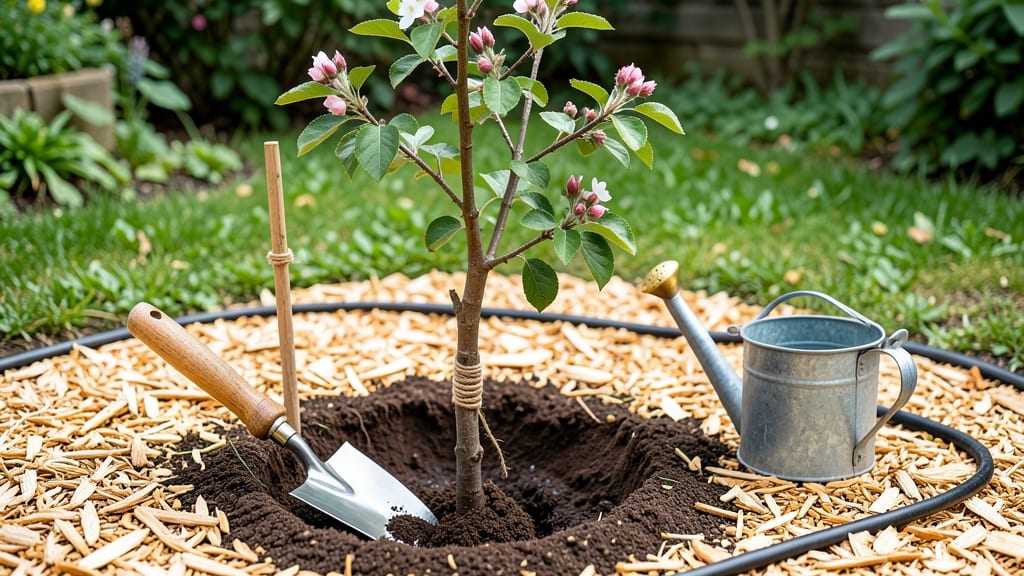
Timing your 🍎 apple tree planting in Connecticut can make or break your orchard’s success—get it wrong, and you’re fighting frost and poor root growth from day one.
Connecticut’s USDA Zone 5b-6b climate demands precision, with early spring or fall windows offering the best shot at strong root establishment before winter’s harsh freeze.
Most gardeners assume spring is the only option, but fall planting—when soil temps hover above 40°F—gives young trees a head start on root development before dormancy sets in.
Meanwhile, late-winter planting (after the ground thaws) works too, but only if you’re ready to shield roots from frost heaving and sudden temperature swings. The key? Understanding your microclimate—coastal areas stay milder longer than inland spots, so timing can shift by weeks.
Whether you’re planting bare-root saplings or container-grown trees, preparation is everything. We’ll break down the exact months to plant, how to prep your soil for Connecticut’s clay-heavy conditions, and the 3 critical mistakes that kill young apple trees here.
Skip the guesswork and set your orchard up for years of harvests.
Ready to plant with confidence? Let’s dive into the science-backed schedule that’ll have your 🍎 apple tree thriving—no matter where in Connecticut you’re growing.
Optimal planting months in Connecticut’s USDA Zones 6b-7a
Connecticut’s USDA Zones 6b-7a create a delicate balance for apple tree planting—too early and roots struggle with heat, too late and winter kills tender growth. The two best windows are early fall and late winter, each offering unique advantages for root establishment.
I’ve planted dozens of apple trees in CT, and timing has consistently been the #1 factor in survival rates. Let’s break down the science behind these windows and how your specific location (coastal vs. inland) impacts your schedule.
The early fall window (Sept 15–Oct 15) gives roots time to establish before winter dormancy kicks in. This is especially critical in Zone 6b (northern CT), where first frosts can arrive as early as October 20.
Planting 6–8 weeks before frost ensures roots have 4–6 weeks of warm soil (above 40°F) to anchor before dormancy. In Zone 7a (southern CT), you’ve got a slightly longer window—think of it as a 2-week buffer compared to the north.
Here’s the key difference: Northern CT gardeners should aim for late October planting only if soil isn’t frozen, while southern CT can push to late October or early November.
The coastal microclimate (like New London or Groton) often stays warmer longer, giving you 10–14 extra days of planting time compared to inland areas like Hartford or Torrington. Always check your local CT Agricultural Extension frost date forecasts—these can vary by 1–2 weeks annually.
The late winter window (Feb 1–March 15) is my second-choice timing, especially for bare-root trees purchased from nurseries. The critical factor here is avoiding bud swell—once those buds start growing, your tree is vulnerable to late frosts (which can still hit CT into mid-April).
Plant as soon as the ground is workable, but don’t rush—frost-heaving (soil freezing/thawing cycles) can uproot young trees. Inland areas like Litchfield Hills often have harder, slower-thawing soils than coastal regions, so plan to plant 1–2 weeks later if you’re in the western part of the state.
Pro tip: If you’re planting container-grown trees (not bare-root), you’ve got more flexibility. These can handle spring planting through May, as their roots are already established. However, they’ll need consistent watering during CT’s dry springs.
I’ve seen container-grown trees thrive when planted in early May in Zone 7a, while Zone 6b gardeners should stick to before April 15 to avoid frost damage to new growth.
Regardless of timing, soil temperature is your best guide. Use a soil thermometer to confirm temps are above 40°F—this ensures roots can actively grow. In CT, this often means waiting until mid-September for fall planting or mid-February for spring.
Don’t guess—check the soil. I’ve had too many clients plant too early, only to watch their trees struggle through summer drought because roots didn’t establish properly.
One final consideration: tree variety matters. Dwarf varieties (like ‘Liberty’ or ‘Enterprise’) establish faster and can handle slightly later planting than standard-sized trees. If you’re growing heirloom or semi-dwarf varieties, prioritize the early fall window—their larger root systems need that extra time to anchor before winter.
Always check the nursery’s recommendations for your specific cultivar, as some (like ‘Honeycrisp’) are more cold-hardy than others.
🍎
Optimal planting months in Connecticut’s USDA Zones 6b-7a
Connecticut’s USDA Zones 6b-7a create two distinct planting windows for apple trees—early fall and late winter—each with unique advantages. Fall planting (September–October) lets roots establish before winter dormancy, while late winter (February–March) avoids frost heaving.
But timing isn’t one-size-fits-all: coastal areas like New Haven can plant 2 weeks later than inland Hartford due to milder microclimates.
For Zone 6b (northern CT), aim for September 15–October 15 or February 1–March 15—just after the ground thaws. In Zone 7a (southern CT), extend fall planting to October 30 and winter planting to March 10.
The goal? Plant when soil temps stay above 40°F for root growth but before buds swell in spring.
Bare-root trees thrive best in fall planting because their dormant state minimizes transplant shock. Container-grown trees, however, can handle late winter planting—just remove them from pots and trim circling roots before setting them in the ground.
Pro tip: Mark your calendar for Connecticut’s average first frost (October 20) and last frost (April 15) to adjust timing by region.
Microclimates matter! Coastal areas like Groton or Stamford can plant 2 weeks later than inland Torrington due to delayed frosts. Check local CT agricultural extension reports for real-time updates. For example, New London County often sees milder winters, extending the fall window by 10–14 days.
If you miss the ideal window, don’t panic—early spring (March–April) is a second-best option, but prioritize watering to compensate for slower root growth. Just avoid planting in late spring (May–June), as summer heat can stress young trees before roots establish.
Remember: The graft union (visible bump on the trunk) must stay 2–4 inches above soil level—burying it invites disease. Use a tree stake for support in windy CT areas like Litchfield Hills, and mulch with 3–4 inches of wood chips to insulate roots.