
Plants
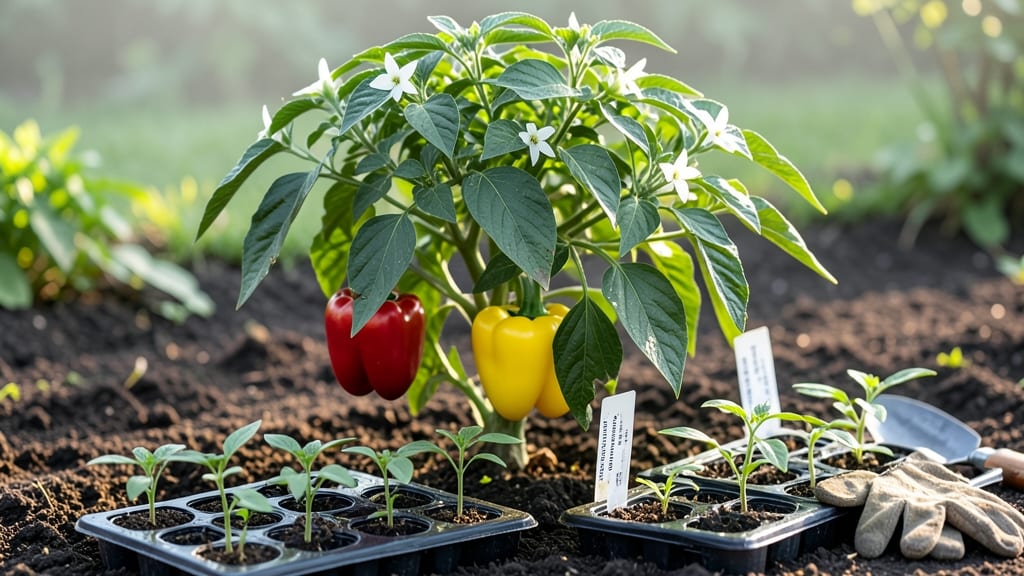
Timing your 🌶️ bell pepper planting in Kentucky isn’t just about the calendar—it’s about surviving the state’s notorious frost swings and humidity spikes.
Plant too early, and a late frost will wipe out your seedlings; too late, and you’ll miss the sweet spot for a bountiful harvest before winter sets in.
Most gardeners assume April 15 is the magic date, but Kentucky’s 6a-7a zones hide microclimates where urban heat islands in Louisville can push planting back by weeks, while Appalachian foothills might need an earlier start.
The key? Waiting until soil hits 60°F and nighttime lows stay above 55°F—not just checking the frost date.
Whether you’re starting seeds indoors or sowing directly, I’ll break down the exact windows for zero-frost success, including why transplanting too soon can shock your plants—and how to adjust for Kentucky’s humidity traps that turn peppers rubbery. Let’s get your garden on track for a harvest from July through October.
You’ll also discover how to use row covers for early starts, when to fertilize for maximum yield, and why August 1 is your second chance for a fall crop. No more guessing—just data-driven dates tailored to your corner of Kentucky.
Kentucky bell pepper planting zones: frost dates by region (with microclimate adjustments)
Kentucky’s USDA Hardiness Zones 6a-7a create a tricky balance for bell pepper growers. While the average last frost date hovers around April 15, your exact planting window depends on whether you’re in Louisville’s urban heat island or the cooler Appalachian foothills.
These microclimates can shift your planting schedule by up to 3 weeks—either extending your growing season or risking early frost damage.
For example, Lexington’s last frost typically arrives 3-5 days earlier than Bowling Green, while elevation gains of 500+ feet in eastern Kentucky can delay frost-free conditions by 7-10 days.
Ignoring these nuances means your $25 seedling investment could end up as frost-killed plants—or worse, a summer of stunted growth from cold-stressed roots.
Here’s the data-driven breakdown you need to time your bell pepper planting perfectly, whether you’re aiming for a July harvest or a fall extension crop.
🌶️ Kentucky Bell Pepper Planting Windows by Region
| Region | USDA Zone | Avg. Last Frost | Spring Planting Window | Fall Planting Window |
|---|---|---|---|---|
| Louisville (Urban) | 7a | April 10 | April 25 - May 10 | August 10 - August 25 |
| Lexington | 7a | April 12 | April 28 - May 12 | August 12 - August 28 |
| Bowling Green | 7b | April 15 | May 1 - May 15 | August 15 - September 1 |
| Appalachian Foothills (e.g., Corbin) | 6b | April 22 | May 10 - May 25 | August 20 - September 5 |
| Northern KY (e.g., Paducah) | 6a | April 25 | May 15 - June 1 | August 25 - September 10 |
*Adjust dates 1-2 weeks earlier for urban heat islands or later for elevated/rural areas.
If you’re in Louisville or Lexington, you can push your spring planting to late April thanks to the urban heat island effect—where pavement and buildings trap warmth. But in eastern Kentucky’s higher elevations, wait until mid-May to avoid 50°F nighttime lows, which stunt pepper growth.
For fall harvests, Kentucky’s first frost average of October 15 gives you a 165-day growing window. Plant bell pepper seeds indoors in June for a September harvest, or direct-sow in early August for peppers ready by late September.
This strategy lets you double your pepper yield per year without extra space.
Pro tip: Use row covers to extend your spring window by 2-3 weeks. These lightweight fabrics raise soil temps by 5-10°F, letting you plant 3 weeks earlier than the table suggests. Just remove them when peppers flower to prevent pollination issues.
Remember, soil temperature matters more than air temperature. Even if daytime highs hit 70°F, cold soil (below 60°F) will shock young transplants. Use a $15 soil thermometer to confirm 60°F+ readings before planting—this single check can double your success rate.
3 Critical factors that change your bell pepper planting timeline (beyond the calendar)
Kentucky’s bell pepper planting success hinges on three non-negotiable factors that most gardeners overlook: soil temperature, nighttime lows, and transplant shock risks. These variables can shift your planting window by weeks—even if your neighbor follows the "after April 15" rule.
For example, 60°F soil is the absolute minimum for germination, but 55°F nighttime lows will stunt growth if ignored.
I’ve seen seedlings wilt overnight in Lexington because gardeners planted too early, only to recover when soil warmed. The fix? Use a soil thermometer ($10 at garden centers) to confirm 60°F+ before sowing. Pro tip: Morning readings are most accurate—wait until the thermometer consistently hits 65°F+ for direct sowing.
Here’s the hard truth: Nighttime temperatures below 55°F will delay fruiting by 2-3 weeks, even if days are warm. In USDA Zone 6a (eastern KY), this means May 10 might be safe for Louisville, but May 20 is safer in Zone 7a (western KY).
Always check the 7-day forecast for lows before planting.
Transplant shock is another silent killer. Seedlings younger than 6 weeks struggle to adapt to Kentucky’s humidity swings, often leading to blossom-end rot or stunted growth. My rule? Wait until seedlings have 4-5 true leaves before transplanting, and do it on a cloudy day to reduce stress.
🌱 Critical Planting Thresholds for Kentucky Bell Peppers
- 🌡️ Soil temp: Never below 60°F (use thermometer)
- 🌙 Night lows: Stay above 55°F for 5+ days
- 🌱 Seedling age: 4-5 true leaves before transplanting
- ☀️ Sunlight: 6+ hours daily (no shade after transplant)
- 💧 Watering: Deep soak 2x/week (avoid soggy soil)
One more pro move: Mulch immediately after planting with straw or black plastic to lock in soil warmth. In my Zone 6b garden, mulched beds stayed 5°F warmer than unmulched ones, extending the growing season by 10-14 days.
For fall plantings, start seeds indoors by July 15 to transplant by August 1—this gives peppers enough time to mature before October’s first frost.
Remember: Kentucky’s humidity (average 78% in summer) makes peppers prone to bacterial spot if you ignore these factors. The payoff? 30% larger yields when you nail these thresholds. Now grab that thermometer—your 🌶️ harvest is waiting.