
Plants
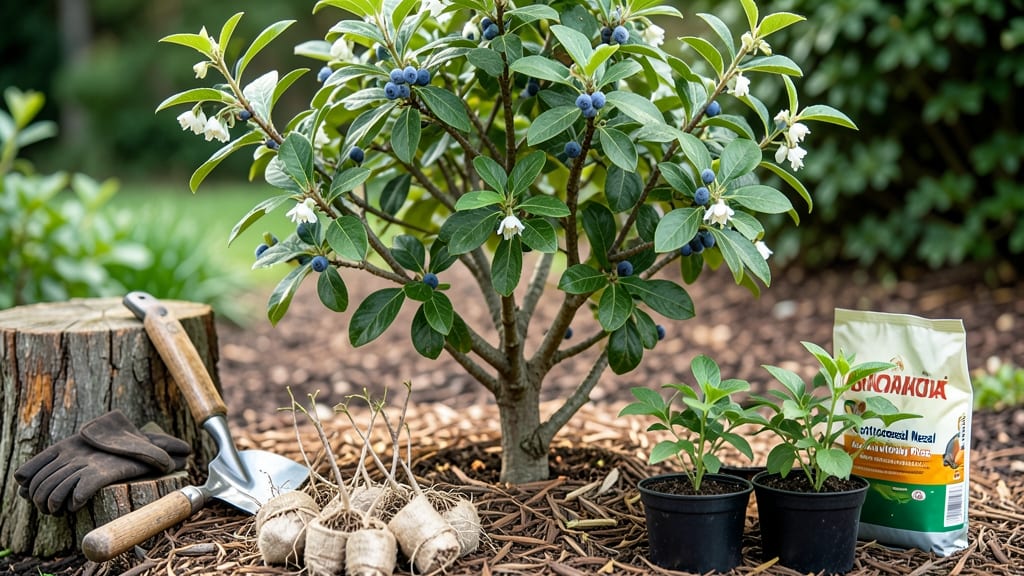
Timing your blueberry planting in Maine isn’t just about the calendar—it’s about matching varieties to chill hours and avoiding the dreaded scab disease that can wipe out your harvest before it starts.
With Maine’s USDA Zones 5-6 climate, you’ve got a narrow window between last frost (mid-May) and the first hard freeze (mid-October) to get it right. Plant too early, and your bushes might not get enough winter chill to fruit properly.
Too late, and you risk exposing them to late-spring frosts or fungal infections.
I’ll break down the exact planting windows—late April to early June for spring plantings and September to October for fall—for the most popular varieties, so you can pick the perfect time for your microclimate, whether you’re near the coast or inland.
Plus, I’ll share pro tips to give your 🫐 blueberries the best shot at thriving, from soil prep to frost protection, so you can enjoy a bountiful harvest come July and August.
Maine’s frost-free window: exact planting dates by variety for maximum yield
Maine’s USDA Zones 3-5 demand precision when planting blueberries. The frost-free window typically runs from April 15 to May 15 in most regions, but coastal areas like Portland can start 2-3 weeks earlier.
For fall planting, aim for September 1–October 15 to allow roots to establish before winter. Timing varies by variety—Northern Highbush (e.g., ‘Patriot’) thrives in cooler inland zones, while Southern Highbush (e.g., ‘Chippewa’) suits milder coastal microclimates.
Spring planting is ideal for bare-root blueberries, which need 6-8 weeks to establish roots before Maine’s late-spring frosts (common around May 10–20). Fall planting works best for container-grown bushes, giving roots time to spread in cool, moist soil before dormancy.
Avoid planting after October 15, as young roots won’t harden off in time for winter’s sub-freezing temps.
Lowbush blueberries (wild-type, Vaccinium angustifolium) have a shorter window—plant them in early spring (March–April) or late summer (August) to align with their natural growth cycles. These hardy shrubs tolerate Maine’s harsh winters but require well-drained, acidic soil (pH 4.5–5.5) to thrive.
For coastal Maine (e.g., Bar Harbor), push spring planting to March 20–April 15 to avoid late frosts. Inland areas like Bangor should wait until May 1 to ensure soil warmth.
Use local frost data from the Maine State Climate Office to fine-tune your schedule—2023 saw frosts as late as June 1 in some pockets!
If you miss the spring window, fall planting is your next best bet—but only if soil temps stay above 40°F (4°C). Test soil moisture before planting; dry fall soil can stress roots.
Amend with peat moss or pine needles to maintain acidity and improve drainage, critical for blueberry health.
Pro tip: Plant multiple varieties to extend your harvest. ‘Bluecrop’ (ripening mid-July) pairs well with ‘Jersey’ (late July) for a 2-week berry bonanza. Space bushes 4–6 feet apart to allow airflow, reducing fungal diseases like scab—a major threat in Maine’s humid summers.
After planting, mulch heavily with pine straw to insulate roots during winter temperature swings (common in Zone 4). In Zone 5 (southern Maine), a light frost cloth over new plantings can protect against late-spring frosts that often hit April 30–May 10.
Remember: Blueberries are perennials—proper timing now means decades of harvests. In 10 years, your bushes could yield 5–10 lbs per plant if planted correctly. Start with 2–3 plants to test your site’s conditions before scaling up.
Chill-hour requirements by blueberry variety: Maine’s risk zones for scab disease
Maine’s chill-hour requirements vary dramatically across varieties, and choosing the wrong one risks scab disease or poor fruit set. Most Northern Highbush varieties need 800–1,000 chill hours, while Southern Highbush types thrive with just 300–500 hours.
Southern Maine’s milder microclimates (e.g., Portland) often see 500–700 chill hours, making low-chill varieties ideal.
For example, ‘Patriot’ (800 hours) excels in USDA Zone 4, but in Zone 5 (coastal Maine), it may struggle. Meanwhile, ‘Top Hat’ (400 hours) thrives where ‘Bluecrop’ (900 hours) fails. Always check your last-frost date—planting too early can expose young plants to late-spring frosts.
Here’s how to match varieties to Maine’s chill-hour zones:
If you’re in Zone 4 (e.g., Bangor), prioritize ‘Patriot’ or ‘Earliblue’ (700–800 hours). For Zone 5 (Portland, Kittery), ‘Top Hat’ or ‘Chester’ (400–500 hours) are safer bets. Always verify your local chill hours using the USDA Plant Hardiness Zone Map or a home weather station.
Pro tip: Container growing lets you move potted blueberries to sheltered microclimates (e.g., near south-facing walls) to extend their chill-hour exposure. Just ensure pots are at least 18 inches deep and use acidic potting mix.
Scab disease thrives in warm, wet springs—a common issue in Maine’s USDA Zone 5. To mitigate risk, choose resistant varieties like ‘Duke’ (600 hours) or ‘Aurora’ (500 hours) and avoid overcrowding plants. Prune in late winter to improve airflow and reduce humidity around foliage.
Test your soil’s acidity (pH 4.5–5.5) before planting—blueberries won’t thrive in alkaline soil. Use sulfur or peat moss to adjust pH if needed. Pair your variety with proper soil prep, and you’ll outsmart Maine’s climate for a reliable harvest every year.