
Plants
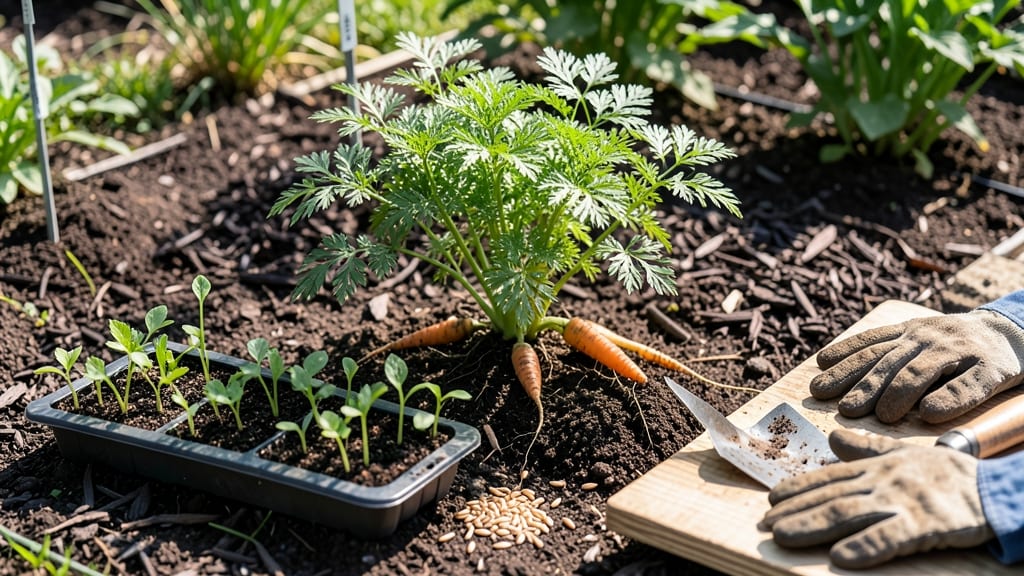
Optimal carrot planting calendar for Central Florida’s climate zones
Central Florida’s USDA Zones 9a-10a offer a unique gardening advantage: no frost to worry about. But that doesn’t mean you can plant carrots anytime. The key is avoiding summer’s brutal heat (85°F+ soil temps) and peak pest seasons.
Your best bets are fall through early spring, when cooler temps and shorter days create ideal conditions.
For crisp, sweet carrots, aim to plant when soil temps stay between 55°F and 75°F. This window spans September through March, with November-January being the sweet spot.
Evenings in Central Florida’s winter rarely dip below 45°F, so you won’t face frost damage—but you’ll still get slow, steady growth perfect for carrot development.
| Month | Planting Window | Soil Temp (°F) | Key Notes |
|---|---|---|---|
| August | Late August (shade cloth) | 70-78°F | Use 30% shade cloth to avoid bolting |
| September | Early to mid-September | 75-80°F | Best early planting for fall harvests |
| October | All month | 70-78°F | Ideal soil moisture and pest control |
| November | All month | 65-72°F | Peak planting for winter harvests |
| December | Early December | 60-68°F | Slow growth; extend with row covers |
| January | Mid-January | 58-65°F | Coolest harvest window of the year |
| February | Early February | 62-68°F | Last winter planting before heat stress |
| March | Early March | 68-72°F | Risk of bolting increases |
Central Florida’s microclimates play a huge role in success. For example, Tampa’s coastal influence keeps evenings slightly cooler than Orlando’s inland heat, while Gainesville’s higher elevation can drop temps faster.
If you’re in Tampa or St. Petersburg, you can push planting into late March with shade cloth. But in Orlando or Kissimmee, stop by mid-February to avoid heat stress.
Pro tip: Use a soil thermometer to confirm temps before planting. Carrot seeds need consistent moisture to germinate, so aim for 60°F+ soil. If temps drop below 55°F, growth slows dramatically, and roots may become woody or bitter.
In November-January, this is rarely an issue—but if a cold snap hits, use row covers to protect seedlings.
For extended harvests, try succession planting every 2-3 weeks from September through February
5 Critical factors that determine your carrot planting success
Carrots thrive in Central Florida’s cool, moist seasons, but success hinges on more than just timing. The sandy, fast-draining soil here is infamous for forking carrots, and the humid summers invite pests like carrot rust flies.
Let’s break down the 5 game-changing factors that’ll make your harvest crisp and abundant.
First, soil prep is non-negotiable. Florida’s native soil is heavy on sand and clay, which causes carrots to fork or split. Amend with 2-3 inches of compost and fine sand to create a loose, stone-free bed.
Work the soil to a depth of 12 inches—this prevents roots from hitting obstacles mid-growth.
Next, shade strategies are your secret weapon for summer sowing. While carrots love full sun, Central Florida’s 90°F+ days can scorch seeds before they sprout. Use 30% shade cloth or plant in partial shade (4–6 hours of sun) during June–August.
For container growing, place pots under dappled shade from nearby trees.
Don’t overlook companion planting—it’s how Florida gardeners outsmart pests. Carrot rust flies are relentless here, but leeks, rosemary, and thyme confuse their scent trails. Interplant with onions or chives to deter maggots naturally. Avoid planting near dill or parsley, which attract the same pests.
The #1 mistake Florida gardeners make? Planting seeds too deep. Carrot seeds are tiny and need light to germinate. Sow them just ¼-inch deep in rows spaced 12–15 inches apart.
Thin seedlings to 2–3 inches apart once they’re 2 inches tall—this prevents competition and ensures straight, fork-free roots.
Finally, consistent moisture is key. Carrots need 1–2 inches of water weekly, but Florida’s humid air can trick you into overwatering. Water deeply in the morning to avoid fungal diseases like Alternaria leaf spot.
Mulch with straw or shredded leaves to retain moisture and keep roots cool during spring and fall planting.
Master these 5 factors, and you’ll grow sweet, straight carrots even in Central Florida’s toughest conditions. The payoff? A year-round harvest of homegrown, pesticide-free crunch! 🥕