
Plants
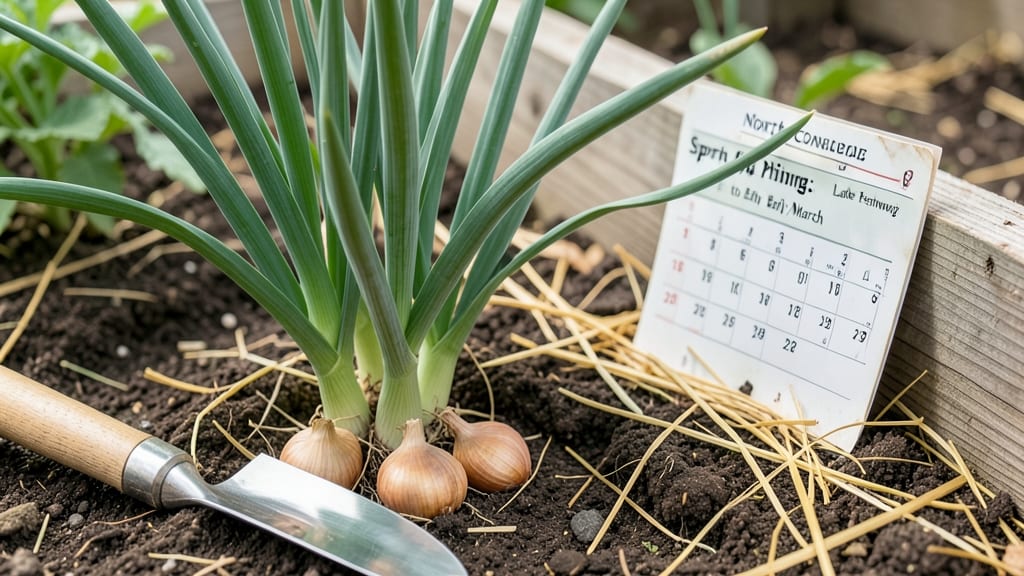
Timing your spring garlic planting in North Carolina can make or break your harvest—especially when those last frost dates sneak up faster than you expect. Unlike fall planting, which is ideal for most gardeners here, spring offers a second chance for bold, flavorful bulbs if you get the timing right.
Most gardeners in USDA zones 6b-8a should aim to plant 🧄 garlic between February and early March, about 4-6 weeks before your region’s average last frost date. This window gives your cloves time to establish roots before the soil warms up, setting the stage for strong growth.
But here’s the catch: North Carolina’s spring weather can be as unpredictable as a Piedmont thunderstorm. If you plant too early and hit a late frost, your garlic might bolt.
Too late, and you risk smaller bulbs. I’ll show you how to adjust for your specific zone and avoid these common pitfalls.
Ready to grow garlic that rivals the flavor of your favorite farmers’ market finds? Let’s dive into the exact planting schedule, soil prep secrets, and variety tips that’ll give you the harvest you’re dreaming of.
NC spring garlic planting calendar: exact weeks before last frost by region
North Carolina’s diverse climate—from the Coastal Plain to the Mountains—creates wildly different last frost dates. For spring garlic, timing is everything: plant too early, and your cloves rot in cold soil; too late, and bulbs won’t mature before summer heat.
The ideal window is 4-8 weeks before your region’s last frost, adjusted for soil temperature (40°F+ for sprouting).
Most NC gardeners aim for mid-February to early March, but your exact timing depends on your USDA zone. Coastal areas (Zone 8a) can plant as late as March 15, while the Mountains (Zone 6b) should plant by February 15 to avoid late frosts.
Let’s break it down by region so you can pinpoint your perfect planting date.
📅 Pro Tip: Use the NC State Climate Office’s frost date maps (or your local Cooperative Extension) for hyper-local accuracy. Even a 10-day shift can mean the difference between plump bulbs and small cloves.
Notice how the Mountains have a 6-week earlier window than the Coast? That’s why hardneck varieties (like ‘Music’ or ‘German Red’) thrive in cooler zones, while softneck types (like ‘Silverskin’) suit warmer areas. Your region’s last frost date isn’t just a guideline—it’s your planting deadline.
For example, if you’re in Raleigh (Zone 7b) with a March 1 last frost, aim to plant by February 15.
But if you’re in Asheville (Zone 6b), shift that to January 25 to account for colder soils. Soil temperature matters more than air temperature—garlic cloves won’t sprout until the ground reaches 40°F+.
Here’s a quick rule of thumb: Count backward from your last frost date and plant 6 weeks out for hardneck varieties (longer growing season) or 4 weeks out for softneck types.
Use a soil thermometer ($10 at garden centers) to confirm readiness—45°F+ is ideal for most NC regions.
One common mistake? Planting too late in spring and relying on garlic’s cold-hardiness. While garlic can tolerate light frosts (down to 20°F), bulbs need 120–180 days to mature.
Planting in late March risks harvests in late August or September, when NC’s humidity and pests spike. Spring garlic is a gamble unless you’re in Zone 8a+.
For reliable harvests, most NC gardeners plant in fall (October–November), but if you’re committed to spring, stick to the 4–6 week window and monitor soil temps weekly. A row cover can extend your window by 2–3 weeks if late frosts threaten.
🌱 Key Takeaway: Your region’s last frost date + soil temperature = your planting deadline. Use the table above, then verify with your local Extension office for hyper-local accuracy.
How to adjust garlic planting for NC’s unpredictable weather patterns
North Carolina’s spring weather can throw off even the most experienced gardeners. One week you’re shivering in a light jacket, the next you’re sweating through a t-shirt—this whiplash makes spring garlic planting a high-stakes game.
The key is flexibility: knowing how to adjust planting dates based on soil temperature and weather forecasts.
If you’re in the Mountains (Zone 6b), aim for early February. The Piedmont (Zone 7a-7b) can wait until late February to early March, while the Coastal Plain (Zone 8a) might need to push planting to mid-March. But these are just starting points—soil temperature is your real guide.
Use a soil thermometer to confirm when the ground reaches 40-45°F. Cold soil slows root growth, while soil warmer than 50°F can trigger premature bolting. If your thermometer reads below 40°F, wait another week or two—your garlic will thank you with stronger roots.
⚠️ Warning: Late Frost Risks
Planting too early in NC’s unpredictable spring can leave your garlic vulnerable to late frosts. If temperatures dip below 20°F after planting, your cloves may freeze. Here’s how to protect them:
- Mulch heavily with straw or leaves (3-4 inches) to insulate soil.
- Use frost blankets on young plants if a freeze is forecasted.
- Plant in raised beds—they warm up faster in spring.
🌡️ Pro Tip: Check the NC State Climate Office for your county’s frost history—some areas average late frosts into April!
What if spring warms up faster than expected? If your soil hits 50°F+ before you’ve planted, your garlic might bolt prematurely (send up flower stalks). To delay bolting, choose longer-day varieties like ‘Silverskin’ or ‘Artichoke,’ which tolerate warmer temperatures better.
For extra insurance, plant a backup batch 2-3 weeks after your initial planting. This staggered approach ensures at least one group of cloves will thrive, even if weather disrupts the first. Just be sure to mark your rows—garlic looks deceptively similar to weeds in its early stages!
Finally, watch for soil moisture during NC’s spring showers. Too much rain can rot cloves, while dry spells stress young plants. Aim for consistent moisture—about 1 inch per week—and avoid waterlogging. A drip irrigation system keeps water at the roots without over-saturating the soil.