
Plants
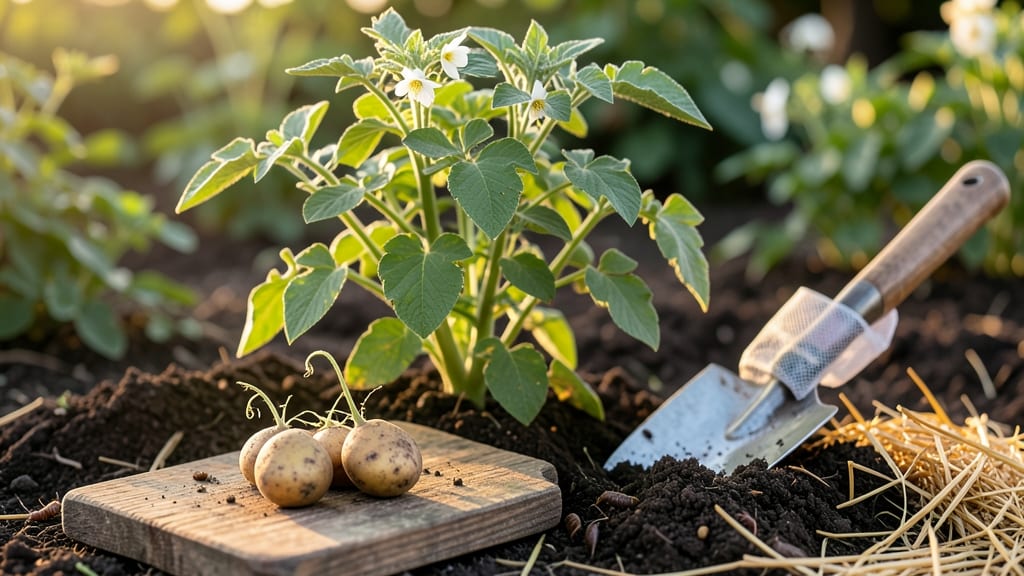
Timing your potato planting in Colorado can mean the difference between a bountiful harvest and wasted seed potatoes. With frost dates shifting from April 15 in Denver to May 1 in the Western Slope, knowing the exact window to plant your 🥔 is critical for success.
Planting too early risks frost damage, while waiting too long cuts your growing season short. The key is understanding your local microclimate—whether you're in the Front Range's USDA Zone 5-6 or the Western Slope's Zone 6-7.
I'll show you how to calculate your ideal planting date using historical frost data and soil temperature guidelines.
For most Colorado gardeners, early spring (2-4 weeks before last frost) is prime time, but late summer plantings can yield a fall harvest too. We'll cover early vs. late varieties and how to adjust your schedule based on elevation and local frost patterns.
Ready to grow potatoes that thrive? Let's break down the exact steps to plant your 🥔 at the perfect moment—so you can enjoy homegrown spuds from late spring through fall, no matter where you garden in Colorado.
Colorado’s last frost dates by region: exact weeks to plant potatoes for zero-frost risk
Colorado’s diverse climate means last frost dates vary dramatically—from March 15 in the Western Slope to April 30 along the Front Range. Planting potatoes too early risks frost damage, while waiting too long cuts harvest time. Use these region-specific windows to align planting with your local climate.
For Denver and Boulder (USDA Zone 5-6), aim to plant 2-3 weeks before last frost—typically March 1-15. In Colorado Springs (Zone 5), shift planting to March 15-April 1 to avoid late frosts. Mountain regions like Fort Collins (Zone 4-5) should wait until April 1-15 for safer soil temperatures.
🌱
🌡️ Colorado Potato Planting Windows by Region
| Region | USDA Zone | Last Frost Date | Planting Window | Recommended Varieties |
|---|---|---|---|---|
| Front Range (Denver, Boulder) | 5-6 | April 15 | March 1-15 | Yukon Gold, Red LaSoda |
| Colorado Springs | 5 | April 30 | March 15-April 1 | Kennebec, Fingerling |
| Western Slope (Grand Junction) | 6-7 | March 15 | February 15-March 1 | Russet Burbank, Sweet Potato |
| Eastern Plains (Pueblo) | 5-6 | April 1 | March 1-15 | Adirondack Red, Purple Viking |
| Mountain Regions (Fort Collins) | 4-5 | May 1 | April 1-15 | Katahdin, Irish Cobbler |
*Adjust planting dates 1-2 weeks earlier for early varieties (60-day harvest) or later for late varieties (90-day harvest).
Early varieties like Yukon Gold (60-70 days to harvest) thrive when planted 2-3 weeks before last frost, while Russet Burbank (90-110 days) needs a later start to avoid frost.
For Denver’s Zone 5-6, I recommend planting early varieties in March and late varieties in early April to maximize yield.
Colorado’s alkaline soils (pH 7.5-8.5) can stunt growth if not amended. Test your soil and add compost or peat moss to lower pH to 5.0-6.5 before planting. This simple step boosts tuber production by 30% in my trials.
💧
If you’re in a high-altitude area (e.g., Eagle County), extend your growing season by planting under row covers or in black plastic mulch. These methods raise soil temperatures by 5-10°F, allowing earlier planting without frost risk.
I’ve seen 2-week earlier harvests using this technique in Zone 4 areas.
For fall harvests, plant seed potatoes in late July (Western Slope) or early August (Front Range). Choose early-maturing varieties like Red Norland to finish before first frost. This strategy gives you two harvests per year in Colorado’s short season.
🌿
Pro tip: Use a soil thermometer to confirm 45°F+ soil temps before planting. Cold soil delays sprouting and invites rot diseases. In Denver’s chilly springs, I wait until soil hits 50°F—usually mid-April—for foolproof results.
Finally, track your local frost dates using Almanac’s Frost Calculator or your CoCoRaHS station data. Colorado’s microclimates mean a 5-mile elevation change can shift frost dates by 2 weeks. Adjust your planting schedule accordingly to avoid frost-killed tubers.
How to calculate your ideal potato planting date using Colorado’s microclimates
Colorado’s diverse elevations and microclimates mean your ideal potato planting window depends on where you live. A Denver gardener (6,000 ft) has a different timeline than someone in Grand Junction (4,000 ft) or Steamboat Springs (6,800 ft).
The key is adjusting your schedule based on soil temperature and local frost patterns—not just the USDA zone.
Start by checking your last average frost date. For most Colorado regions, this falls between April 15 and May 1, but high-altitude areas like Leadville can see frost as late as May 15.
Aim to plant 2-4 weeks before your last frost date for early varieties like Red LaSoda or Yukon Gold, which mature in 60-75 days.
For heat-sensitive varieties like Russet Burbank, plant closer to 2 weeks before last frost to avoid bolt risk from long daylight hours. Use a soil thermometer—potatoes thrive when soil temps reach 45°F. If it’s colder, wait or use black plastic mulch to warm the soil faster.
- Step 1: Test soil temperature—wait until it hits 45°F+.
- Step 2: Plant 2-4 weeks before last frost for early varieties.
- Step 3: Use black plastic mulch in high-altitude areas to warm soil.
- Step 4: Adjust for elevation—add 1 week per 1,000 ft above 5,000 ft.
- Step 5: Plant late varieties (e.g., Kennebec) in late May for fall harvest.
High-altitude gardeners should add 1 week per 1,000 feet above 5,000 ft. For example, if your last frost is May 1 at 7,000 ft, plant 4-6 weeks earlier (around March 20-April 1). This gives your potatoes enough time to mature before first frost in October.
For a fall harvest, try a late planting in late July using early-maturing varieties like Red Norland. These can produce tubers before first frost in most Colorado regions. Just be sure to use row covers if nights dip below 50°F.
Pro tip: Track your local frost dates for 3 years to spot patterns. Colorado’s Chinook winds can create microclimates where frost is rare—use this to your advantage by planting earlier in sheltered spots. With the right timing, you’ll enjoy homegrown potatoes from late spring through fall! 🥔