
Plants
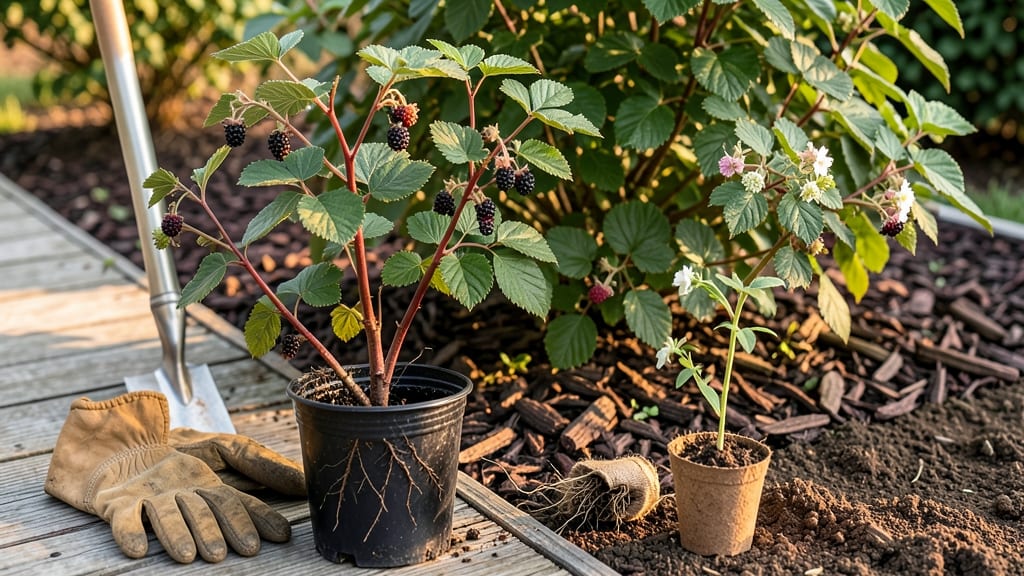
Timing your blackberry 🫐 planting in Georgia isn't just about the calendar—it's about matching the plant's chill-hour needs to your local climate. Get it wrong, and you might end up with weak bushes or missed harvests, despite Georgia's perfect growing conditions.
Most Georgia gardeners know blackberries thrive in USDA zones 7b-8b, but did you know some varieties need 1,000+ chill hours while others only require 200-300? Planting too early risks winter damage, while waiting too long can delay your first harvest.
I'll show you exactly when to plant—whether you're working with bare-root plants or potted blackberries—so you can maximize your May-July harvests. We'll cover both fall and spring windows, plus how to adjust for Georgia's microclimates from the Piedmont to the coast.
Ready to grow juicier, more abundant blackberries? Let's dive into the chill-hour matching guide that'll have your bushes producing like champions.
Georgia blackberry planting zones: chill-hour requirements by variety
Georgia’s diverse climate—from the coastal humidity of Savannah to the Piedmont chill of Athens—means blackberry planting success hinges on matching chill-hour needs to your specific zone. Most Georgia regions fall under USDA Zones 7b-9a, but chill hours (the number of hours below 45°F needed to break dormancy) vary dramatically.
For example, 'Arapaho' thrives with 400-600 chill hours, while 'Natchez' (a thornless favorite) needs 600-800. Planting the wrong variety in the wrong zone risks poor fruit set or winter dieback.
In Zone 7b (northwest Georgia, like Dalton), where winters dip below freezing, summer-bearing varieties like 'Ouachita' (800+ chill hours) excel. Meanwhile, Zone 8a (central Georgia, including Macon) can support everbearing types like 'Chester' (500-700 chill hours), which produce two harvests per year.
Coastal areas (Zone 9a, e.g., Brunswick) may struggle with traditional blackberries but can grow low-chill varieties like 'Apache' (300-500 chill hours) with winter protection.
Here’s the critical rule: Plant in late winter (February-March) or early fall (September-October) to align with your zone’s chill accumulation. For instance, if you’re in Zone 8b (Atlanta area), aim for September planting—this gives roots time to establish before winter’s 300-500 chill hours kick in.
Conversely, bare-root plants in Zone 7a (like Rome) should go in early spring to avoid late frosts.
Microclimates add another layer. A south-facing slope in Zone 8a might accumulate chill hours faster than a north-facing valley, allowing you to push planting dates slightly later. Use a chill-hour calculator (like the one from the University of Georgia Extension) to fine-tune your variety choice.
For example, 'Prime-Ark Freedom' (thornless, 500-700 chill hours) is a top pick for Zone 7b-8a, while 'Black Satin' (400-600 chill hours) suits Zone 8a-9a with minimal winter protection.
Soil temperature also plays a role. Roots need soil temps above 50°F to thrive—so avoid planting in November if your soil hasn’t warmed post-harvest. Use a soil thermometer to check; 60°F+ is ideal for transplanting.
In Zone 9a, where winters are mild, fall planting in October works best, while Zone 7b gardeners should wait until March to avoid frost damage.
Pro tip: Mulch heavily (4-6 inches of straw or pine needles) after planting to insulate roots during Georgia’s unpredictable freezes. This is especially critical for low-chill varieties in Zone 8a-9a, where winter temps can still dip into the 20s°F.
Without protection, young plants may suffer crown damage or fail to fruit the following season.
Let’s break down the best varieties for Georgia’s zones and their chill-hour ranges to help you choose the right match for your microclimate.