
Trees
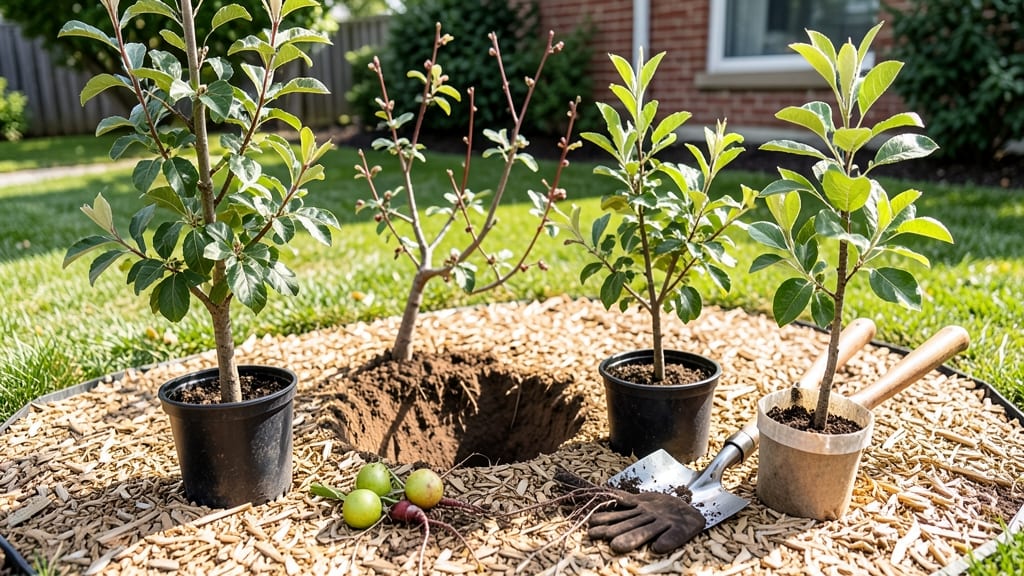
Timing your fruit tree planting in Iowa isn’t just about the calendar—it’s about outsmarting Zone 5B’s unpredictable frosts and matching varieties to their exact chill-hour needs. Plant too soon, and tender roots will freeze; too late, and your trees won’t establish before winter.
The secret? Aligning your schedule with Iowa’s frost-free dates (around April 15) and choosing varieties that thrive in 200-1,000 chill hours, depending on whether you’re growing apples, peaches, or cherries.
Iowa’s 🍎🍐🍒 orchards succeed when you plant during the ideal windows of early spring (March–April) or fall (September–October), but not all trees are created equal. High-chill varieties like Honeycrisp apples need 800+ chill hours, while low-chill peaches get by with just 300–500.
Skipping this step means risking poor fruit set—or worse, a dead tree by next winter.
What sets Iowa apart? Late frosts can sneak in until May in some years, so container-grown trees give you flexibility. Meanwhile, heavy clay soil demands amendments like compost to prevent root rot.
I’ll break down the exact steps to plant for success, from soil prep to variety selection, so you can avoid the costly mistakes most gardeners make.
Ready to grow a thriving orchard? Let’s dive into the chill-hour matching and planting strategies that’ll have your fruit trees bearing juicy, homegrown harvests in just a few years—without the guesswork. Your Iowa orchard starts here.
Iowa’s best planting months for fruit trees by chill-hour requirements
Planting fruit trees in Iowa’s Zone 5B hinges on two critical factors: chill-hour requirements and frost-free windows. High-chill varieties like apples and pears need 800-1,000 hours below 45°F, while low-chill peaches and cherries thrive with 300-600 hours.
Iowa’s last frost typically hits April 15, but microclimates can shift this by weeks.
Spring planting (March-April) gives trees 6-8 weeks to root before summer heat, while fall planting (September-October) allows 4-6 weeks of root growth before dormancy. The key? Match your tree’s chill-hour needs to Iowa’s 1,200-1,400 annual chill hours—most varieties here fit perfectly.
⚠️ Critical Note: Bare-root trees must be planted while dormant (no leaves). Container-grown trees offer more flexibility but still need soil temperatures above 40°F for root growth.
| Planting Window | Chill-Hour Range | Best Varieties | Soil Temp Threshold | Iowa Months |
|---|---|---|---|---|
| Early Spring | 800-1,200 hrs | Apples, Pears, Cherries | 40°F+ | March-April |
| Late Spring | 300-600 hrs | Peaches, Plums, Apricots | 50°F+ | May (container trees only) |
| Fall | 800-1,400 hrs | All high-chill varieties | 50°F+ | September-October |
For spring planting, aim for March 15-April 15 when soil thaws but before buds swell. This gives roots time to establish before summer drought stress. In Iowa’s northern zones, delay until after April 15 to avoid late frosts damaging new growth.
Fall planting (September 1-October 15) is ideal for bare-root trees because cooler temps reduce transplant shock. Water deeply before dormancy to build root reserves. Never plant after October 15—new roots won’t harden before winter.
Pro tip: Use mulch (4-6 inches) after planting to insulate roots. In Iowa’s clay-heavy soils, mix in compost or sand to improve drainage. Test soil pH (6.0-7.0)—lime may be needed for acid-loving varieties like blueberries.
🌿 Local Tip: Iowa State University Extension recommends cover crops (clover or rye) in orchards to suppress weeds and retain moisture during critical root-establishment periods.
If you’re unsure about chill hours, check the USDA Plant Hardiness Zone Map and cross-reference with your tree’s tag. For example, Honeycrisp apples (900 chill hours) thrive in Iowa, while Tropicana peaches (300 chill hours) may struggle in northern counties.
📅 Remember: Iowa’s frost-free season averages 165 days. Planting too late in spring risks stunted growth before winter, while late fall planting may not allow enough root development.
Iowa’s best planting months for fruit trees by chill-hour requirements
Timing is everything when planting fruit trees in Iowa’s Zone 5B. The state’s last frost date (April 15) and first frost (October 15) create a narrow window for success.
High-chill varieties like apples and pears need 800-1,200 chill hours, while lower-chill peaches and plums thrive with 400-600 hours. Planting at the wrong time risks frost damage or poor root establishment.
Spring planting (March–April) gives trees a full growing season before winter, while fall planting (September–October) allows roots to establish before dormancy. Bare-root trees are best planted in early spring, while container-grown trees can go in slightly later.
Soil temperatures below 40°F slow root growth, so avoid planting when the ground is frozen.
Iowa’s variable microclimates mean frost dates shift by region—northern areas may need to wait until mid-April, while southern zones can plant in late March. Always check your local USDA Plant Hardiness Zone map and consult a county extension office for precise timing.
Fall planting in Iowa works best for dwarf varieties or trees with shallow root systems. Aim to plant at least 6 weeks before the first frost to allow roots to establish. Mulch heavily (4–6 inches) to insulate roots and retain moisture during winter.
For container-grown trees, you can plant anytime the ground isn’t frozen, but early spring or late summer (August) are ideal. These trees adapt better to transplant shock and establish faster. Just ensure the root ball stays moist until roots spread into the native soil.
Always amend heavy clay soil with compost or sand before planting—Iowa’s glacial till soil drains poorly, leading to root rot. Test your soil’s pH (6.0–7.0) and adjust with lime or sulfur if needed. A well-prepared site sets the stage for decades of fruit production.