
Trees
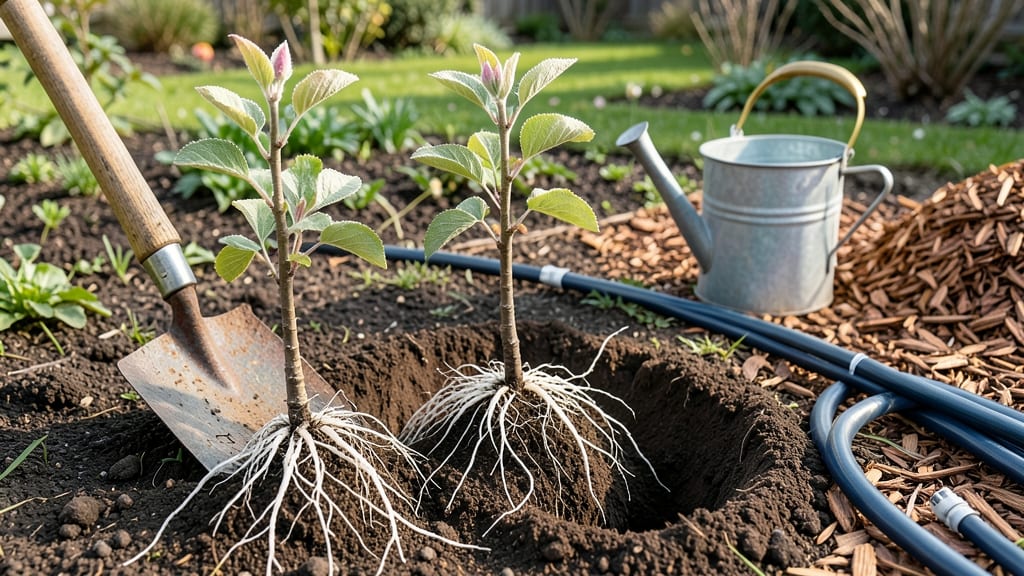
Timing your fruit tree planting in Washington State wrong could mean the difference between a lush orchard and a frost-killed disappointment. The right window depends on your region's chill-hour needs and frost patterns, not just the calendar date.
From the Puget Sound's milder climate to Eastern Washington's harsh winters, each area demands a different approach. I'll break down exactly when to plant—whether you're working with bare-root saplings or container-grown trees—to give your fruit trees the best possible start.
You'll learn how to read your local frost-free dates, match varieties to your chill-hour zone, and avoid common planting mistakes that even experienced gardeners make. Let's get those fruit trees thriving in your backyard.
Whether you're dreaming of crisp apples or juicy cherries, proper timing is everything. I'll show you how to navigate Washington's diverse growing conditions with confidence.
Washington State chill-hour zones: matching fruit trees to your region’s cold requirements
Washington State’s diverse chill-hour zones determine which fruit trees thrive in your backyard. These zones measure the number of hours below 45°F (7°C) during winter—a critical factor for fruit trees like apples, cherries, and peaches.
Planting the wrong variety in your zone can lead to poor pollination, small fruit, or even no harvest at all.
For example, Eastern Washington (e.g., Wenatchee) typically needs 800–1,200 chill hours, while Western WA (e.g., Seattle) often gets 400–800 hours. The Puget Sound region falls somewhere in between, with 500–700 hours annually.
Always check your USDA Hardiness Zone (e.g., Zone 7–9) and cross-reference with chill-hour data from Washington State University (WSU) Extension.
Here’s how to verify your chill hours: Use a home weather station or access NOAA’s climate data tools. For a quick estimate, WSU’s Chill-Hour Calculator maps your location to the nearest microclimate. This step is non-negotiable—skipping it risks investing in trees that won’t produce fruit in your area.
Now, let’s match your zone to the best fruit trees. The table below compares 15+ popular varieties and their chill-hour needs, so you can pick the perfect fit for your garden.
| Fruit Tree | Chill-Hour Range | Best WA Regions | Notes |
|---|---|---|---|
| Apples (e.g., Gala, Fuji) | 500–1,200 hrs | Western WA, Puget Sound, Eastern WA | Dwarf varieties work in lower-chill zones. |
| Cherries (Sweet) | 600–1,000 hrs | Western WA, Puget Sound | Requires cross-pollination; avoid Eastern WA. |
| Peaches/Nectarines | 400–800 hrs | Western WA, Puget Sound | Low-chill varieties like ‘Redhaven’ adapt well. |
| Pears (Bartlett, Anjou) | 300–800 hrs | All WA regions | Tolerates partial shade; great for urban gardens. |
| Plums (Stanley, Santa Rosa) | 500–1,000 hrs | Western WA, Eastern WA | Dwarf plums thrive in containers. |
| Apricots | 300–600 hrs | Western WA, Puget Sound | Needs warm microclimates; avoid Eastern WA. |
| Fig Trees (e.g., ‘Chicago Hardy’) | 200–500 hrs | Western WA, Puget Sound | Heat-loving; plant near south-facing walls. |
| Quince | 300–800 hrs | All WA regions | Ornamental and edible; drought-tolerant. |
| Blueberries (Rabbit Eye) | 200–500 hrs | Western WA, Puget Sound | Requires acidic soil (pH 4.5–5.5). |
Pro tip: If you’re in a transition zone (e.g., near the Cascades), opt for low-chill varieties or use heat lamps during early spring to boost fruit set. For example, ‘Lapins’ apple (400–600 hrs) grows well in Zone 7 but may struggle in colder Zone 5 areas like Spokane.
For Eastern Washington, prioritize high-chill trees like ‘Golden Delicious’ apples (800–1,200 hrs) or ‘Sentinel’ cherries. These varieties handle the harsher winters and longer cold snaps typical of the region.
Always check the rootstock compatibility—dwarf rootstocks (e.g., M.9) are ideal for small spaces but may need extra winter protection.
In Western WA, focus on low-chill fruits like peaches, figs, and plums. The milder winters mean you can experiment with exotic varieties such as ‘Flame’ nectarines (500 hrs) or ‘Black Diamond’ figs (300 hrs).
Just be mindful of late spring frosts, which can damage blossoms—use frost cloth if needed.
Finally, always plant in early spring (March–April) when the soil is workable but not frozen. This timing ensures roots establish before summer heat stress. For bare-root trees, plant as soon as they arrive; for container-grown trees, wait until after the last frost date in your area.
Use WSU’s frost-free date maps to pinpoint the exact window.
🌱
Frost-free deadlines by Washington region: when to plant bare-root vs. container trees
Washington State’s frost-free dates vary wildly from region to region, making timing critical for fruit tree success.
In the Puget Sound area, you’ll typically see last frost dates between March 15 and April 15, while Eastern Washington can hold onto frost until May 15 or later in colder valleys.
These dates determine whether you plant bare-root trees (best in late winter/early spring) or container-grown trees (which can handle slightly later planting).
Bare-root trees, for example, should go into the ground 4-6 weeks before your last frost date—this gives roots time to establish before active growth begins.
Container-grown trees, however, are more flexible and can be planted up to 2 weeks after your frost-free date, as their root systems are already established. For Seattle gardeners, that means bare-root planting between February 15 and March 15, while Spokane gardeners should wait until April 15.
Soil temperature is another key factor. Fruit trees thrive when soil reaches 45°F (7°C). In Western Washington, this usually happens by mid-March, but in Eastern Washington, you may need to wait until late April.
Use a soil thermometer to confirm—planting too early in cold soil can stunt root growth and invite disease.
| Region | Last Frost Date | Best Planting Window | Soil Temp Threshold |
|---|---|---|---|
| Puget Sound (Seattle) | March 15-April 15 | Feb 15-Mar 15 (bare-root) / Apr 1-Apr 15 (container) | 45°F (7°C) by mid-March |
| Western WA (Portland) | March 20-April 5 | Feb 20-Mar 20 (bare-root) / Apr 1-Apr 10 (container) | 45°F (7°C) by late March |
| Eastern WA (Spokane) | May 1-May 15 | Apr 15-Apr 30 (bare-root) / May 1-May 10 (container) | 45°F (7°C) by late April |
| Eastern WA (Wenatchee) | May 10-May 25 | Apr 20-May 5 (bare-root) / May 5-May 15 (container) | 45°F (7°C) by early May |
For container-grown trees, you can push the envelope slightly later in the season, but avoid planting after June 15—this gives roots time to establish before summer heat sets in.
If you’re in a microclimate (like a sheltered valley or urban heat island), adjust your timeline by 1-2 weeks earlier—these areas often experience later frosts and warmer soil temperatures.
Pro tip: Check the NOAA Frost Probability Maps for your specific area to fine-tune your planting schedule. For example, the Wenatchee area has a 30% chance of frost after May 15, so I recommend waiting until early May for bare-root planting there.
Always have frost cloth on hand for newly planted trees in case of unexpected late frosts.
Finally, remember that rootstock type affects planting time too. Semi-dwarf and dwarf varieties establish faster and can handle slightly later planting, while standard rootstocks need that extra time to root before summer arrives.
When in doubt, err on the side of planting earlier—your trees will thank you with years of abundant fruit.