
Trees
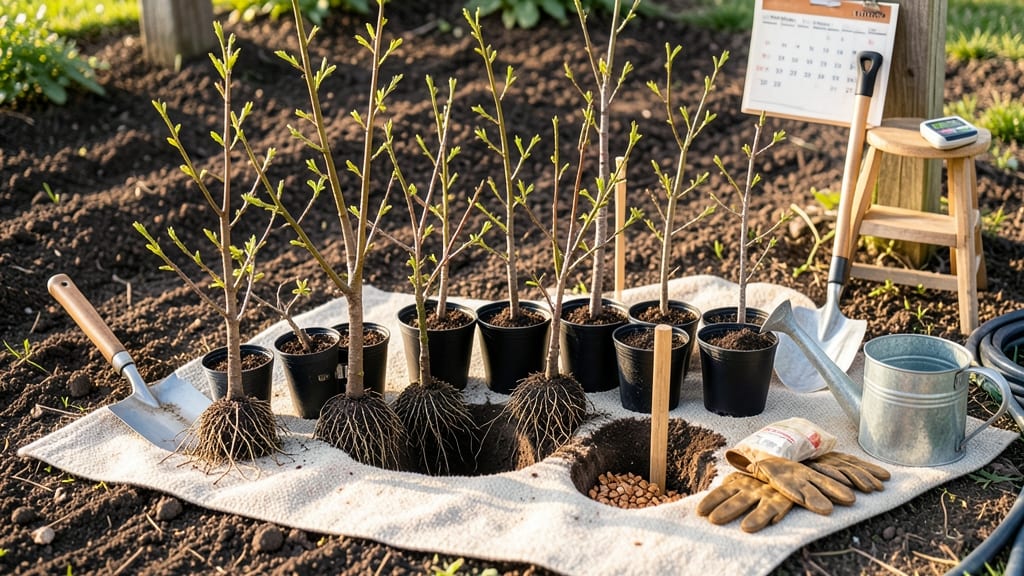
Timing your fruit tree planting in Illinois could mean the difference between a thriving orchard and years of disappointment. Whether you dream of juicy peaches or crisp apples 🍎, getting the window right—between late winter's dormancy and early spring's soil warmth—is everything.
Most gardeners in USDA Zones 5-6 assume spring is the only option, but fall planting actually gives roots time to establish before winter. The key? Planting when soil temps hit 40-50°F—too early risks frost damage, while waiting too long means missed growing seasons.
In this guide, I’ll break down the exact months to plant each variety (apples, peaches, cherries) based on their chill-hour needs and Illinois’ microclimates. You’ll also learn how to prep soil, avoid common mistakes, and give your trees the best start for decades of harvests.
Ready to skip the guesswork and plant with confidence? Let’s get your orchard off to the right start—because patience now means bigger yields later.
Best planting months in Illinois based on soil temperature & chill hours
Illinois gardeners know timing is everything when planting fruit trees. The ideal window stretches from late winter to early spring (February through April), but exact timing depends on soil temperature and chill-hour requirements.
Northern Illinois (USDA Zones 5a-5b) has a shorter growing season than southern Illinois (Zones 5b-6a), so adjust accordingly.
For spring planting, wait until the soil warms to 40-50°F—use a soil thermometer to check. In northern Illinois, this typically happens by mid-April, while southern regions can plant as early as late March.
Fall planting (September-October) is also viable if the ground isn’t frozen, but it’s riskier due to unpredictable early frosts.
Chill hours—the number of hours below 45°F a tree needs to fruit—are critical. For example, apples require 600-1,000 chill hours, while peaches need 400-600 hours.
Planting too early (when trees are still dormant) or too late (when buds swell) can disrupt this cycle, leading to poor fruit production.
Here’s how to check your chill-hour zone: Use the University of Illinois Extension’s chill-hour map or track local weather data. Most of Illinois falls into 500-900 chill hours, but microclimates near rivers or lakes may vary.
🌱 Illinois Fruit Tree Planting Guide by Region
| Region | Best Planting Window | Soil Temp Requirement | Chill Hours Range | Key Varieties |
|---|---|---|---|---|
| Northern IL (Zones 5a-5b) | Mid-April to early May | 45-50°F | 600-1,000+ | Apples, Cherries, Pears |
| Central IL (Zone 5b) | Late March to April | 40-45°F | 500-800 | Peaches, Plums, Apples |
| Southern IL (Zones 5b-6a) | Late February to March | 40°F+ | 400-600 | Peaches, Nectarines, Figs |
⚠️ Pro Tip: Bare-root trees can be planted earlier (February-March) as long as the ground isn’t frozen.
If you’re planting in fall, aim for 4-6 weeks before the first frost (typically late September to early October). This gives roots time to establish before winter. Avoid fall planting in northern Illinois, where frosts can arrive earlier and damage young trees.
For container-grown trees, the window is slightly wider—plant anytime the soil is workable (February through November), but prioritize early spring or fall for best results. Containers warm up faster, so monitor soil temperature closely.
One common mistake is planting too early when the ground is still frozen or too late when buds are swelling. Use the 50°F soil rule as your guide: if the soil is colder, wait. If it’s warmer, you’re likely safe to plant.
Remember, dwarf varieties (like columnar apples) establish faster than standard trees, so they can handle slightly earlier planting. But for stone fruits like peaches, which are more frost-sensitive, delay until after the last frost date.
For extra peace of mind, cover young trees with frost cloth if late frosts are forecasted after planting. This protects tender new growth while roots settle in.
Top 5 fruit trees for Illinois gardens & their perfect planting timing
Choosing the right fruit tree varieties for Illinois isn’t just about taste—it’s about matching their chill-hour needs to your local climate. Northern Illinois (Zone 5) needs trees with 800-1,000 chill hours, while southern Illinois (Zone 6) can handle 300-600 chill hours.
Here are my top 5 picks for reliable harvests.
For apples, the ‘Honeycrisp’ variety thrives in both zones with 600-800 chill hours. Plant it in late March to early April when soil temps hit 45°F.
Southern Illinois gardeners can also try ‘Zestar!’ apples, which need just 300 chill hours—ideal for early spring planting in February-March.
Peaches like ‘Reliance’ (700+ chill hours) are perfect for northern Illinois, while ‘Redhaven’ (500+ chill hours) suits southern areas. Both should go in the ground by mid-April to avoid late frosts. Cherries, such as ‘Montmorency’ (800+ chill hours), are best planted in late April—they’re frost-sensitive, so wait until after the last frost date.
Plums like ‘Stanley’ (500+ chill hours) are versatile for both regions, with an early April planting window. Pears, such as ‘Kieffer’ (300+ chill hours), are low-maintenance and can be planted in late March. All these varieties benefit from well-draining soil and full sun—critical for root development.
Pro tip: Use a soil thermometer to confirm temps before planting. If soil is below 40°F, wait—cold roots struggle to establish. For fall planting (September-October), aim for 6 weeks before first frost to give roots time to settle.
🌱
Each variety has a specific frost tolerance and growth rate. For example, peaches bloom early, making them vulnerable to late frosts, while apples bloom later and are more forgiving. Always check your local last frost date (typically mid-April in Illinois) before planting.
My personal favorite for beginners is ‘Honeycrisp’ apples—they’re disease-resistant and produce reliable harvests even in cooler climates. For southern Illinois, ‘Elberta’ peaches are a crowd-pleaser with sweet, juicy fruit and fewer chill-hour demands.
🌿